

Red Curry w/ Wild Venison
Wild Meat
I just returned from a quick trip to Idaho and with me came a cooler full of wild meat – deer, antelope, elk and pheasant. The folks’ freezer is packed to overflowing with this season’s hunting bounty. There’s little room for the upcoming holiday fixings they’ll need to freeze so they took advantage of my visit to do a little purging. Lucky us!
I wasn’t a huge fan of wild meat as a kid but that has changed over time as we’ve learned to cook it in ways that highlight its rich flavors and lean texture. This curry adaptation is a perfect use for wild deer meat.
The beef called for in Joyce Jue’s recipe for Gaeng Mussaman Nuea, a Thai peanut curry, cooks in coconut milk until tender, about one hour (Savoring Southeast Asia, a Williams-Sonoma cookbook). Once cooked through, deer meat becomes tough and has to braise for some time before the protein fibers soften enough to enjoy eating. Tough deer meat gives your jaw quite a workout. We adjusted the cooking time a bit on this recipe to account for the toughness of the meat. Luckily, the meat was clean of sinew and silver skin so the finished dish was fork tender.
I added a cooking step to draw the complex flavors of the wild venison out of the meat and into the coconut milk. Browning the meat first creates depth of flavor while taking the wild edge off the finished curry. In addition to browning the meat, I added ingredients not called for in Joyce’s recipe but they work as adjuncts to the base ingredients in the curry paste. The modifications are noted in the recipe that follows. In the meantime, take inspiration in T. Edward Nickens’ thoughtful post over at Field & Stream. It’s a nice reminder of why deer meat has always mattered.
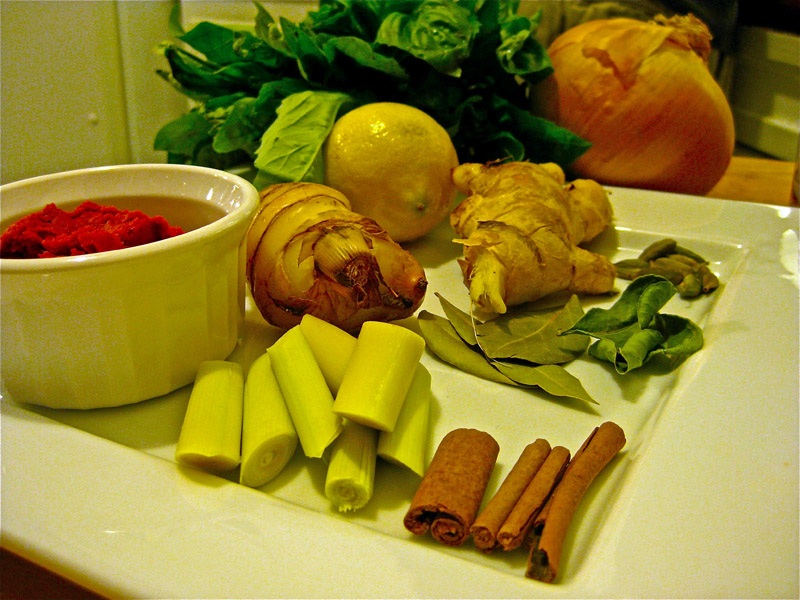
The Ingredients
Wild Venison Curry
2 cans (13 ½ fl oz) coconut milk
2 lbs wild venison stew meat, cut into 1 ¾ – inch pieces
3 tablespoons red curry paste
1 large potato, peeled and cut into 1 ½ -inch cubes
1 yellow onion, cut into 6 wedges
1 2-inch long piece of galangal, peeled and sliced into thin coins
1 2-inch long piece of fresh ginger, peeled and cut into julienne
1 stalk lemon grass, cut into 2 inch pieces
¼ cup unsalted roasted peanuts
2 tablespoons fish sauce, or as needed
2 tablespoons dark brown sugar
1/3 – cup tamarind water (or plain water)*
2 cinnamon sticks
6 cardamom pods, toasted
3 bay leaves
2 tablespoons fresh lemon juice
2 tablespoons chopped fresh basil
Pomegranate seeds for garnish
Start with the cans of coconut milk. Don’t shake them before opening. Once opened, skim off the top ½ cup from the top of each can and set aside the heavy cream aside in a small sauce pan for later.
I started by heating a few tablespoons of grape seed oil a heavy stockpot over medium high heat. The cleaned, diced meat was sprinkled with salt and then fried in batches to brown, trying not to steam the pieces. Once all the meat is nicely browned and you have a nice fond in the pan, add the remaining canned coconut milk as well as the ginger and galangal to the pan. Bring to boil then reduce heat to a steady simmer and cook uncovered for an hour and a half, stirring occasionally and adding a little water from time to time to prevent the pan from drying and the coconut milk from scorching.
In the meantime, heat the coconut cream over medium-high heat and bring to a boil. Gently boil until the oil begins to separate from the cream, about 5-8 minutes. Add the curry paste and cook, stirring frequently, until the mixture is fragrant and the oil separates from the paste, another 5-8 minutes.
Add the curry coconut cream mixture to the pot holding the venison along with the potato, onion, peanuts, 2 tablespoons fish sauce, brown sugar, tamarind water, cinnamon sticks, cardamom pods, and bay leaves. Cook, uncovered, until the vegetables are tender, 10-15 minutes. Taste and adjust the seasoning with curry, fish sauce or sugar. Stir in lemon juice and transfer to serving dish. Serve immediately.
*We didn’t make tamarind water this time around, but the recipe is easy enough and the tamarind paste called for in the recipe should be readily available in specialty markets in most cities. If you want to go for it, look for tamarind pulp sold in blocks. To make about 1 ½ cups tamarind water, cut up ½ pound of the pulp into small pieces, place in a bowl, and add 2 cups boiling water. Mash the pulp to separate the fibers and seeds, then let stand for 15 minutes or so, stirring two or three times. Pour the liquid through a fine-mesh sieve placed over a bowl, pushing against the pulp with the back of a spoon and scraping the underside of the sieve. Transfer to a jar and refrigerate for up to 4 days or freeze in an ice-cube tray for up to 1 month.


 (y)our food choices™