
Roasted Veggies or Stop Feeding Your Kids Chicken Nuggets

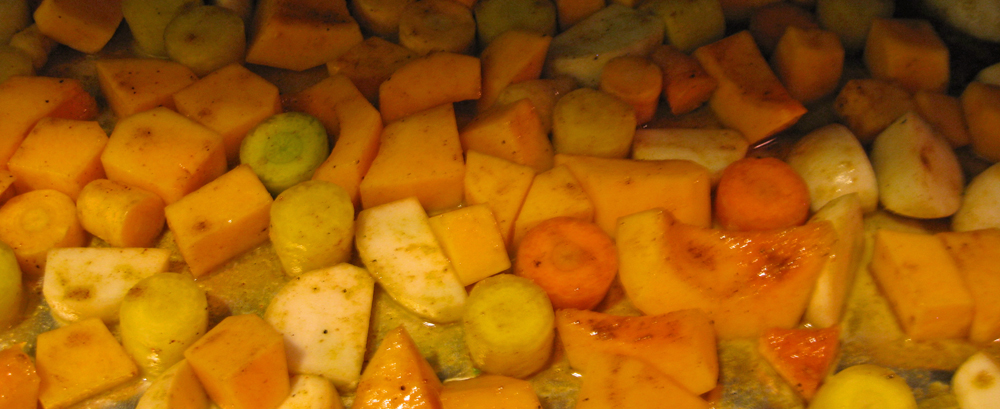
A mélange of veggies (carrots, turnips, and butternut squash) prepare for the heat.

The concept is simple; crank the oven up to a high temperature (around 425 degrees), take your favorite hard, non-leafy, vegetable and break apart or dice into large cubes (one inch?), line a baking sheet with foil and place the veggies on the sheet along with a good drizzle of olive oil, roast for 20-30 minutes or until a nice roasted color has developed, remove from the oven and toss the veggies with salt, pepper, and whatever else you think might be good from your fridge or pantry. What you have is a delicious side dish to serve to the pickiest vegetable eaters.

Don’t believe us about picky vegetable eaters? We took a couple of heads of cauliflower and roasted them for Steve’s parents over the holidays. Just a little salt and pepper added to the fresh-from-the-oven crucifers, and another drizzle of olive oil, was all it took for these two devout carnivores to enjoy a vegetable they normally don’t eat.

If you’re looking to get kids to eat their veggies, asked them to help out in the kitchen. After washing the cauliflower ask your little ones to break apart the cauliflower and place it on the baking sheet. Let them do the work. When kids feel like they’re a part of the cooking they’re more apt to eat what they’ve prepared.
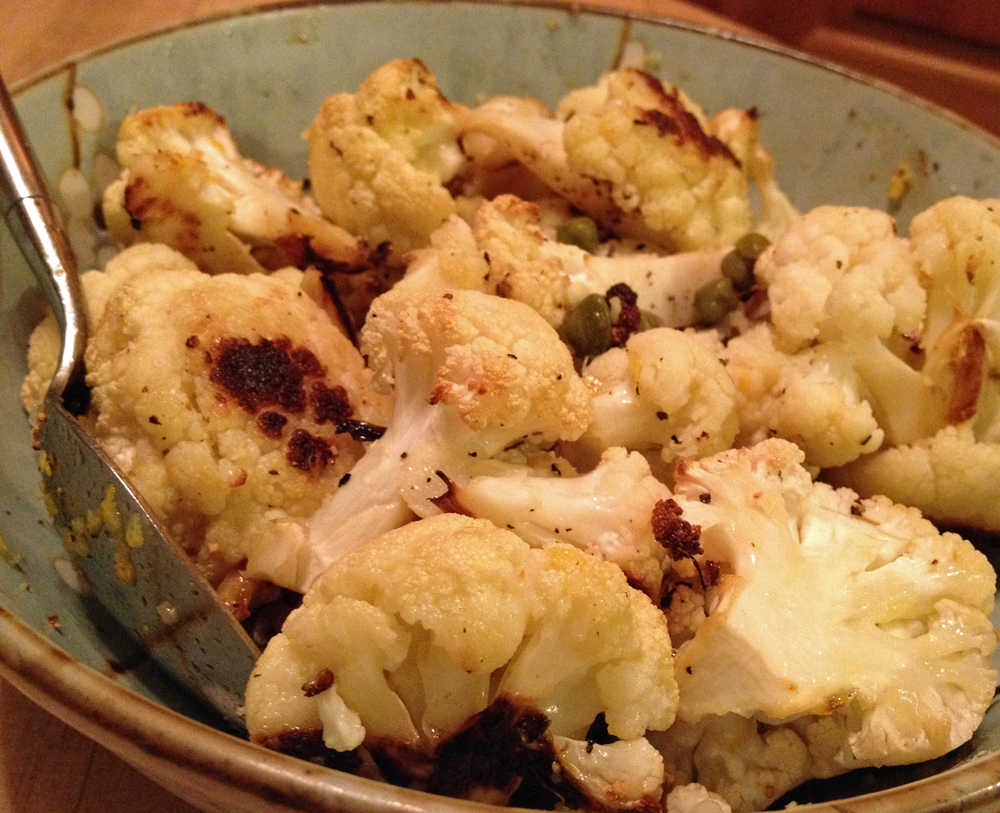
A bowl of roasted cauliflower with capers, lemon zest and juice.

The roasting of the veggies brings out a deep rich flavor and sweetness that pan frying or blanching looses. Great veggies to try include broccoli, sweet potatoes, cabbage, Brussels sprouts, and, of course, the notorious russet potato. We use this technique with hard squash and beets in addition to the veggies already mentioned. An added benefit to cranking up the oven is the warming effect the ambient heat has in a small, freezing apartment.

The basic recipe idea is outlined in the first paragraph, but for those of you who need an actual recipe, well here it is. Roast as much or as little as you want. Just make sure that all vegetable pieces rest in a single layer and that you don’t over crowd the pans. The heat needs to hit as much of the surface of the vegetables as possible (caramelizes the veggies and makes for quick cooking time).
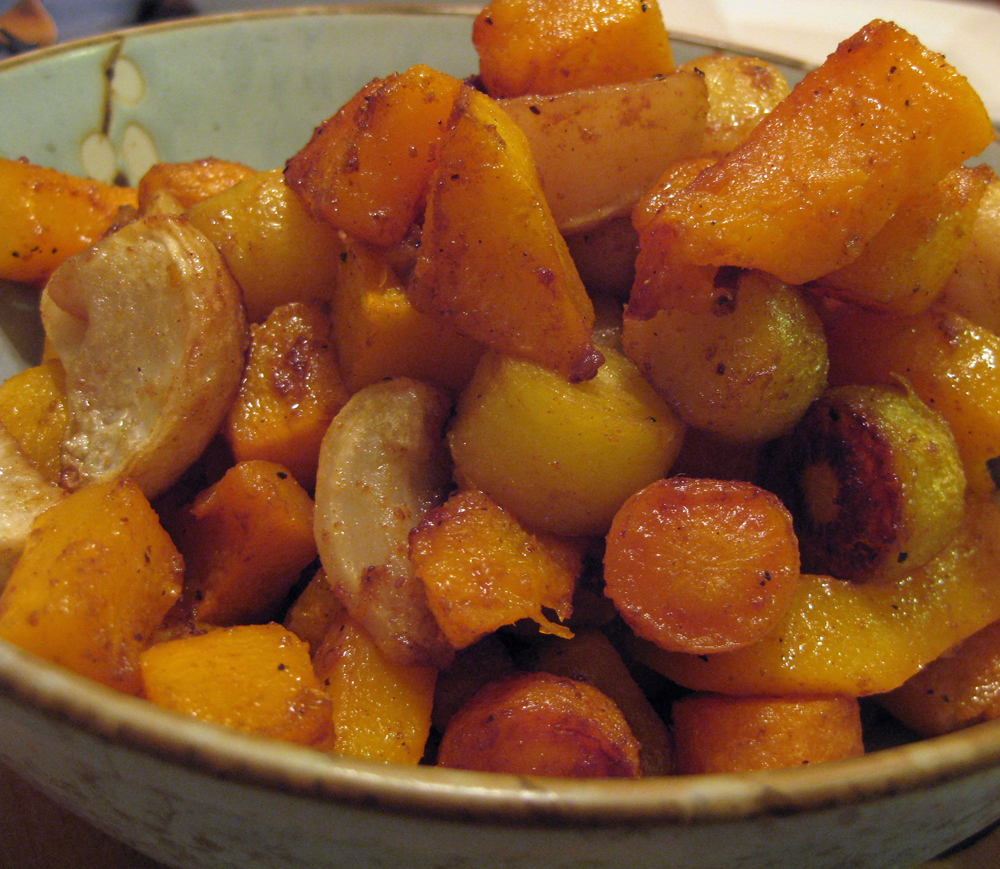
Carrots, butternut squash, and turnips with honey, garam masala, and curry powder.


Simple Roasted Vegetables

Hard vegetables such as; cauliflower, broccoli, sweet potatoes, russet potatoes, hard winter squashes, etc.
Olive oil*
Salt & pepper

Preheat the oven to 425 degrees. For easy clean up, line baking sheet(s) with aluminum foil. Large dice or break apart (broccoli and cauliflower) the vegetables. Place the veggies on the lined baking sheets and drizzle with olive oil (about 2 tablespoons per sheet). Roast in the oven for 20-30 minutes or until a good roasted color has developed. Rotate the pans and toss the vegetables half way through roasting. Once the vegetables are done, transfer into a bowl and add your optional ingredients. Enjoy!

Other optional ingredients: garlic, red pepper flakes, peanut butter, lemon juice, vinegar, capers, anchovies, or whatever your heart, and stomach, desires.

Some Good Combinations

Garlic, red pepper flakes, & peanut butter: Add mince garlic to a bowl with the red pepper flakes and ¼-1/2 cup peanut butter. Add 1-4 tablespoons hot water and stir until a smooth consistency develops. Pour over roasted vegetables and serve with rice or noodles.

Capers, anchovies & vinegar: After the vegetables have roasted. Add 1-2 tablespoons capers, 1 or 2 finely minced anchovies and a light drizzle of your favorite vinegar to the veggies. This is especially good with cauliflower.

Garam Masala, curry, & honey: Toss the veggies with ½ tablespoon (or more) of each spice and about 2 tablespoons honey, along with olive oil, and salt and pepper.

*Italian dressing: Substitute half the olive oil with a good quality Italian dressing before placing in the oven, or add the dressing to the roasted vegetables after they have roasted.

Hitting the Reset Button

Citrus pineapple juice--more nutritious and tastier than the carton.

Last summer we were inspired by the documentary Fat, Sick, and Nearly Dead.  The film tells the story of Joe Cross and his now-famous trek across the U.S. in a quest to loose weight and get healthy by drinking only fresh fruit and vegetable juices. Along his journey, Joe met a few people who joined him on his fasting crusade, and as the story goes, changed their lives for the better.

While the film, in the beginning, seemed destined to be more like an infomercial for Breville Juicers than a documentary, the message of change was more powerful, emotional, and humane than watching any episode of The Biggest Loser.

If you want true inspiration to change your eating habits and lose excess weight, or just want to be healthier, then you should watch Joe’s film. Then you should go out and get yourself a juicer. You’ll be glad you did it.

Our first fast only lasted three days. We did it a week before we were to run the first half of the SF Marathon, and even though we could have continued on a diet of juice and fresh fruits and vegetables after three days, we thought it best to break the fast and go back to our regular food choices – albeit with the addition of juicing. We needed calories from grains to keep us going as we trained and that meant eating solid foods.

Those three days really changed our lives. The first day was the hardest, as Joe describes in the film. Jason suffered from a horrible migraine headache that included vomiting (we know, not a pleasant topic for a food blog). He spent the first evening in bed. The next morning, however, after a refreshing fruit juice and some green tea, everything changed. Energy levels increased for both of us and by the end of the second day we saw noticeable changes in our skin tone. The puffiness around our eyes was gone, wrinkles seemed to be fading away, and a glow came into our complexions. This was only after day two. By the afternoon of our third day we felt incredible, and each of us had dropped three pounds. A pound of weight per day! We know. This sounds like an infomercial. But this was our experience and we’re serious about it.

We were also preparing for our trip to Spain and our interest in traveling Spain’s countryside eating and drinking just fruit and vegetable juices started to wear on our food traveling souls. After our trip, the holidays came at us with a vengeance. We held many of our temptations at bay this year and for the first holiday season in the history of our lives together, we finally came to understand what moderation really means.

Now, after all the candy and treats, booze and cocktails, processed food and many, many bags of potato chips, were tackling the New Year. We’ve hit the reset button on our diets—even though it is with a gentle hand and a few weeks late. We are eliminating alcohol from our lives for the next few months. We’re also taking a clue from former President Bill Clinton and fellow foodie Mark Bittman by working on becoming vegans – even if it’s just part time. And of course, there will be more juicing. We’re not setting goals or keeping a dietary journal of everything we consume. Our plan is to just be more conscience of what we put into our bodies and to pay attention to the effects it has on our lives. In a few months you’ll probably read about an incredible elk roast that we prepared from a long lost recipe, but that is all part of the balance of our lives. If you’re life is off balance watch Joe’s documentary. We hope it will inspire you just as it did us. The goal is to find your balance in life.

Pineapple Citrus Juice

Yield 5+ cups

½ pineapple – peeled
2 grapefruits –peeled
2 oranges – peeled
1 lemon – peeled
2 limes – unpeeled and organic

Put the items in your juicer as suggested by the manufacturer. The juice will keep in your fridge for up to 24 hours without loosing many nutrients. However, with all fresh juice, it is suggested that you consume right away to maintain maximum flavor and nutrition.

Note about organic: Whenever possible use local, organic fruits and vegetables for juicing, especially if the skin or the peel is part of the juice. If organic produce is not available in your area, remove the skin before juicing.

Another note about organic: We know that many people are skeptical about the merits of organic produce. In our opinion, even if there isn’t a significant difference between commercial produce and organic for our own consumption, there are problems with pesticide run-off affecting water quality.  Even more, farm workers are exposed to extremely unsafe levels of chemicals known to be carcinogenic and we eat cheap food at their expense. In other words, if you’re not going to think about your own quality of life, at least think about the choices you may have on the quality of the lives of others.