Preserved Lemons

It’s citrus season in the Bay Area and folks everywhere are harvesting their winter crops. Friends have gifted us bags of golden yellow Meyer lemons and we’re happy to accept. Meyer lemons are sweeter and more fragrant than their true lemon cousins. Their thin skins make them more delicate and their lower acidity makes for a more versatile flavoring agent. Raw or cooked, these beauties are a favorite in our kitchen.

A friend recently asked what to do with all the lemons on her tree and we suggested preserving. Typical of Mediterranean lemon preservation, we like salt packing lemons and their juice into jars where they are then left to ferment, transforming them into a savory condiment deliciously paired with a variety of dishes. They’re great chopped and added to fresh sauces for fish, or stewed with chicken, olives and fennel. Preserved lemons are commonly added to couscous and other grain dishes where they add rich complexity. However you use them, these lemons are best used as a condiment. That means a little will go a long way (remember, they’re preserved in salt and lemon juice). Taking a spin on the most obvious pun, “When life gives you a bag of Meyer lemons, preserve them.” They’ll last longer than lemonade and will flavor more dishes.

The following recipe comes from Chef Mourad Lahlou of Aziza in San Francisco who included it in his book – Mourad: New Moroccan. While the recipe is simple, preserved lemons aren’t a last-minute flavoring, so if you plan to add them to your pantry, you’ll have to wait a month before digging in. We think the wait is worth it!

As easy as cut, salt, juice, and pack.


Preserved Lemons

12-18 lemons (Meyer if you can get them)
½ cup kosher salt

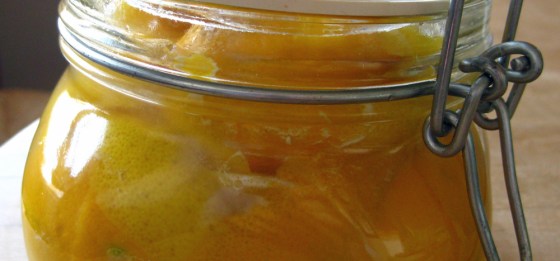
Slice the 6-8 lemons lengthwise and in a cross shape ¾ of the way through the lemon. Generously add the kosher salt down the center of the lemon and pack it in a sterile jar. Continue with all the lemons. With the lemons you intend to juice, be sure to remove strips of lemon zest (use a veggie peeler). Make sure not to remove too much of the pith. Add the strips of zest to the jar. Juice the zested lemons either by hand or with a citrus juicer. Pour the lemon juice over the salted lemons in the jar, make sure the lemons are fully covered by the juice, seal tight. Allow to sit in a dark area of your kitchen, gently shaking the jar daily. After about a month the lemons will be ready to use.

Roasted Veggies or Stop Feeding Your Kids Chicken Nuggets

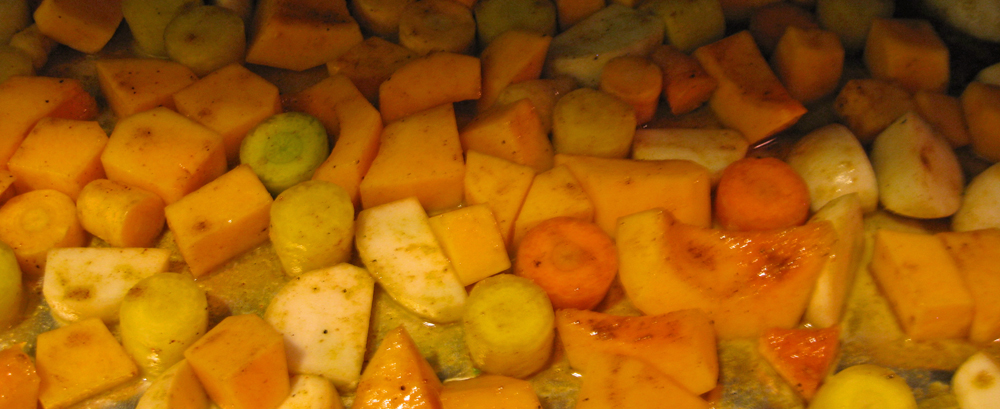
A mélange of veggies (carrots, turnips, and butternut squash) prepare for the heat.

The concept is simple; crank the oven up to a high temperature (around 425 degrees), take your favorite hard, non-leafy, vegetable and break apart or dice into large cubes (one inch?), line a baking sheet with foil and place the veggies on the sheet along with a good drizzle of olive oil, roast for 20-30 minutes or until a nice roasted color has developed, remove from the oven and toss the veggies with salt, pepper, and whatever else you think might be good from your fridge or pantry. What you have is a delicious side dish to serve to the pickiest vegetable eaters.

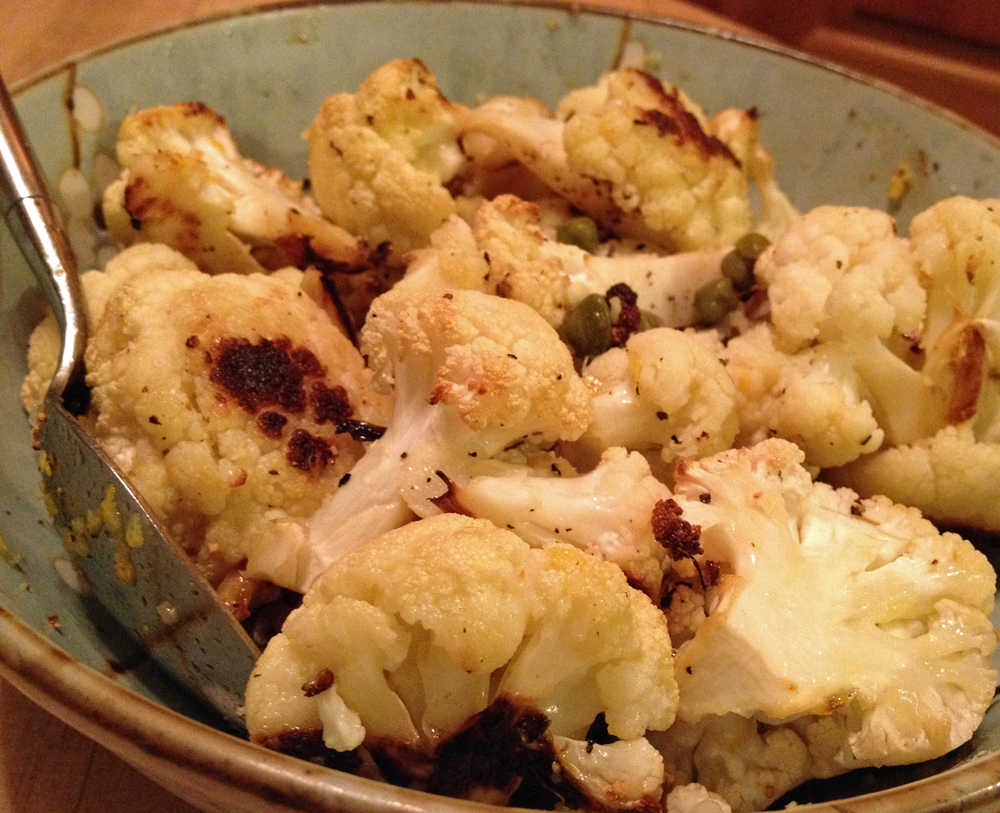
Don’t believe us about picky vegetable eaters? We took a couple of heads of cauliflower and roasted them for Steve’s parents over the holidays. Just a little salt and pepper added to the fresh-from-the-oven crucifers, and another drizzle of olive oil, was all it took for these two devout carnivores to enjoy a vegetable they normally don’t eat.

If you’re looking to get kids to eat their veggies, asked them to help out in the kitchen. After washing the cauliflower ask your little ones to break apart the cauliflower and place it on the baking sheet. Let them do the work. When kids feel like they’re a part of the cooking they’re more apt to eat what they’ve prepared.

A bowl of roasted cauliflower with capers, lemon zest and juice.

The roasting of the veggies brings out a deep rich flavor and sweetness that pan frying or blanching looses. Great veggies to try include broccoli, sweet potatoes, cabbage, Brussels sprouts, and, of course, the notorious russet potato. We use this technique with hard squash and beets in addition to the veggies already mentioned. An added benefit to cranking up the oven is the warming effect the ambient heat has in a small, freezing apartment.

The basic recipe idea is outlined in the first paragraph, but for those of you who need an actual recipe, well here it is. Roast as much or as little as you want. Just make sure that all vegetable pieces rest in a single layer and that you don’t over crowd the pans. The heat needs to hit as much of the surface of the vegetables as possible (caramelizes the veggies and makes for quick cooking time).

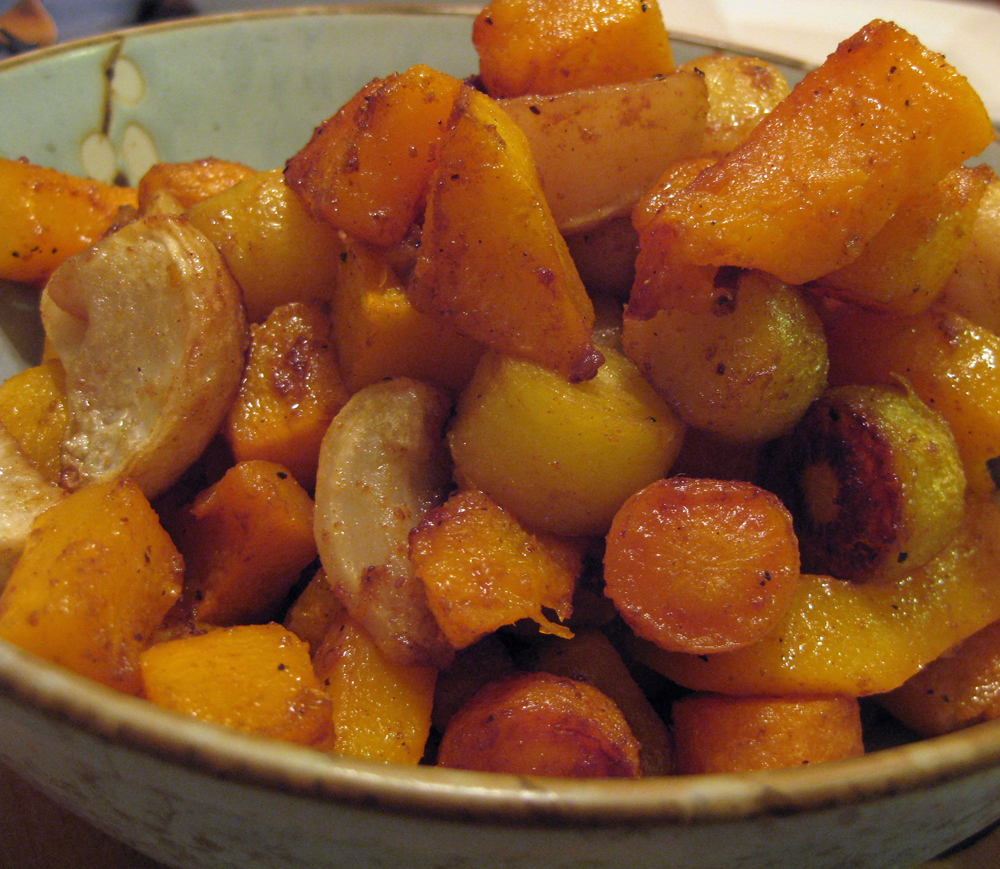
Carrots, butternut squash, and turnips with honey, garam masala, and curry powder.


Simple Roasted Vegetables

Hard vegetables such as; cauliflower, broccoli, sweet potatoes, russet potatoes, hard winter squashes, etc.
Olive oil*
Salt & pepper

Preheat the oven to 425 degrees. For easy clean up, line baking sheet(s) with aluminum foil. Large dice or break apart (broccoli and cauliflower) the vegetables. Place the veggies on the lined baking sheets and drizzle with olive oil (about 2 tablespoons per sheet). Roast in the oven for 20-30 minutes or until a good roasted color has developed. Rotate the pans and toss the vegetables half way through roasting. Once the vegetables are done, transfer into a bowl and add your optional ingredients. Enjoy!

Other optional ingredients: garlic, red pepper flakes, peanut butter, lemon juice, vinegar, capers, anchovies, or whatever your heart, and stomach, desires.

Some Good Combinations

Garlic, red pepper flakes, & peanut butter: Add mince garlic to a bowl with the red pepper flakes and ¼-1/2 cup peanut butter. Add 1-4 tablespoons hot water and stir until a smooth consistency develops. Pour over roasted vegetables and serve with rice or noodles.

Capers, anchovies & vinegar: After the vegetables have roasted. Add 1-2 tablespoons capers, 1 or 2 finely minced anchovies and a light drizzle of your favorite vinegar to the veggies. This is especially good with cauliflower.

Garam Masala, curry, & honey: Toss the veggies with ½ tablespoon (or more) of each spice and about 2 tablespoons honey, along with olive oil, and salt and pepper.

*Italian dressing: Substitute half the olive oil with a good quality Italian dressing before placing in the oven, or add the dressing to the roasted vegetables after they have roasted.