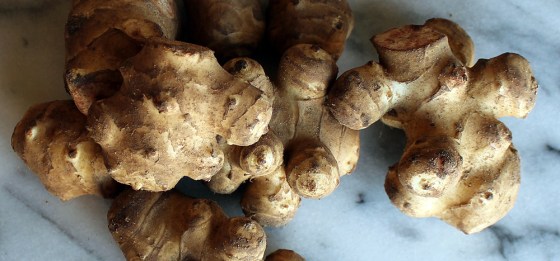
Jerusalem Artichoke: Jerusalem Artichoke Chips w/ Rosemary Salt

The Mariquita Farms “Mystery Boxes” (actually, they’re really big bags) we buy twice a month are always filled with beautiful, in-season veggies in an extraordinary variety. The fun of the mystery is that you really don’t know what you’re going to get before you show up to grab the bag off the back of the farm’s delivery truck. And from time to time, we get something that we’ve never considered buying but have always been curious to try.

Such was the case with a recent bag that included a lot of Jerusalem Artichokes. We’ve seen them around. They’re knobby little tubers that look sort of like ginger root or galangal, have the texture of apple or Jíca

ma when raw and make for a delicious puree when boiled like a potato. Cooked, they have an earthier, sweeter flavor than potato, which is to say you get more of the mineral flavor of the soil they’re grown in. They aren’t a starchy veggie, so you don’t get the same fluffy, dry mouth feel you get from potato. Instead, they’re a bit waxy when cooked through. Eaten raw, they’re crisp and a little sweet thanks to their high fructose content. They’re delicious as an addition to your dinner salad.

Nobody knows how the plant got its name. This member of the sunflower family (hence the alternative name ‘sunchoke’ or ‘sun choke’) isn’t an artichoke, and it doesn’t come from the Middle East (it’s a North American native species). Aboriginal North Americans were cultivating and eating it when the first Europeans landed on our shores. It made its way to Europe in the early 1600’s and was quickly adopted on the continent. That’s about all we know about its earliest culinary uses. The bulbs are loaded with potassium and iron and they’re low carb/low glycemic diet-friendly thanks to their high inulin content.

We adapted a bon appétit recipe for Fried Sunchoke Chips with Rosemary Salt by toasting thin slices of Jerusalem Artichoke in the oven on an oiled sheet pan before sprinkling them with the herbaceous salt. We recommend getting them as thin as possible so that they dry as they brown. Our first go at oven roasting produced a softer chip because of the thickness of the slices, but they were sweet and delici

ous all the same.

This slideshow requires JavaScript.

Oven Roasted Jerusalem Artichoke Chips sprinkled with Rosemary Salt

1 lemon

1 tablespoon kosher salt

1 tablespoon finely chopped fresh rosemary

1 pound Jerusalem artichokes

3 tablespoons olive oil

Preheat the oven to 350 degrees and line two baking sheets with aluminum foil. Mix the salt and rosemary together in a small bowl, set aside. Cut the lemon in half and squeeze one half of it in a bowl filled with fresh water. Scrub the Jerusalem artichokes until very clean; place them in the bowl of acidulated water. Thinly slice each tuber, about 1/8 to 1/16 inch thick, or as thin as possible. Empty the water from the bowl and dry. Add the sliced tubers to the bowl and squeeze the other half of lemon over the top. Add the olive oil and toss to coat. Evenly place the slices on the baking sheets in one layer, do not over lap. Lightly sprinkle the rosemary salt over the slices and place in the oven. Bake for 15 minutes; then pull the pans out of the oven and begin to remove the browned and crispy ones from the pan. Rotate the pans and place them back in the over for 3-5 minutes. Continue to check the tuber slices and remove the crispier ones and place the lighter colored ones back in the oven. This will take up to 30-40 minutes. Consolidate the slices to one pan when there is room available. Sprinkle more rosemary salt over the top. Serve warm or at room temperature.

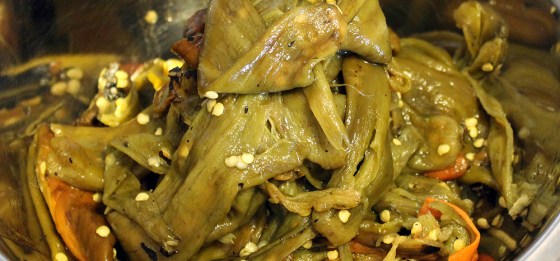
New Mexico Green Chili: Green Chili and Wild Antelope Pozole

Our dear friend, and artist extraordinaire, Zannah Noe, gifted us a giant bag of frozen, roasted New Mexico green chilies, a souvenir of her 2012 Albuquerque painting stint. After sampling Zannah’s version of pozole during one of her early returns to SF, we were excited to have our own chilies on hand for a host of chili-accented dishes.

New Mexico green chilies are quintessential southwest food. Native chilies have been cultivated in the region for nearly 6,000 years. They’re full of vitamins – including tons of vitamin C – and the capsaicin (the stuff that makes them hot) has a number of medicinal uses. In fact, the evidence of capsaicin’s healthfulness is overwhelming and those who avoid hot chilies because of “stomach issues” do so to their detriment.  The capsaicin in chili peppers seems to have a protective effect on the stomach lining and may reduce the risk of heart disease and diabetes. Contrary to popular misconceptions, peppers do not cause stomach ulcers. In fact, the chemicals in green chili aid in the prevention of diverticulitis, a nasty inflammation of the intestinal tract. Folks who suffer from heartburn often blame recently consumed peppers for the upset, but the real causes of an over acidic stomach have nothing to do with “spicy foods” and far more to do with poor diet. The bottom line: hot peppers are good for the stomach!

We finally busted out our frozen bag of flavor-packed peppers for this truly western stew. Pozole has an ancient, pre-Columbian origin and early versions of the dish were eaten ritualistically by early Americans; shared by entire communities, after sacrifices to the gods. In this version, we substitute traditional pork with wild antelope for a more flavorful, leaner stew. The pressure cooker makes quick work of rehydrating the hominy and tenderizing the wild meat. Served with warm corn tortillas, diced fresh radishes and cilantro, a bowl of green chili pozole is the perfect mid-winter warmer.

References

New Mexico Chili Association

The Chili Pepper Institute – New Mexico State University

Food as MedicineDharma Singh Khalsa, M.D.

This slideshow requires JavaScript.

Recipe

Green Chili and Antelope Pozole

1 cup dried hominy, or 2 cans cooked hominy, drained
1 1/2 pounds antelope stew meat, or other venison (pork or beef can be substituted), cut into one inch pieces
2 – 3 tablespoons olive oil
1 large onion, diced
2 teaspoons dried oregano
2 teaspoons dried cumin powder
1 bottle beer
4-6 cups chicken broth, water, or a mixture of both
1/2 – 1 cup, or more, pureed roasted New Mexico green chilies or canned chilies*
salt and pepper

Toppings:

queso fresco
diced avocado
sliced radishes
lime wedges
chopped cabbage
chopped cilantro

Special Equipment: pressure cooker

If using dried hominy; place the dried hominy on a baking sheet and search, picking out any small stones or other items. Rinse the hominy in a colander then place it in the pressure cooker. Cover with water at least three inches above the hominy and add 1 tablespoon salt, cover and heat over medium high until the water comes to a boil. Place the lid on the pressure cooker and cook for 30 minutes. Release the pressure using the cold water method. Remove the lid and check the hominy for doneness. If more time is needed cook in 10-minute intervals until the hominy is chewy but still firm. Do not over cook it at this point. The hominy will need to cook a little longer with the meat. Once the hominy is cooked, drain the liquid and set the hominy aside.

Dry the inside of the pressure cooker before continuing. Place the pressure cooker over medium heat and add olive oil. When the oil is shimmering, add pieces of the antelope to the pan. Do not over crowd the pan or the meat will steam instead of brown. Cook the antelope until well browned on each side, 3-5 minutes, remove from the pan and place on a plate, set aside. Continue to cook all the meat. Once all the meat is cooked and removed from the pan add more olive oil, if needed, and the diced onion. Cook for 4-6 minutes until translucent, scraping the pan often to avoid burning. Return the meat to the pan and add the oregano, cumin and other spices. Using a micro-planer, grate the garlic over the meat and onion. Cook for 20 seconds then add the bottle of beer, scraping up the brown bits.

Return the hominy to the pan and add the chicken stock, or water, making sure you have enough to cover the meat and hominy by about 2 inches. Add the pureed green chili, starting with 1/2 cup than add more if desired, 1/4 to 1/2 cup at a time, up to 1 1/2 cups. Season with salt and pepper. Bring the broth to a boil then cover with the lid. Cook at low pressure for 20-30 minutes. Cool using the cold water method and check the meat for tenderness. If needed, cook the stew in 10 minute intervals until the meat is tender. The meat will tenderize if allowed to be cooked the day before and then reheated or cooked earlier in the day and allowed to rest before reheating and serving.

Serve with crumbled queso fresco, chopped avocado, slices of radishes, chopped cabbage, chopped cilantro, and wedges of lime to squeeze over the top.

*Some farmer’s markets sell roasted peppers or chilies. If you have one in your area, these fresh roasted chilies are much better than the canned varieties. However, in a pinch, you can always use the canned ones. Also, all chilies are not created equal. Some have more heat then others. Use caution when adding them to your pozole.