
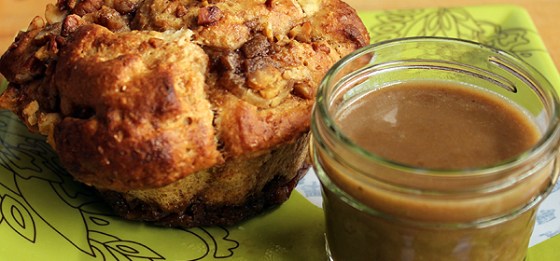
Monkey See, Monkey Bread

The first time I tasted Monkey Bread it was a disappointment. The pastry itself was very good, but when I heard the name “Monkey Bread,” I expected, well, monkeys, or at the very least some bananas or other tropical flavors. I’ve tasted a lot of versions over the years, some good, some not so good, and they’ve all featured the same cinnamon caramel flavors. No banana. No coconut. No monkeys. Monkey bread ought to have a little monkey in it, right? Goddamnit!*

Monkey Bread is a mid-century American classic of no definitive origin. It is typically made of sweet, yeasted bread dough balls that have been dipped in butter and rolled in sugar or coated with caramel. They’re piled on top of one another in a cake or bundt pan and served warm so that they easily pull apart. No wonder the name leaves us scratching our heads.

We’ve decided the time has come to monkey around with the recipe. By adding both fresh and dried banana, plenty of coconut (sugar, oil and cream), and a hearty kick of booze (in lieu of the monkeys), we’ve given a well-worn staple a tropical upgrade. The Graham flour isn’t necessary, but it does add a nice bite to the bread, and after all the sugar and booze it’s nice to know there’s a bit of nutrition in the bread.

This is a great breakfast or brunch treat that can be assembled ahead of time and baked just before serving.

This slideshow requires JavaScript.

Banana Coconut Monkey Bread with Graham Flour

1/3 cup coconut milk
1 1/2 teaspoons dry active yeast
3 eggs
1 cup plus 1 cup all-purpose flour
1/4 cup ground dehydrated banana chips
1/4 cup coconut sugar
1 tablespoons sea salt
1 cup graham flour
3 tablespoons unsalted butter, softened
3 tablespoon coconut oil (solid form not above 77 degrees)
Nonstick cooking spray, for bowl
Coconut & Maple Butterscotch (see recipe below)
1 1/2 ripe bananas, pureed until smooth
1 cup dried banana chips, broken up
1 cup chopped pecans (walnuts, pistachios, and cashews are also good)
1/4 cup bourbon (or other booze such as Grand Marnier, Scotch, or Rum)

DIRECTIONS

In a small saucepan, heat milk until just warmed through. Transfer to a large bowl and add yeast; stir to combine. Let stand 1 minute until yeast is dissolved. Add 1 egg and whisk to combine. Add 1/2 cups flour and mix until well combined. Sprinkle remaining 1/2 cup flour over top of mixture; cover with plastic wrap and let dough stand in a warm place until doubled in volume, about 1 hour.

Transfer dough to the bowl of an electric mixer fitted with the dough hook attachment. Add remaining 2 eggs, powdered banana, coconut sugar, remaining all purpose and graham flours, and salt. Mix until dough forms a ball, adding more all purpose flour if necessary. Increase speed to medium and mix for about 5 minutes. Reduce speed to low and add butter and coconut oil; mix until fully incorporated.

Lightly coat a large bowl with nonstick cooking spray and transfer dough to prepared bowl. Cover with plastic wrap and let stand in a warm place until doubled in volume, 1 to 2 hours. Punch dough down and cover again with plastic wrap. Transfer to refrigerator until ready to use, up to 1 week.

In a large bowl, mix together 1 cup butterscotch and pureed bananas. Lightly coat 5 1-cup ovenproof dishes or ramekins with cooking spray; set dishes on a large rimmed baking sheet. Place one tablespoon butterscotch in the bottom of each baking dish. Sprinkle some of the soaked banana chips and nuts over the butterscotch; set aside.

Divide dough into 6 equal pieces (about 6-ounces each). Working with 1 piece at a time, roll into a 6-inch-long rope using your hands. Cut rope into 8 equal pieces, add pieces to bowl with butterscotch mixture and toss to coat. Transfer dough pieces to a prepared baking dish; repeat process with remaining pieces of dough. Sprinkle each baking dish filled with dough with more banana chips, nuts, and a drizzle more of the banana butterscotch. Cover baking dishes with plastic wrap and let stand in a warm place until spongy, about 1 hour. (Can also be frozen at this point. To bake remove from freezer the night before and place in a warm area overnight before continuing.)

Preheat oven to 350 degrees.

Brush tops of dough with more butterscotch mixture. Transfer to oven and bake, rotating halfway through baking, until golden and firm to the touch, about 30 minutes. Serve immediately with remaining butterscotch, for dipping.

Coconut Maple Butterscotch

1/4 cup coconut sugar
1/4 cup maple syrup
2 tablespoons unsalted butter
1 cup coconut cream
1/2 teaspoons sea salt
1 1/2 teaspoons pure vanilla extract
3/4 cups Stout beer

In a large, heavy-bottomed saucepan, melt both sugars and butter over medium heat. Bring to a gentle boil and gradually add the coconut cream about 1/3 cup at a time.

Continue cooking at a gentle boil for 15-20 minutes or until it thickens enough to coat the back of a spoon. Add salt and vanilla; stir to combine. Add stout and stir to combine. Bring to a boil and cook for 30 seconds. Remove from heat and let cool. Continue to stir occasionally as it cools to keep from separating.

* No little monkeys were harmed in the making of this sweet doughy treat!

Baking a Birthday Cake

I’m not a baker, so things were likely to go awry when the non-baker decided to bake a birthday cake for the baker’s birthday. To make matters more interesting, Jason’s response to my question “what kind of cake would you like,” was a funny “the Queen’s 90th birthday cake.” Ha! But he seriously wanted a three tier purple and orange cake and that is what he got.

From the get-go, I doomed my effort to the panic of a last-minute frenzy by getting a very late start. I didn’t appreciate how much time it takes to bake and decorate a cake. Cooking shows make it look like it can be done in minutes, maybe an hour or so, but certainly no longer than two. But there I was, birthday afternoon, with dinner reservations looming and a growing pile of buttery dishes in the sink.

There were ample opportunities to seek the wise counsel of the birthday boy baker. He suggested early on that I make small cakes. I ignored him. Having stretched a recipe to include a larger-than-called-for cake pan, my cake tiers were thin. The cake itself turned out well. The crumb is tender, but dense and rich. I had to halve them horizontally to add a filling and so, with a smile and lots of patience, Jason jumped in to demonstrate how to cut a cake round into layers using a long serrated knife and a cake decorating stand. He really is a master at this stuff!

With the cakes halved, we brushed the cut sides with Grand Marnier and spread apricot jam or fig butter on alternating base layers of each cake round. Then came a layer of frosting followed by the top layer of cake. Frosting is magic! We increased the amount to give a bit of height to the thin layers. What I didn’t expect is just how difficult it is to get the hang of applying frosting to the outside edges of round cakes using an offset spatula.

We made the frosting and decorated the cake in just under two hours. To make our dinner reservations on time, we quickly showered while the frosting was whipping away.  It felt like we were competing on The Great British Bake-Off, and our reward was a night out at Bon Marché. We were both pleasantly smiling and having fun, but I secretly think we were both doubting our ability to finish on time and get to the restaurant.

My advice to the first time cake baker: start a day ahead and listen to your husband. If you can follow a recipe, you can bake a delicious cake. But unless you’ve done this a hundred times, the chemistry, the textures and temperatures, the timing of it all – none of this is necessarily intuitive. Not to the novice. Be patient and take your time.

This slideshow requires JavaScript.

A Queen’s Birthday Cake
The Whiteout Cake from Baked Bakery
Yield: 1 (10-inch; 8-inch; 6-inch) thin layer cake or 1 (8-inch) cake

For the white cake layers

2 1/2 cups of cake flour
3/4 cup all-purpose flour
1 tablespoon baking powder
1 teaspoon baking soda
3/4 teaspoon salt
1/2 cup (1 stick) unsalted butter, softened
1/2 cup vegetable shortening
1 3/4 cups sugar
1 tablespoon pure vanilla extract
1 large egg
1 1/2 cups ice cold water
3 large egg whites, at room temperature
1/4 teaspoon cream of tartar

For the white chocolate frosting (this recipes was increased by 1/2 to ensure proper cake frosting coverage)

9 ounces white chocolate, coarsely chopped
2 1/4 cups sugar
1/2 cup all-purpose flour
2 1/4 cups milk
1/2 cup heavy cream
2 1/4 cups (4 1/2 sticks) unsalted butter, soft but cool, cut into small pieces
1 1/2 teaspoon pure orange extract
food coloring (optional)

Make the White Cake Layers

Preheat the over the 325 degrees F. Butter cake pans, line the bottoms with parchment paper, and butter the parchment. Dust with flour, and knock out the excess flour.

Sift the flours, baking powder, baking soda, and salt together in a large bowl. Set aside.

In the bowl of an electric mixer fitted with the paddle attachment, beat the butter and shortening on medium speed until creamy, 3 to 4 minutes. Add the sugar and vanilla and beat on medium speed until fluffy, about 3 minutes. Scrape down the bowl, add the egg, and beat until just combined. Turn the mixer to low. Add the flour mixture, alternating with the ice water, in three separate additions, beginning and ending with the flour mixture. Scrape down the bowl, then mix on low speed for a few more seconds.

In a medium bowl, whisk the egg whites and cream of tartar until soft peaks form. Do not overbeat. Gently fold the egg whites into the batter.

Divide the batter among the prepared pans and smooth the tops. Bake for 30 to 45 minutes, rotating the pans halfway through the baking time, until a toothpick inserted in the centre of the cake comes out clean (smaller cake pans will require less time [cupcakes will take about 20-25 minutes]). Transfer the cakes to a wire rack and let cool for 20 minutes. Invert the cakes onto the rack, remove the pans, and let cool completely. Remove the parchment.

Making the White Chocolate Frosting

Using either a double boiler or a microwave oven, melt the white chocolate and set it aside to cool, but not too cool that it solidifies.

In a medium heavy-bottom saucepan, whisk the sugar and flour together. Add the milk and cream to cook over medium heat, whisking occasionally, until the mixture comes to a boil and has thickened, about 20 minutes.

Transfer the mixture to the bowl of an electric mixer fitted with the paddle attachment. Beat on medium high speed until cool. Reduce the speed to low and add the butter; mix until thoroughly incorporated. Increase the speed to medium-high and beat until the frosting is light and fluffy.

Add the orange and vanilla extract and white chocolate and continue mixing until combined. If the frosting is too soft, put the bowl in the refrigerator to chill slightly, then beat again until it is the proper consistency. If the frosting is too firm, set the bowl over a pot of simmering water and beat with a wooden spoon until it is the proper consistency.

Crumb Coating the Cake

Refrigerate the frosting for a few minutes, if necessary (but no more), until it can hold its shape.

Sprinkle the cake stand with a little sugar. Place the 10 inch cake layer on the stand and using a serrated knife, cut the cake through the middle, horizontally, making two equally thick layers. Spread a thin layer of apricot preserves or fig butter on the bottom, then add about 3/4 cup of the frosting, spreading it over the cake layer evenly. Add the top layer and evenly spread about 1 1/4 cups of the frosting on top. Transfer the layer to a large plate and refrigerate for at least 15 minutes.

Repeat the crumb coat frosting step for the next two cake layers.

Assembling the Cake

Divide the remaining frosting among three bowls in proportion with the cakes. The bowl with the least amount of frosting will be colored light orange (or whatever color you desire). Do the same with the other two bowls of frosting (light purple and a little darker purple in our case).

Transfer the largest layer of the cake back to the cake decorating stand. Frost the bottom cake layer with the frosting from the fullest bowl. Add the frosting to the top of the cake first and, using an off-set spatula, move the cake decorating stand as needed, frost the top of the cake pushing the frosting over the sides. Next, positioning the spatula at 90 degrees next to the cake sides, turn the stand and frost the sides of the cake until all sides are covered. Transfer the layer to a display cake plate/stand and refrigerate.

Repeat the above steps for the next two layers. Transferring the finished layers to the bottom tier of the cake. Clean-up any flaws with more frosting as needed. Garnish with sprinkles, nonpareils, ribbon, or anything your heart desires. Refrigerate for 15 minutes to firm up the finished cake.

This cake will keep beautifully in a cake saver at room temperature (cool and humidity free) for up to 3 days. If your room is not cool, place in a cake saver and refrigerate for up to 3 days. Remove the cake from the refrigerator and let sit at room temperature for at least 2 hours before serving.