
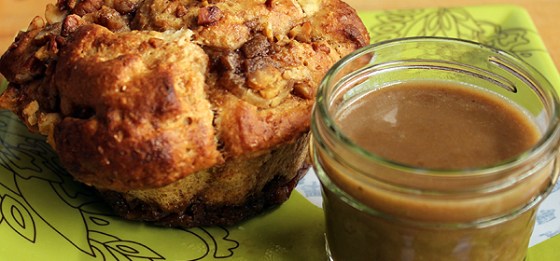
The first time I tasted Monkey Bread it was a disappointment. The pastry itself was very good, but when I heard the name “Monkey Bread,” I expected, well, monkeys, or at the very least some bananas or other tropical flavors. I’ve tasted a lot of versions over the years, some good, some not so good, and they’ve all featured the same cinnamon caramel flavors. No banana. No coconut. No monkeys. Monkey bread ought to have a little monkey in it, right? Goddamnit!*
Monkey Bread is a mid-century American classic of no definitive origin. It is typically made of sweet, yeasted bread dough balls that have been dipped in butter and rolled in sugar or coated with caramel. They’re piled on top of one another in a cake or bundt pan and served warm so that they easily pull apart. No wonder the name leaves us scratching our heads.
We’ve decided the time has come to monkey around with the recipe. By adding both fresh and dried banana, plenty of coconut (sugar, oil and cream), and a hearty kick of booze (in lieu of the monkeys), we’ve given a well-worn staple a tropical upgrade. The Graham flour isn’t necessary, but it does add a nice bite to the bread, and after all the sugar and booze it’s nice to know there’s a bit of nutrition in the bread.
This is a great breakfast or brunch treat that can be assembled ahead of time and baked just before serving.
Banana Coconut Monkey Bread with Graham Flour
1/3 cup coconut milk
1 1/2 teaspoons dry active yeast
3 eggs
1 cup plus 1 cup all-purpose flour
1/4 cup ground dehydrated banana chips
1/4 cup coconut sugar
1 tablespoons sea salt
1 cup graham flour
3 tablespoons unsalted butter, softened
3 tablespoon coconut oil (solid form not above 77 degrees)
Nonstick cooking spray, for bowl
Coconut & Maple Butterscotch (see recipe below)
1 1/2 ripe bananas, pureed until smooth
1 cup dried banana chips, broken up
1 cup chopped pecans (walnuts, pistachios, and cashews are also good)
1/4 cup bourbon (or other booze such as Grand Marnier, Scotch, or Rum)
DIRECTIONS
In a small saucepan, heat milk until just warmed through. Transfer to a large bowl and add yeast; stir to combine. Let stand 1 minute until yeast is dissolved. Add 1 egg and whisk to combine. Add 1/2 cups flour and mix until well combined. Sprinkle remaining 1/2 cup flour over top of mixture; cover with plastic wrap and let dough stand in a warm place until doubled in volume, about 1 hour.
Transfer dough to the bowl of an electric mixer fitted with the dough hook attachment. Add remaining 2 eggs, powdered banana, coconut sugar, remaining all purpose and graham flours, and salt. Mix until dough forms a ball, adding more all purpose flour if necessary. Increase speed to medium and mix for about 5 minutes. Reduce speed to low and add butter and coconut oil; mix until fully incorporated.
Lightly coat a large bowl with nonstick cooking spray and transfer dough to prepared bowl. Cover with plastic wrap and let stand in a warm place until doubled in volume, 1 to 2 hours. Punch dough down and cover again with plastic wrap. Transfer to refrigerator until ready to use, up to 1 week.
In a large bowl, mix together 1 cup butterscotch and pureed bananas. Lightly coat 5 1-cup ovenproof dishes or ramekins with cooking spray; set dishes on a large rimmed baking sheet. Place one tablespoon butterscotch in the bottom of each baking dish. Sprinkle some of the soaked banana chips and nuts over the butterscotch; set aside.
Divide dough into 6 equal pieces (about 6-ounces each). Working with 1 piece at a time, roll into a 6-inch-long rope using your hands. Cut rope into 8 equal pieces, add pieces to bowl with butterscotch mixture and toss to coat. Transfer dough pieces to a prepared baking dish; repeat process with remaining pieces of dough. Sprinkle each baking dish filled with dough with more banana chips, nuts, and a drizzle more of the banana butterscotch. Cover baking dishes with plastic wrap and let stand in a warm place until spongy, about 1 hour. (Can also be frozen at this point. To bake remove from freezer the night before and place in a warm area overnight before continuing.)
Preheat oven to 350 degrees.
Brush tops of dough with more butterscotch mixture. Transfer to oven and bake, rotating halfway through baking, until golden and firm to the touch, about 30 minutes. Serve immediately with remaining butterscotch, for dipping.
Coconut Maple Butterscotch
1/4 cup coconut sugar
1/4 cup maple syrup
2 tablespoons unsalted butter
1 cup coconut cream
1/2 teaspoons sea salt
1 1/2 teaspoons pure vanilla extract
3/4 cups Stout beer
In a large, heavy-bottomed saucepan, melt both sugars and butter over medium heat. Bring to a gentle boil and gradually add the coconut cream about 1/3 cup at a time.
Continue cooking at a gentle boil for 15-20 minutes or until it thickens enough to coat the back of a spoon. Add salt and vanilla; stir to combine. Add stout and stir to combine. Bring to a boil and cook for 30 seconds. Remove from heat and let cool. Continue to stir occasionally as it cools to keep from separating.
* No little monkeys were harmed in the making of this sweet doughy treat!


 (y)our food choices™