
Salt
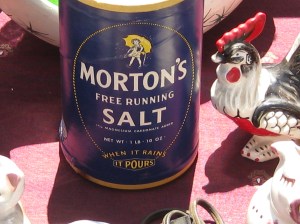
A Classic!
I grew up with the Morton Salt Company – “When it rains it pours.” There was just one salt in our kitchen and it came from a navy blue canister. I didn’t pay much attention to salt. I sort of knew how to use it, though I remember being counseled against over consumption – high blood pressure and all that. I had no idea then, of course, that salt is so important to our survival – it helps our bodies regulate fluid balance, it actually helps regulate blood pressure, and it assists in food absorption in the intestinal tract.
Like so many foods, salt is now terribly misunderstood. Our ancestors could not have imagined a day when salt would be vilified as a public health menace. Salt preserves and cleanses and is essential for so many forms of food preparation and preservation. Of course, we now consume far too much salt if processed foods are our principal source of sustenance. But, if what we cook at home begins as fresh whole unprocessed food, we’ll need to add a little salt – for great taste and for your good health.
The myriad uses for culinary salts grows more creative by the season. And why not? Salt boosts flavor and the larger crystals add satisfying texture to just about everything they touch. Big crunchy crystals of natural sea salt are a perfect compliment to ripe summer tomatoes or grilled steak. We get the big gray crystals we keep in our pantry from the San Francisco Herb Company. They’re amazing and the company’s prices make buying in bulk an easy investment. The gray salt in our cupboard adorns vine ripened heirloom tomatoes at breakfast whenever possible. Our orange Hawaiian sea salt provides color contrast to the white of a sliced boiled egg in one of our ad hoc nicoise salads. But more than all the others, the snowy white sea salt we buy in bulk from Rainbow Grocery waits next to the stove in its salt box for the next meal. It has to be refilled often.
The universe of salt manufacturers is vast. We like the idea of salt made by traditional methods and only very modestly processed, if processed at all. With all that is available online, serious home cooks have no reason to go without interesting salts. But if the local supermarket is your only choice, you should understand what you’re looking at on the store shelf. You can learn just about everything you’ll ever need to know from the Salt Institute – a non-profit salt industry trade association. Note the member company list to gain an understanding of the Institute’s perspective.
– Steve


 (y)our food choices™