
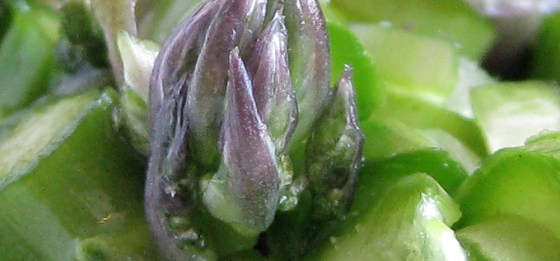
Spring is truly sprung when those miraculous shoots of asparagus push their way up and out into the fresh air. Imported organic asparagus is available year round, but we try to eat the local stuff instead, when it’s available, and then move on to whatever comes into season next. Asparagus is full of vitamins (especially K), minerals, dietary fiber and protein. Like most veggies, it’s great both raw and cooked. We eat lots of it at this time of year when it’s at its most tender.
More often than not, we roast it whole on foil-lined baking sheets, tossed in olive oil and sprinkled with a little sea salt. Asparagus tastes like nothing else, so however you enjoy it, you really taste it. A random search for asparagus recipes drummed up over 41 million hits, reminding us that people have been eating it for thousands of years. It seems to love cheese and cream and butter, but then again, don’t we all. It’s confusingly infamous for not pairing well with wine, but we haven’t found that to be true. A bottle of your favorite Pinot Grigio, Sauvignon Blanc or sparkling wine is a nice accompaniment to this spring veggie.
As veggie prep goes, asparagus is a breeze to clean, but stems that have grown “woody” need to be peeled before cooking. If you cook asparagus for a blended soup, you may need to strain the stubborn fibers after pureeing. Most blenders just aren’t up to the task of breaking them down.
The asparagus pizza recipe that follows was inspired by a delicious, seasonal pizza on the menu at The Plant Organic Café on the Embarcadero at Pier 3. Our tasty iteration is nothing like it, but the beautiful spring asparagus on both reminded us of why we miss the season when it’s over.
Roasted Asparagus, Arugula Pesto, and Feta Cheese Pizza
1/2 pizza recipe (see recipe below for pizza made with coconut flour or click here for our traditional pizza recipe)
1/4 – 1/3 arugula pesto (or homemade basil pesto, or gasp…store bought 😉 )
1 bunch pencil thin asparagus, trimmed and cut into half
2-3 ounces feta cheese, crumbled
2 eggs
Optional items: raw walnuts, red pepper flakes, thinly sliced lemons,
Preheat the oven to 500 degrees. After shaping the pizza on a baking sheet, spread the pesto over the pizza dough. Decoratively place the asparagus spears over the top, then add the crumbled feta cheese. Place in the oven for 3-4 minutes. Take the pizza out of the oven and crack the two eggs on top of the pizza on each side, place it back in the oven for another 7-8 minutes.
For runny eggs, you’ll want to prebake the pizza for a longer time 4-5 minutes then add the cracked eggs and finish baking for an additional 6-7 minutes.
For hard yolks, you can place the eggs on top of the pizza before you place it in the oven and bake for the full 10 minutes, or so.
Pizza Dough made with Coconut flour
Makes 2 pizzas
2 cups (10 ounces) all-purpose flour
1/2 cup (2 ounces) coconut flour
1 teaspoon rapid rise yeast
2 teaspoons salt
1 – 1 1/4 cup water
3 tablespoons + 1 tablespoon olive oil
Food Processor Method:
Add the flours, yeast, salt in the bowl of a food processor, pulse to combine. With the processor running, add 1 cup water and 3 tablespoons olive oil through the feed tube.
Process the dough for 30 seconds to 1 minute. The dough should come together as a ball. If the dough is too dry add 1 tablespoon of water at a time through the feed tube. The dough should be slightly sticky to the touch, and may look slightly textured and not completely smooth (this is due to the coconut flour).
Form the dough into a ball and place in bowl with the additional tablespoon of olive oil. Turn the dough to coat it in oil and cover the bowl with a damp kitchen towel, or plastic wrap. Let the dough rise until doubled in volume 2-3 hours, or less, depending on the warmth of your kitchen.
When ready, divide the dough in two and proceed to form the pizza. At this point you can stretch the dough with your hands or roll the dough out on a floured surface. If the dough becomes too tight and does not stretch, cover with a lightly damped towel, or plastic wrap and let it sit for up to 10 minutes to relax before trying to shape it. This dough is great for a thin crusted pizza. The thinner you can get the it without tearing, the crispier it becomes.
Bake the pizza in a preheated 500 degree oven with your favorite toppings for 10-15 minutes. Don’t overload the pizza with a lot of toppings and cheese, a little goes a long way.
Stand Mixer:
In a stand mixer with a dough hook, mix the yeast with the flours and salt. Add the water, 1 cup to start, and olive oil and mix on medium speed for about five to seven minutes. If the dough is too dry add a little more water, a tablespoon at a time. If too wet, add a little flour, again a tablespoon at a time. Once the dough comes together, coat the dough with the additional tablespoon of olive oil, and cover the bowl with a damp towel and let rise until doubled.
When ready, divide the dough in two and proceed to form the pizza. At this point you can stretch the dough with your hands or roll the dough out on a floured surface. If the dough becomes too tight and does not stretch, cover with a lightly damped towel, or plastic wrap and let it sit for up to 10 minutes to relax before trying to shape the dough.
By Hand:
In a large bowl, add the flours, salt, and yeast, mix with a wooden spoon. Add 1 cup of water and 3 tablespoons olive oil, mix until will combined. On a floured surface, turn out the dough and knead by hand for 5-10 minutes or until the dough is smooth and comes together in a ball. Form the dough into a ball and place in bowl with the additional tablespoon of olive oil. Turn the dough to coat in oil and cover the bowl with a damp kitchen towel, or plastic wrap, allow to rise until doubled, 2-3 hours.
When ready, divide the dough in two and proceed to form the pizza. At this point you can stretch the dough with your hands or roll the dough out on a floured surface. If the dough becomes too tight and does not stretch, cover with a lightly damped towel, or plastic wrap and let it sit for up to 10 minutes to relax before trying to shape the dough.


 (y)our food choices™