Mustard Greens

Eat your green veggies.

Steve’s first taste of cooked greens came in the late-‘80s. They were prepared in a modest home somewhere in central Florida (Tampa? Ruskin?) and they were amazing. It would be years after those first tastes before he rediscovered collard and mustard greens. Our diets improved dramatically when we moved to San Francisco in the mid‘90s in part because we started including fresh, bold greens into our grocery routine thanks to all the ease of access created by the purveyors in our neighborhood. And unlike the way greens are cooked in the South, long and slow, when you cook them the California way, they’re a quick sauté, spending time on heat just long enough to become a little tender while still chewy.

Mustard greens are sharp with their peppery, spicy and slightly bitter flavors – perfect with olive oil, garlic and chili pepper flakes. These greens are real “super food” that delivers impressive quantities of vitamins and minerals in a single serving. They’re delicious added to hearty soups and clear broth noodle soups. They can be baked in gratins or shredded and added to stir fry. We like them pan cooked in hot olive oil. They retain their bite and their herbaceousness when cooked quickly at high heat until just wilted.

Pan wilted greens make a perfect side to rich meat dishes. The astringent greens cut nicely through the sweet puree adorning the roast as well as the cheesy polenta that we served with it.

Sauted Greens

1 bunch mustard greens, kale, or chard
2 tablespoons olive oil
1 large garlic clove
pinch of red pepper flakes
salt and pepper

Wash the leaves and remove the stems. The stems can be used in the sauté, or frozen for another use, or composted. If using the stems, cut into small pieces and sauté for 5 minutes before proceeding.

Roll the leaves together and cut into 1” ribbons. Heat the olive oil in a sauté pan. Smash the garlic and cut into large pieces (at the stems at this point if you’re using them, add to the hot oil, cook for 1-2 minutes or until fragrant, along with the red pepper flakes if using and cook for 10 seconds then add the greens. Season with salt and pepper. Cook for 5 minutes, turning with tongs. Add a little water, about 2-3 tablespoons, to the pan along with the greens to avoid burning the garlic. Cover the pan with a lid and cook for another 5 minutes. Check the pan often and add more water if necessary to make sure the pan doesn’t dry out. Check the salt and pepper and re-season if necessary.

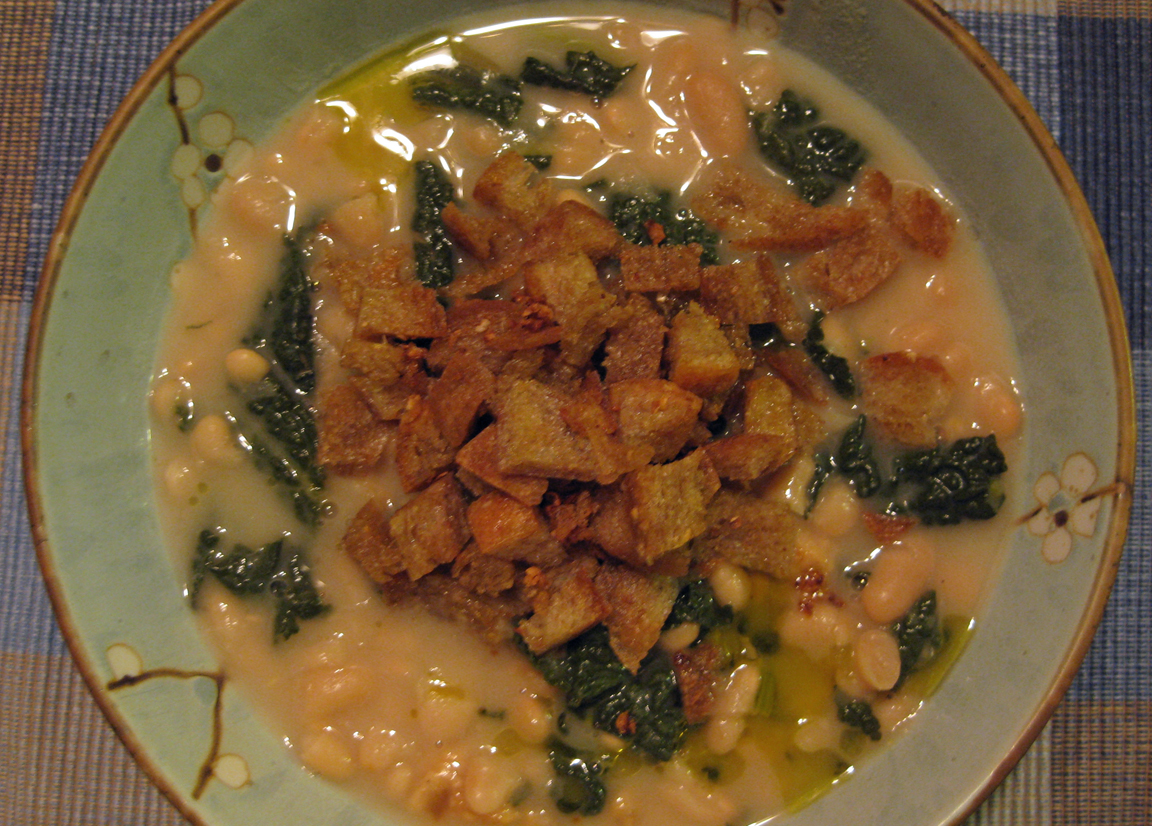
Cheese Rind Soup

Parmesan Cheese Rind Soup

Let’s assume that if you’re reading our blog you’re a foodie, right? Which means that you don’t have a can of Kraft Parmesan cheese in the refrigerator and that you most likely have a wedge of Grana Padano, or another type of parmesan cheese, that you use on a regular basis. And if you don’t know the difference it’s time that you do a bit of homework on the world of cheeses and visit your nearest cheese shop, or at least go online and do some research. Cheese should never come in a can, and don’t get us started on Cheeze Whiz. If you have a can of that crap in your fridge you have some serious food hang-ups and there’s probably nothing we can do to help you. So stop reading and just leave, just kidding. But seriously, get up from your computer and get rid of that can of Cheeze Whiz now.

We purchase Grana Padano from Costco, and while it is a large wedge it also lasts us for months. The best way we have found to store it is in a plastic bag (we are looking for an alternative, but as of today, it’s the best solution), within a plastic box (again, looking for an alternative) in the fridge. The plastic box has become our cheese drawer. It allows moisture to remain at a minimum while also keeping the cheeses fresh, and since Grana Padano is in the hard cheese category you’ll want minimal moisture. We use the cheese with anything from pastas, soups, breads, sandwiches, and anything that parmesan cheese is used for you can use Grana Padano. It has a nutty, sharp flavor that intensifies any dish.

When we get down to the rinds, something most people would just throw away, we freeze them and use them for soup stock. The flavor is so intense and wonderful and the soup is so rich that all you need is a small cup to be satisfied, although you’ll be tempted to eat a large bowl. The cost of the soup is also so economical that it literally costs less than a can of Campbell’s soup to make. If you have a pressure cooker it will take very little time to create. If you don’t have one you can use canned beans or soak dried beans overnight but it will take a lot more time, and the flavors won’t be the same.

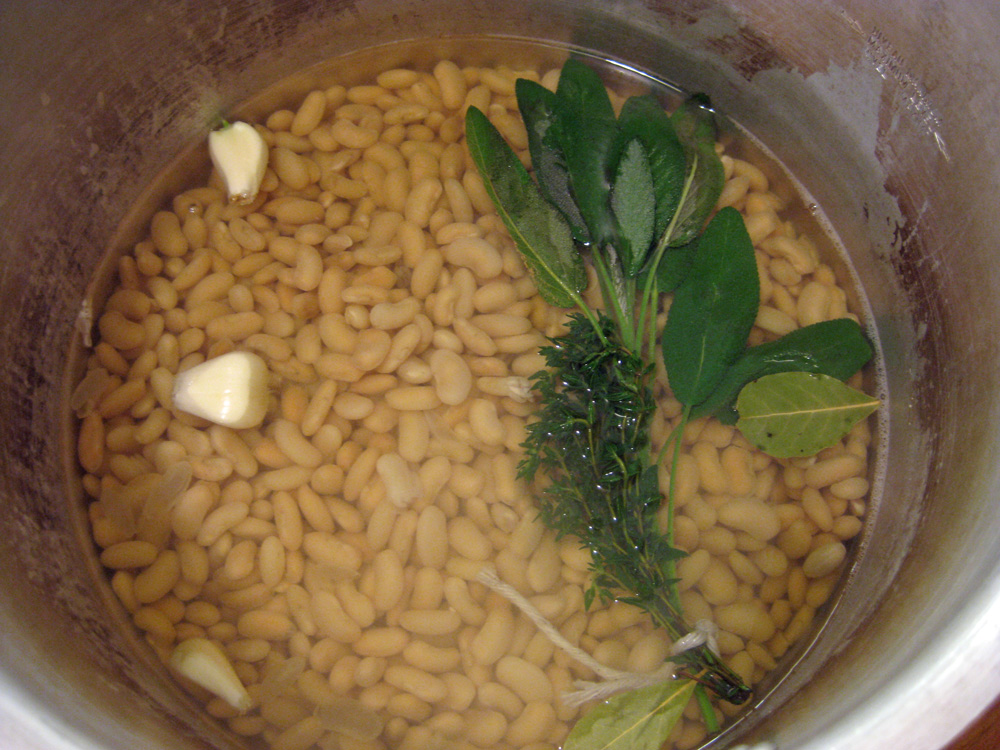
Beans and Herbs in the pot

Cheese Rind Soup Recipe

2 cups dried Navy beans (picked over for small stones)

2 bay leaves

Sage & Thyme bundle

2-3 garlic cloves

½ – 1 pound Grana Padano cheese rinds (or other hard cheese rinds)

1 pound Kale, Chard, Spinach, or other leafy greens

Add the dried navy beans, garlic, bay leaves, sage and thyme to the pressure cooker, with about six cups water. Bring to a boil and cook for about 12-15 minutes. The beans will not be fully cooked. Reduce pressure and add the cheese rinds. Bring back to a boil and pressure cook for another 10-15 minutes. Reduce pressure again and remove the cheese rinds. The rinds will be hot so take caution when removing. Chop the rinds into small pieces and add them back to the soup. Add the greens and bring to boil and then pressure cook again for about 5-7 minutes. The cheese should mostly be melted but there may be small pieces. Add salt and pepper to taste. The cheese will already add a lot of salt so take caution not to add too much. Make sure to stir after each reduction of the pressure to assure that the cheese does not stick to the bottom of the pot and burn.

Serve with a drizzle of good quality extra-virgin olive oil. You can also add croutons or serve with crackers. For a spicy kick add your favorite Tabasco or hot sauce.