Best Cup of Coffee, Ever!

A pinch of salt (and our well seasoned filter) make the best coffee, ever!

There’s no need to go out and purchase a fancy machine to make a great cup of coffee. There’s also no need to go out and buy a specific type of coffee, or for that matter, to buy whole beans and grind them seconds before brewing your coffee. Let’s face it, there are hundreds of different types of coffee out on the market and everyone likes something different.

We got over our coffee snobbery a long time ago. For us, it’s about what we think tastes good, costs the least amount of money, takes the least amount of time, and takes up as little counter space as possible. For those reasons we buy our beans in bulk at Costco, grind them at the store, fill a Mason jar with coffee and store it in the cabinet. The rest of the coffee goes into the freezer.

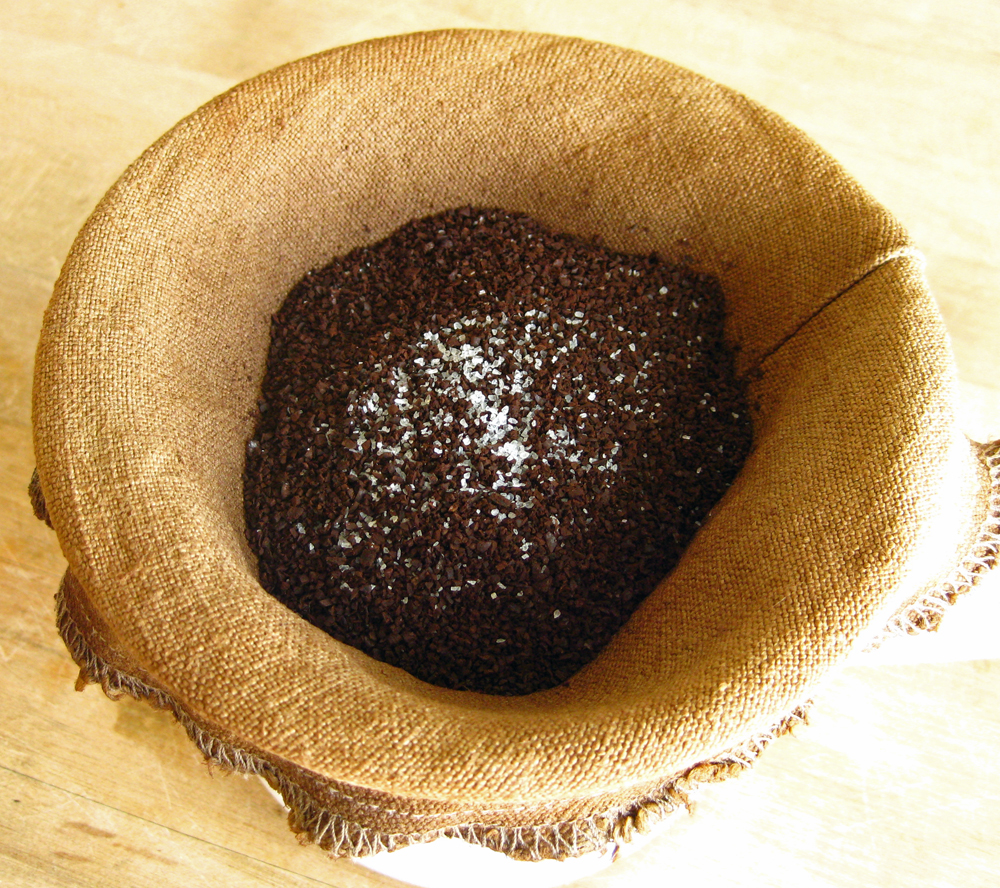
We say, drink what you like, but to make a good cup of coffee even better, here’s a tip we think you should try: add a pinch of salt. That’s right, salt. Just a small amount is all you need to bring out the flavor of the coffee, less than an eighth of a teaspoon per pot. What does the salt do? As in cooking, salt brings out the flavors of the coffee. It makes the coffee less bitter and mellows the notes. We read about it in Cook’s Illustrated, so it must be true. We’ve been hooked since the first try.

How do we make our coffee? First off, we like the pour over method and we use a reusable hemp coffee filter (it’s kind of like a cast iron skillet, it just gets better with age). We decided we don’t need a stovetop kettle – we’ve ruined a few in our lives – so we just heat the water in a pan. Quick, easy and simple!
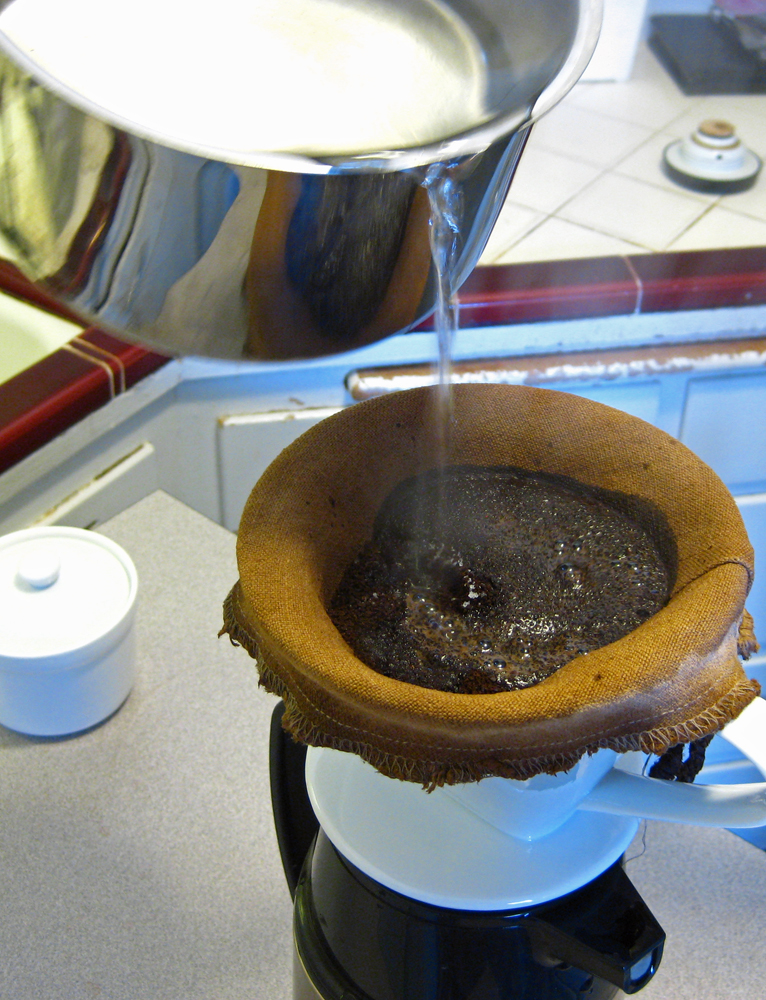
Move over french press and make room for the pour over method.

We can see it now, the so-called “coffee aficionados”*, screaming at their screens telling us how insane we are. “How dare you title this blog post, ‘Best Cup of Coffee, Ever!” “Never freeze your coffee!” “Always get your beans fresh from a local source.” “Always grind seconds before brewing.” “Use a French Press!” “Starbucks** isn’t real coffee.” Blah, blah, blah. To the CAs, we say go ahead and spend a month’s worth of rent for that allegedly perfect cup of coffee. For the rest of us, just a little pinch of salt will do.

For all those coffee drinkers who like to add milk and sugar to their coffee, but are trying to cut out the sugar, here’s another little tip: heat the milk first before adding it to your coffee. Heating the milk breaks down lactose and converts it to glucose (simple sugar) so the coffee tastes sweeter without any added sugar. You don’t need to buy an expensive espresso machine to steam the milk. A small saucepan on the stovetop will work just fine.

*Air quotes are being used for sarcastic purposes.

**We know there was no mention of Starbucks before, but many “coffee aficionados” look down on SB. We both happen to like SB and are grateful when we find one while traveling. Although, the McCafe in Madrid was nicer than SB. Just saying.

Chicken Involtini Part III: Wild Mushroom & Whisky

Wow! Has it really been a year since our Chicken Involtini experiment? We did so well getting the first two recipes up, Chicken Involtini Part I (Apple & Bacon) & Part II (Collards, Feta & Bacon), our most popular blog posts to date, thanks to Foodpress and WordPress. One would think that with the fame and popularity of the earlier posts, we would be blogging about stuffed chicken on a daily basis, at the very least the much promised involtini part III would have gone up right away. Alas, other food obsessions stole our attention and Steve waited and waited to get his version of involtini written up and then time got away from him. We figure since we’re growing mushrooms and our last post was all about that experiment, now might be a good time to revisit this unusual preparation for chicken and mushrooms. It’s also our 150th blog post – a major accomplishment even if it has taken us 3 years to reach this goal.

Butterflying the chicken breast.

The idea here was to produce a boneless, skinless breast that was flavorful and moist. Seasoning bland chicken breast is rarely an issue for the home cook. The challenge is cooking the meat through without drying it out. Most of us fail most of the time.

We took a slow poach approach to this one, simmering the stuffed breast in a broth seasoned with mushroom, rosemary and whisky. The woodsy flavors of dry mushroom, resinous rosemary and smoky whisky made for an interesting dish. While the technique looks to be a bit fussy, it wasn’t at all difficult. You just need to take the time to rehydrate the dry wild mushrooms. Everything else comes together quickly.

Poached Chicken Involtini w/ Wild Mushroom Stuffing

1 package dry Santini mixed wild mushrooms (25g)

Poaching Liquid:
4 cups water
2 cups veggie broth
6-8 fresh button or Crimini mushrooms, sliced
1/8 cup Johnny Walker Black Label, Scotch Whisky
1 sprig fresh rosemary
2 bay leaves
Salt to taste

The poaching liquid

2 large skinless, boneless chicken breasts
1 oz parma cheese, shredded
¼ cup dry bread crumbs
1 small shallot, minced
1 tablespoon fresh rosemary, chopped
olive oil
Salt & pepper

Place dry mushrooms in a medium bowl. Pour two cups boiling water over the dry mushrooms. Set aside to rehydrate, about 10 minutes. Note: the strained water will be added to the poaching liquid.

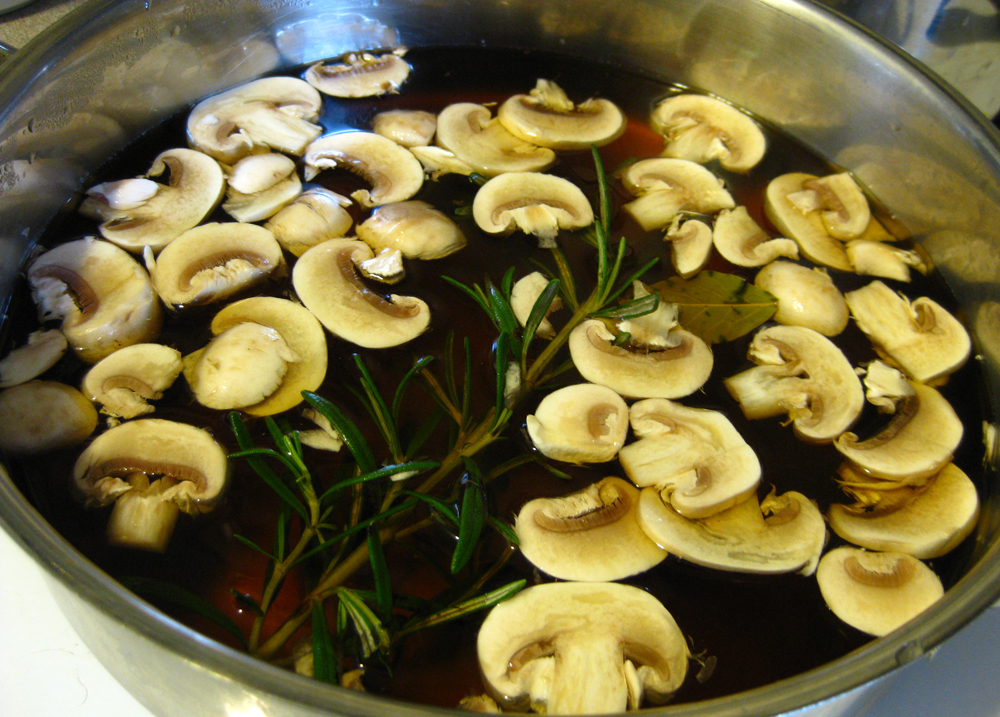
In a large saucepan over high heat add the water, veggie broth, and whisky, along with the sprig of rosemary, sliced mushrooms, and bay leaves. Bring to a boil and simmer for 5 minutes. Season the broth with salt to taste. Keep the broth at a low simmer while preparing the chicken breasts.

Whiskey; the secret ingredient.

Preparing the chicken:

Carefully butterfly the chicken breasts by cutting through the center of each as if you were opening a book. Do not cut all the way through. Open the breast and place between two sheets of plastic. Using the flat end of a meat tenderizer or the flat bottom of a small sauté pan, gently, but firmly, pound the chicken breast between the plastic making sure to pull the mallet away from the center toward the edges of the cutlet. Pound each breast until about ¼ to 1/8 inch thick. Season the inner part of the breast with salt and pepper.

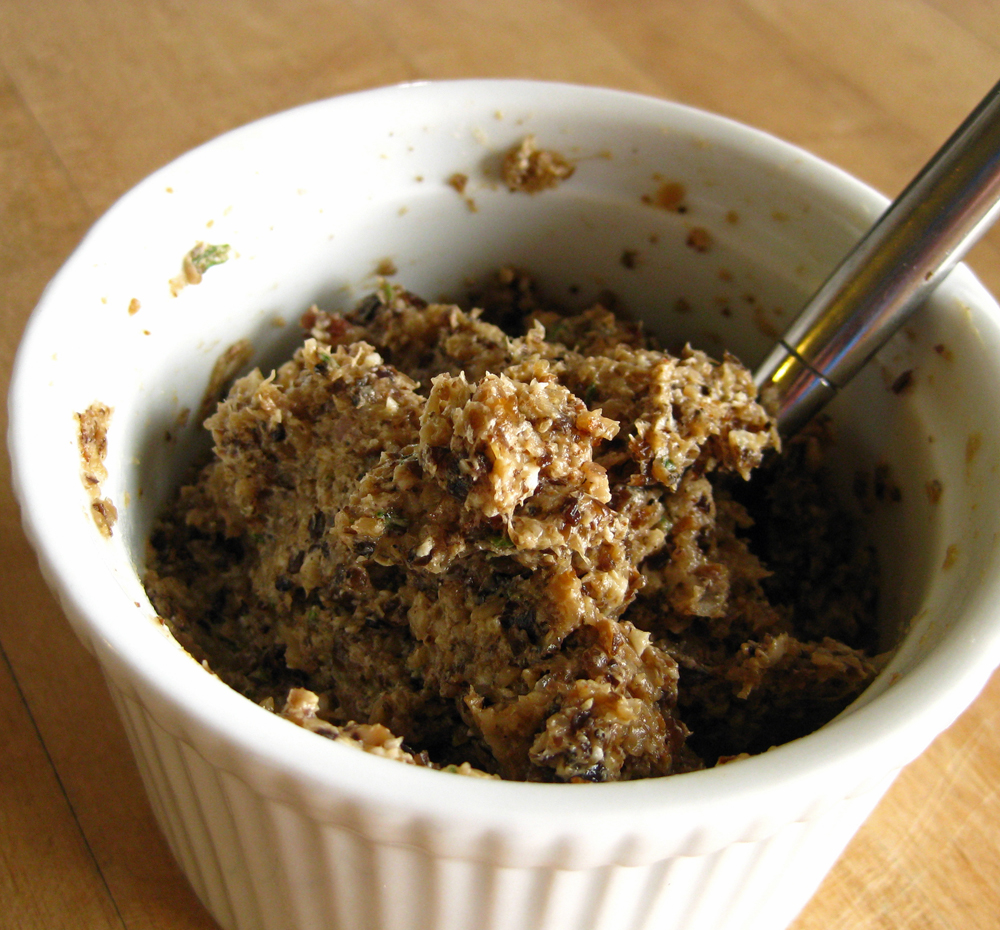
Mushroom filling.

Preparing the mushroom stuffing:

Drain rehydrated wild mushrooms, adding the liquid to the poaching broth (do not add the grit at the bottom of the bowl). In the bowl of a food processor, add the rehydrated mushrooms, cheese, shallot, breadcrumbs, rosemary, olive oil, and salt and pepper. Pulse until finely chopped, being careful not to over process. The stuffing can become gummy if ground to a paste.

Spread the mushroom stuffing mixture over one side of flattened chicken breast and roll, being careful not to let the stuffing fall out of the ends of the roll. Place rolled chicken breast on a double layer of cheesecloth and wrap tightly. Tie ends off with kitchen twine.

Lower chicken breasts into the poaching liquid until fully submersed. Simmer involtini until fully cooked, about 25 minutes or until the internal temperature reaches 160 degrees Fahrenheit. Do not boil. The breasts should cook slowly in the poaching liquid.

Remove involtini and allow them to rest for 10 minutes. Remove cheesecloth and slice into 1 inch thick slices. Serve with a large dollop of mashed potatoes and a couple of tablespoons of the poaching liquid.

For an Asian inspired soup; substitute the salt in the poaching liquid with soy sauce. Prepare a package of soba noodles as directed splitting the portion between bowls. Add a couple of handfuls of baby spinach and ladle the poaching broth into the bowl. Place slices of involtini in the bowls and top with chopped scallions or chives.