Thanksgiving Feasts

Thank you, Susan and Dan!

Forget about the hormone injected turkey and the Stovetop stuffing. I don’t need the boxed mashed potatoes, canned green bean casserole with fried onion rings, or the gooey sweet potatoes topped with multi-colored marshmallows. And please do not serve another jell-o salad with canned diced pineapple and cottage cheese.  I don’t like it and I don’t want to eat it again. This is the same menu my family has been making every year for Thanksgiving since I was a child and even before. And I’m sure I’m not the only one in America who had to eat the exact same menu every forth Thursday in November. It’s not that I don’t like these things when they’re made from scratch, but when the definition of scratch means opening up cans of one thing and dumping it into a casserole dish with a packet of this and another can of that–I find it just plain wrong. The food the pilgrims ate did not come from cans, packets, and boxes, so why do Americans believe that by eating this processed food we are honoring the American settlers?

I’m sure I have already offended over half of my family for my blatant dislike for this so-called food. And if the choice is to eat processed food just to visit with family or not go home for Thanksgiving, I would choose to visit with family and eat what is available without a word of disrespect, but why does there have to be a choice? Why not choose to prepare items from their most natural state possible first before grabbing the can opener, or the box? Is it really that much harder to peel some potatoes, put them in a pot of boiling water until tender, drain them and then mash all together with butter, milk, salt & pepper?

I know that we are all busy this year and times are tough all around. We want to save time to be with our family, but also save some money. This Thanksgiving, I propose instead of going for the conveyance of the box, we learn to think outside of it. Only shop the perimeter of the grocery store, leaving the middle lanes alone, and if possible just the vegetable section. Selecting an organic Turkey and making the stuffing using bread from a bakery makes for a fine first step.  Try sautéing some Brussels sprouts in brown butter and serving both sweet potatoes and russet potatoes mashed separately. No need to add tons of brown sugar and a bag of mini marshmallow to make the sweet tubers edible. And, let’s forget about the jell-o salad altogether. Why not a nice radicchio and apple salad with a warm apple cider vinaigrette, topped with bleu cheese and candied walnuts? To me that just sounds closer to what our ancestors ate, and probably was (minus the bleu cheese).

Apple Radicchio Salad w/ Prosciutto and Pine Nuts

What ever your Thanksgiving menu will be there’s one thing that even I agree should come out of a can. No, it’s not cranberries. Anyone who buys the canned cranberries and prefers them to fresh needs to have their head examined. It takes a whole five minutes to throw a bag of fresh cranberries into a pan with a little sugar, or honey, some cinnamon, a little citrus peel and some water. Crank up the heat until it bubbles, cook for 5 minutes and then let cool. That’s it. I’m a fan of canned pumpkin. I’m all for picking up a sugar pumpkin and roasting it, but if you’ve already made everything else from scratch, give yourself a break. The crust, however, should not come from the freezer section of a supermarket. If you haven’t made a crust before now is the best time to learn. Martha Stewart has videos and recipes galore for any training you may need. During the holidays your family members are going to appreciate the effort even more, so give it a try. Not only will you be amazed by how wonderful everything tastes, you’ll also appreciate that the food you’re eating is healthier for you, and that should give you another reason to be thankful.

Happy Thanksgiving!

Jason

Wild Pheasant

“But over all … [wild fowl], the pheasant takes precedence; yet few are the mortals who know how to extract perfection from the bird.” – Brillat-Savarin

We rarely think to buy “exotic” varieties of meat from the market. Our freezer is full of grass fed beef and a few odd packages of wild meat from Idaho – elk, deer, trout and pheasant. We even had a couple of packages of wild moose steaks at one point a number of years ago, compliments of Steve’s Uncle Tom. We shared them with friends while on a camping trip. But these are not things we would typically buy from the market. We live, like most people, on staples like beef, pork and chicken and think of wild meat as a rare treat.

Farm raised “wild” animals taste different because their feed is controlled and their flesh is nurtured to appeal to domesticated tastes. Truly wild animals taste of the things they forage on to survive and their free roaming nature means the muscle will be stronger, leaner and full of rich, complex flavor.

Cooking wild game requires much greater care than the average farm raised animal because its flesh is very lean and quick to toughen on heat. Elk and deer steaks, for example, must be cooked at very high heat for just a moment and then quickly taken off the heat to rest for a few minutes. It’s only edible in very rare form.

Pheasant 5

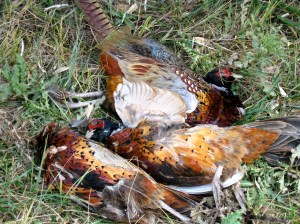
Wild Ringneck Pheasants

I suspect the Sara’s Ranch Baby Pheasant on offer at Big 4 is a might more tender than the wild roosters we shoot in southern Idaho. The gamey birds in our freezer were “harvested” the old fashioned way – with a shotgun and a bird dog – on the edge of Blackfoot, Idaho. We dressed them quickly and froze them for the trip to California where they went right into the freezer.

Tradition calls for leaving the birds to “age” until they begin to decompose, allegedly sweetening in the process. We’re not that adventurous and I wouldn’t recommend aging poultry at home. Few of us have enough experience with meat to know when to stop the aging process before the whole thing spoils. But given our experience with tough wild bird meat, I can see the wisdom in letting time break down muscle fiber to soften the meat for eating.

Alas, we’ve settled on long, slow cooking methods to get the most out of the wild pheasant we have on hand. The results don’t come close to the “perfection” Brillat-Savarin describes in his elaborate recitation of a complex roasted pheasant dish worthy of a king. But our take on slow cooked meat sauces here makes for a tasty pheasant ragù, perfect for dressing big pappardelle noodles and accompanied by a nice bottle of wine (Pinot Noir, Sauvignon Blanc or a dry French rose).

Mighty Hunter 2

Steve and Jack w/ Pheasants

Not all of us are hunters. We’re lucky in San Francisco to have access to a bounty of exquisite and unusual meats. Our butcher shops sit in neighborhoods filled with thankful foodies who understand the differences between industrialized meat production practices and the thoughtful, ethical ranching practices of local farmers. The better specialty retailers will have plenty of unusual things to try and if they don’t have what you’re looking for, most have solid relationships with good suppliers who can get whatever you’re looking for quickly.

Of course, farm raised anything is going to cost you plenty (we aren’t going to talk about how much it cost for Steve to buy a non-resident hunting license in Idaho, ahem!). But since most folks no longer hunt game birds, farmed pheasant is worth tracking down. These San Francisco purveyors should be able to source farm raised pheasants for the curious home cook: Drewes Bros. in Noe Valley, Bryan’s Quality Meats in Laurel Heights, Avedano’s Holly Park Market in Bernal Heights, Golden Gate Meat Company and Prather Ranch in the Ferry Building and Guerra Quality Meats in the Sunset. Each offers terrific access to quality meat products at premium prices. You might check MacFarlane Pheasants out if you’re looking for a large, national supplier.

This is our take on a wild pheasant sugo. Making sauce from these birds seems the best way to cook the meat long enough to make it tender. We didn’t, but you might try sprinkling toasted walnuts over the plated dish. A little fresh lemon zest on top wouldn’t hurt either. We have another batch cooked and waiting in the freezer for our own future experimentation.

Wild Pheasant Sugo

2 pheasants, completely de-boned, cut into half-inch pieces*

4 slices thick bacon, diced

1 large onion, coarsely chopped

1 large stalk of celery, coarsely chopped

1 large carrot, coarsely chopped

Bouquet garni of fresh thyme, parsley and bay leaves

1/4 cup dry vermouth

2 tablespoons extra virgin olive oil

Water

Salt and pepper to season

*Note: the “drumstick” of the pheasant is particularly sinewy. The older the bird, the harder the tendons. The hardest, sharpest pieces won’t soften no matter how long you cook the meat. The tendons are almost bone-like and should be trimmed or removed before cooking.

Start by heating a heavy 12″ skillet over medium high heat and add bacon. Cook bacon until crisp, 10 – 12 minutes, and remove from the pan to dry on paper towels. Pour off all but a couple of tablespoons of the rendered bacon fat and return the pan to the heat.

Add pheasant meat and brown on all sides, approximately 5 minutes. Remove the meat from the pan and set it aside. Return pan to the heat and add olive oil.

Add diced onion, celery and carrot and saute on medium low until they’ve soften and begun to caramelize, approximately 15 minutes. Return meat to the pan with the vegetables and deglaze the pan with the vermouth, scraping up any brown bits. Add enough water to cover the meat and add the bouquet garni. Finally, add salt and pepper to taste, but be careful you don’t over salt the braising liquid. It will grow saltier as it reduces. Cover and bring to a simmer.

The pan should stay on heat at a low simmer for at least an hour and a half. The pan will want to go dry from time to time so be sure to add water as necessary until the meat is falling apart and the sauce has become fairly thick. You can always thin it later with pasta water to suit your taste. Be sure to remove the bouquet garni before serving or storing the sauce.

Toss sauce with pappardelle and finish with grated Parmigiano-Reggiano cheese, a sprinkle of red pepper flakes, fresh ground black pepper and a drizzle of extra virgin olive oil!

Cheers, Steve & Jason