Black Japonica® Rice

Black Japonica Rice

We’ve already shared a few stories of my infatuation with novel foods. Every time I see a veggie or fruit at the farmer’s market I haven’t seen or tasted, I can’t rest until I get my hands on whatever it is. That was true of last summer’s French plums and the creamy lavender and white eggplant we found at Capay’s Sunday market stand. So, when I saw this beautiful black rice in the bulk bins at Rainbow Grocery, I knew I had to have some of it.

Lundberg Family Farms grows this gorgeous blend of black and mahogany rice grains. They describe the rice’s flavors as “nutty, mushroom-like … energized with an exotic sweet spiciness.” I don’t know about the exotic or the spicy, but this whole grain brown rice has a warm nutty flavor that works well in soup or as the main attraction in rice salads. If you visit the farm’s website, you’ll find a number of simple recipes for rice sides, mains and salads. As for me, I’m content with plain, lightly salted rice. Having a container of cooked rice on hand in the fridge makes for easy improvisations later.

According to their website, the family owned and operated farm adheres to sustainable farming practices that go beyond complying with organic farming standards. Of course, I worry that any rice production in California is out of place given the state’s precarious water resource management challenges. But Lundberg has made a serious commitment to land stewardship. On balance, we’re likely better served by supporting local farmers who care about the air, land and water we all depend on instead of importing organics from out-of-state.

This dark and beautiful rice is picture perfect. Simply cooked, it stands on its own. But I had to come up with a recipe to inspire me to use it and the dish I came up with didn’t disappoint, but I should let you be the judge. I’ve incorporated a few of my favorite flavors and another “exotic” ingredient – burdock root– to produce an earthy, complexly flavored rice dish that balances sweet and savory with just a bit of spicy heat.

Black Japonica Rice Salad

Black Japonica Rice Salad with Orange Segments

1 cup Japonica rice

1 burdock root (gobo root), peeled and chopped, about 2 cups (optional)

1 star anise

1 medium carrot, diced

2 shallots, diced

1 tbsp fresh ginger, diced

1 medium orange–remove zest with vegetable peeler and cut into thin julienne strips, segment the orange, setting aside for the top, and squeeze the membrane into a bowl to make 2 tbsp juice

2 tbsp oil

¼ cup soy sauce

1 tbsp toasted sesame oil

1 tsp honey

Salt and pepper to taste

Start by cooking the rice by adding 1 cup rice and 2 cups water to saucepan. Bring to boil then reduce heat to a very low flame and cover. Be sure to keep the heat low enough that pot doesn’t boil over. Cook rice approximately 40 minutes or until all the water has been absorbed. Turn heat off and leave rice covered an additional 10 minutes. Allow to cool an additional 30 minutes uncovered while preparing the rest of the dish.

While rice is cooking, heat water in saucepan and add salt, star anise and diced burdock. Bring to a boil and cook for approximately 30 minutes or until burdock is tender. Drain in a colander and set aside.

In the meantime, heat oil in a sauté pan and add diced carrot, shallot and ginger. Cook over medium heat until tender, approximately 5 minutes. Add boiled burdock and sauté an additional 5 minutes. Add slivered orange zest and heat until fragrant. In a small pan add orange juice, soy sauce, sesame oil, and honey, bring to a boil. Add rice and sauce to pan with vegetables, toss heating until the liquid is absorbed. Turn heat off and finish with freshly ground pepper. Set aside to cool for 30 minutes.

To serve, scoop rice onto a plate or into a bowl and top with fresh orange segments. Serve at room temperature.

Cheers,

Steve & Jason

Wild Pheasant

“But over all … [wild fowl], the pheasant takes precedence; yet few are the mortals who know how to extract perfection from the bird.” – Brillat-Savarin

We rarely think to buy “exotic” varieties of meat from the market. Our freezer is full of grass fed beef and a few odd packages of wild meat from Idaho – elk, deer, trout and pheasant. We even had a couple of packages of wild moose steaks at one point a number of years ago, compliments of Steve’s Uncle Tom. We shared them with friends while on a camping trip. But these are not things we would typically buy from the market. We live, like most people, on staples like beef, pork and chicken and think of wild meat as a rare treat.

Farm raised “wild” animals taste different because their feed is controlled and their flesh is nurtured to appeal to domesticated tastes. Truly wild animals taste of the things they forage on to survive and their free roaming nature means the muscle will be stronger, leaner and full of rich, complex flavor.

Cooking wild game requires much greater care than the average farm raised animal because its flesh is very lean and quick to toughen on heat. Elk and deer steaks, for example, must be cooked at very high heat for just a moment and then quickly taken off the heat to rest for a few minutes. It’s only edible in very rare form.

Pheasant 5

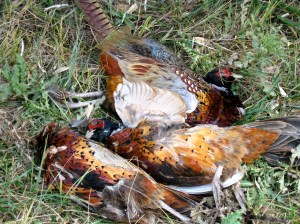
Wild Ringneck Pheasants

I suspect the Sara’s Ranch Baby Pheasant on offer at Big 4 is a might more tender than the wild roosters we shoot in southern Idaho. The gamey birds in our freezer were “harvested” the old fashioned way – with a shotgun and a bird dog – on the edge of Blackfoot, Idaho. We dressed them quickly and froze them for the trip to California where they went right into the freezer.

Tradition calls for leaving the birds to “age” until they begin to decompose, allegedly sweetening in the process. We’re not that adventurous and I wouldn’t recommend aging poultry at home. Few of us have enough experience with meat to know when to stop the aging process before the whole thing spoils. But given our experience with tough wild bird meat, I can see the wisdom in letting time break down muscle fiber to soften the meat for eating.

Alas, we’ve settled on long, slow cooking methods to get the most out of the wild pheasant we have on hand. The results don’t come close to the “perfection” Brillat-Savarin describes in his elaborate recitation of a complex roasted pheasant dish worthy of a king. But our take on slow cooked meat sauces here makes for a tasty pheasant ragù, perfect for dressing big pappardelle noodles and accompanied by a nice bottle of wine (Pinot Noir, Sauvignon Blanc or a dry French rose).

Mighty Hunter 2

Steve and Jack w/ Pheasants

Not all of us are hunters. We’re lucky in San Francisco to have access to a bounty of exquisite and unusual meats. Our butcher shops sit in neighborhoods filled with thankful foodies who understand the differences between industrialized meat production practices and the thoughtful, ethical ranching practices of local farmers. The better specialty retailers will have plenty of unusual things to try and if they don’t have what you’re looking for, most have solid relationships with good suppliers who can get whatever you’re looking for quickly.

Of course, farm raised anything is going to cost you plenty (we aren’t going to talk about how much it cost for Steve to buy a non-resident hunting license in Idaho, ahem!). But since most folks no longer hunt game birds, farmed pheasant is worth tracking down. These San Francisco purveyors should be able to source farm raised pheasants for the curious home cook: Drewes Bros. in Noe Valley, Bryan’s Quality Meats in Laurel Heights, Avedano’s Holly Park Market in Bernal Heights, Golden Gate Meat Company and Prather Ranch in the Ferry Building and Guerra Quality Meats in the Sunset. Each offers terrific access to quality meat products at premium prices. You might check MacFarlane Pheasants out if you’re looking for a large, national supplier.

This is our take on a wild pheasant sugo. Making sauce from these birds seems the best way to cook the meat long enough to make it tender. We didn’t, but you might try sprinkling toasted walnuts over the plated dish. A little fresh lemon zest on top wouldn’t hurt either. We have another batch cooked and waiting in the freezer for our own future experimentation.

Wild Pheasant Sugo

2 pheasants, completely de-boned, cut into half-inch pieces*

4 slices thick bacon, diced

1 large onion, coarsely chopped

1 large stalk of celery, coarsely chopped

1 large carrot, coarsely chopped

Bouquet garni of fresh thyme, parsley and bay leaves

1/4 cup dry vermouth

2 tablespoons extra virgin olive oil

Water

Salt and pepper to season

*Note: the “drumstick” of the pheasant is particularly sinewy. The older the bird, the harder the tendons. The hardest, sharpest pieces won’t soften no matter how long you cook the meat. The tendons are almost bone-like and should be trimmed or removed before cooking.

Start by heating a heavy 12″ skillet over medium high heat and add bacon. Cook bacon until crisp, 10 – 12 minutes, and remove from the pan to dry on paper towels. Pour off all but a couple of tablespoons of the rendered bacon fat and return the pan to the heat.

Add pheasant meat and brown on all sides, approximately 5 minutes. Remove the meat from the pan and set it aside. Return pan to the heat and add olive oil.

Add diced onion, celery and carrot and saute on medium low until they’ve soften and begun to caramelize, approximately 15 minutes. Return meat to the pan with the vegetables and deglaze the pan with the vermouth, scraping up any brown bits. Add enough water to cover the meat and add the bouquet garni. Finally, add salt and pepper to taste, but be careful you don’t over salt the braising liquid. It will grow saltier as it reduces. Cover and bring to a simmer.

The pan should stay on heat at a low simmer for at least an hour and a half. The pan will want to go dry from time to time so be sure to add water as necessary until the meat is falling apart and the sauce has become fairly thick. You can always thin it later with pasta water to suit your taste. Be sure to remove the bouquet garni before serving or storing the sauce.

Toss sauce with pappardelle and finish with grated Parmigiano-Reggiano cheese, a sprinkle of red pepper flakes, fresh ground black pepper and a drizzle of extra virgin olive oil!

Cheers, Steve & Jason