

We have an upcoming trip planned for London and Paris in April and we can’t wait until we depart. We’ve never been to Europe, and aside from Canada and Mexico we have never left the U.S. We are also big fans of French and European culture even though we have yet to experience them up close and personal. We hope that in the years to come we’ll be able to travel to Italy and Spain to experience their cuisines in person. Whenever we see Lidia Bastianich or Jose Andres cooking up their regional dishes we both wish we had the luxury of being able to travel and eat delicious foods. Some day soon we’ll visit Italy and Spain, but for this first venture to Europe it’s all about Paris and London.

Pate, Cheese, Pear, Cornichon and Olive
Give us a bottle of Champagne (or a nice Cava, or sparkling wine), a baguette, some cheese, pâté, Dijon mustard, olives and cornichon pickles and we’re as happy as we can be. That also happened to be our midnight Valentine’s Day celebration menu from last Sunday. I was working late, serving the masses their Valentine’s Day dinner, while Steve was at home preparing our feast. The most complicated part of the nosh was preparing the Pâté, which is essentially just chicken livers and butter. We found the recipe in the March issue of Martha Stewart’s Living and the only thing we did differently was to pour the Pâté into a jar instead of pouring it into a plastic lined bread pan.
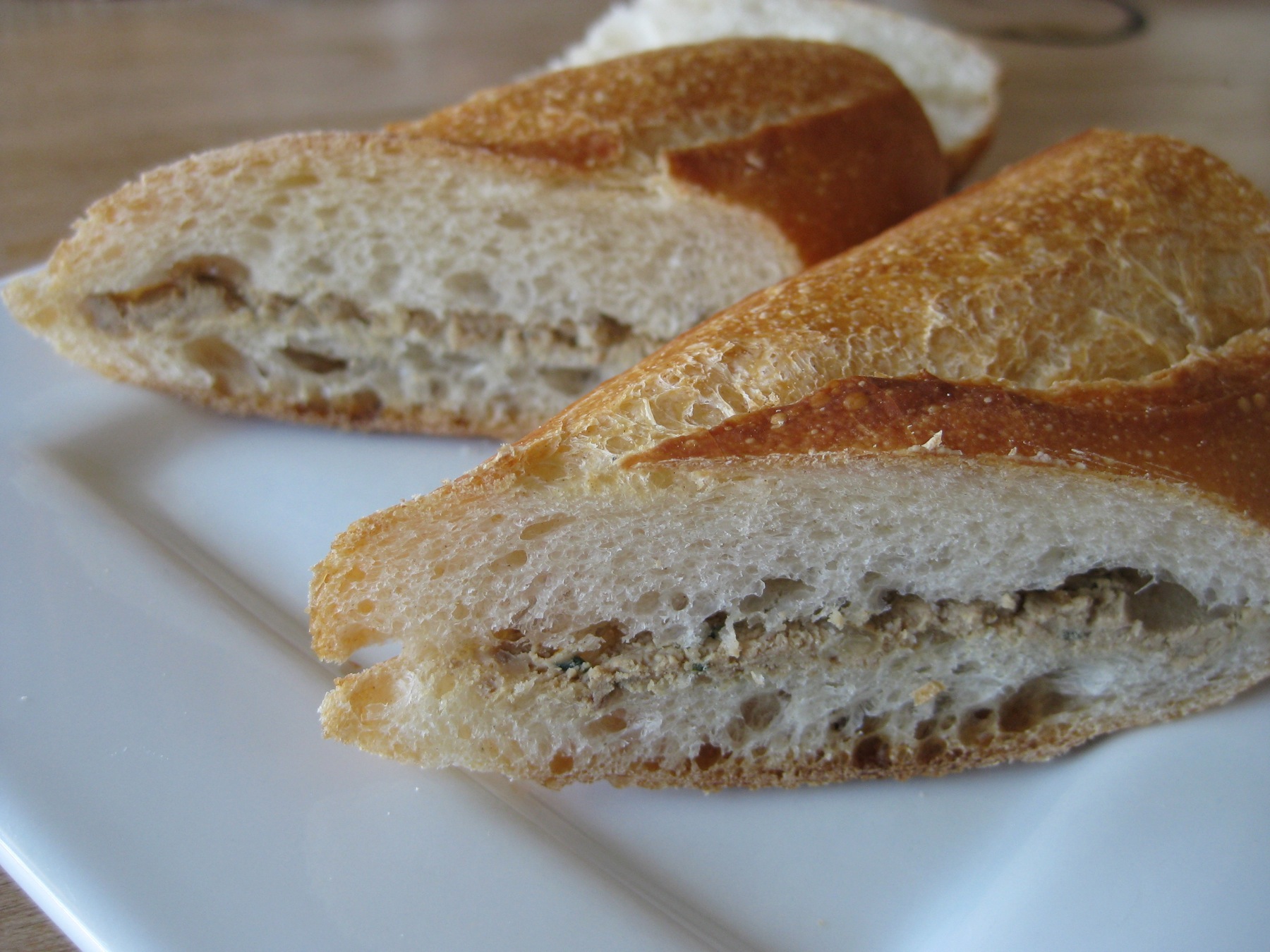 The amount of pâté was too much for both of us to eat in one sitting, so now whenever we need a reminder of what’s to come on our Paris vacation, we can spread a little on some toast or crackers, dreaming of the day when we can truly eat like Parisians. Even if you’re not as lucky enough to get Paris this year, you can still make up a batch of Martha’s pâté to keep on hand for those days you need to be reminded of how good life really is!
Steve’s Note:
When I think of food torture I think of my childhood. I think of sitting at the family table or at a TV tray with a plate of pan-fried beef liver and onions with a side of canned peas and lumpy boiled potatoes. If this meal didn’t make me cry (believe me, it almost always did) or vomit (it happened once), at the very least it meant that I would be tethered to my seat at the table for what felt like an eternity. These standoffs would last until my plate was cold and mom couldn’t take the suffering of her child martyr any longer. After choking down “just one bite,” I’d be dismissed from what was a mercifully rare but memorable ordeal.
Martha’s simple pate recipe is, I suppose, a sort of liver therapy. A rehabilitation of sorts of my attitude toward a lowly food that has much more to offer than poor cooking methods will ever reveal. We hope you’ll give it a try.
Cheers, Steve
Pâté Recipe
3 shallots, diced
12 Tbsp butter, room temperature, cut into pieces
1 lb. chicken livers, cleaned of fat and connective tissue
½ cup dry white wine
1 tbsp fresh thyme
Dash of cayenne
Salt and pepper to taste
Melt 2 tbsp butter in skillet. Sautee shallots over medium heat until softened, approximate 5 minutes. Add chicken livers and sauté for approximately 10 minutes. Add thyme and white wine and simmer until the wine has reduced by half. Pour contents of the pan into a food processor and puree adding the remaining 10 tbsp butter and process until completely smooth. Scoop puree into container and refrigerate for 2 hours. Serve on baguette or your favorite cracker.



 (y)our food choices™