
You got Salt in my Chocolate!

We’re all about being frugal, trying to save a nickel here and a dime there, and when it comes to holiday confections we don’t see what difference a day or two makes when buying a box of chocolate. The box of chocolate will be as good on February 15th as it was the day before and it’s always 50% off the retail price. We also know that giving chocolates on Valentine’s Day is a tradition that many of us can’t resist from year to year. So what to do? We say make your own.

There are few flavors that go together so perfectly that people get into heated debates over someone expressing ambivalence, or worse, dislike for the paring. And we don’t understand how anyone could feel like something so perfect has been made one too many times. With our friend Susan’s Caramel-Dark Chocolate Truffles with Fleur de Sel, the ubiquitous combination of sea salt and caramel proves it is a match made in heaven, or um … France. What is it that makes caramel, chocolate and sea salt taste so good together that even the most jaded food critic can’t resist the flavor combo? Here in the U.S. we’re used to the chocolate and caramel or chocolate and peanut butter pairings. Can you imagine Hershey going a bit French by adding a sprinkle of fleur de sel to their chocolate bars? We can already see the revolt by the crazy-ass wing nuts in the red states. “Sea salt in my chocolate? What the hell?” Remember “Freedom” fries?
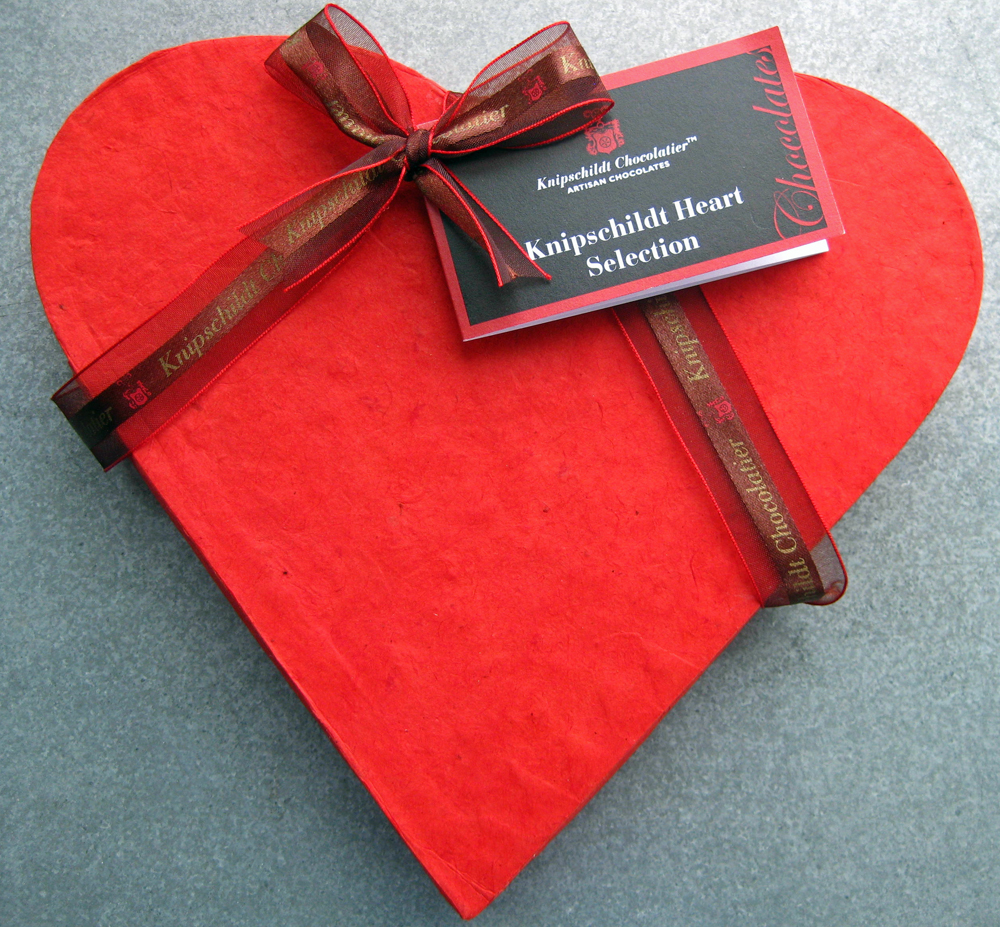
What difference does a day make? Buy your heart shaped box of chocolates on February 15th or make your own.

Susan has perfected this recipe and you can taste the love and time she’s put into it. We were lucky enough to taste these delicious truffles at their 2010 holiday party. We’re grateful that she shared the recipe with us and the rest of her friends on Facebook. Steve’s office enjoyed the batch Jason made and we’re sure your sweetie(s) will love them just as much. So we suggest whipping up a batch this weekend and if you still have a hankering for more chocolate, pick up that heart shaped box on Tuesday. It’s a win-win situation. You’ll get great, homemade chocolate truffles for Valentine’s Day and the heart shaped box a few days later. Now go hit the gym and start working out so you can enjoy all the sugar calories you’ll be consuming for the next few weeks.
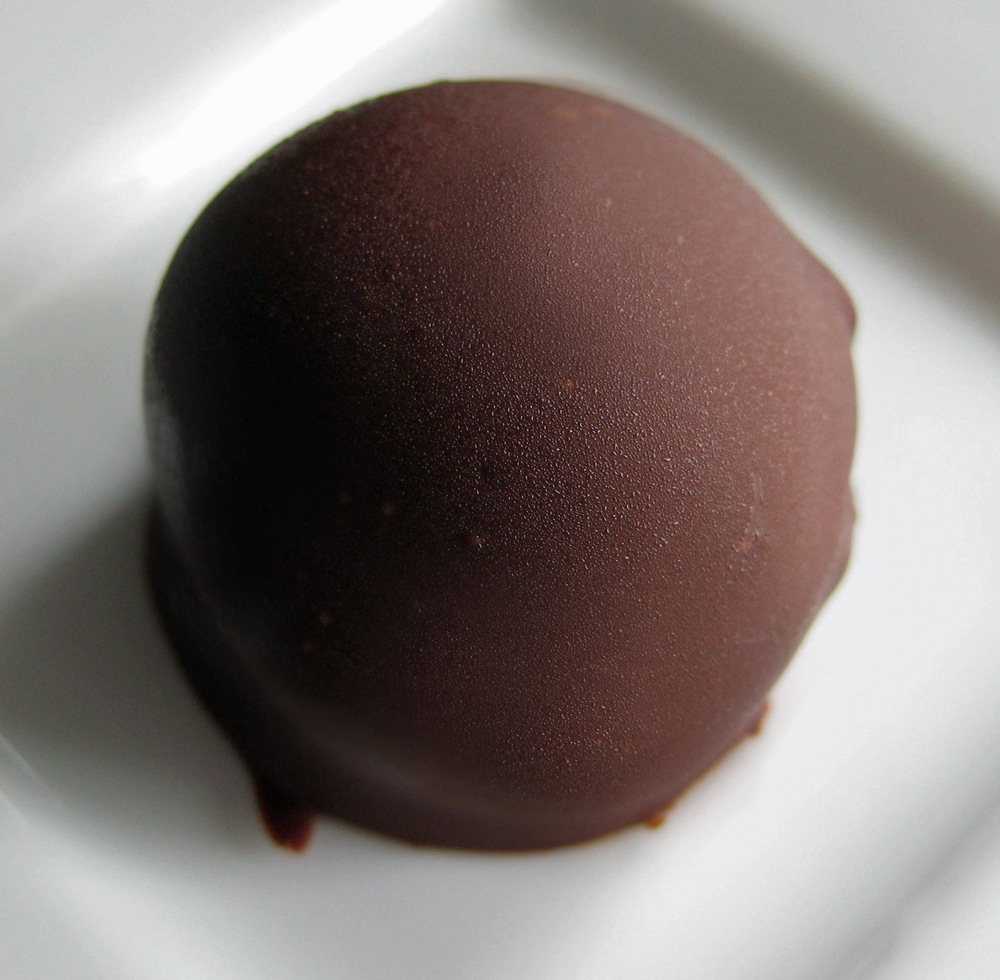
A little bite of France.

Susan’s Caramel-Dark Chocolate Truffles with Sea Salt

24 ounces fine-quality bittersweet or semisweet chocolate, chopped, divided
2/3 cup sugar
1/4 cup water
1 cup whipping cream
1 teaspoon sea salt (fleur de sel if you have it on hand)
unsweetened cocoa powder
additional sea salt

Gently melt 10 ounces chocolate in a double boiler or microwave, set aside.

Combine sugar and water in a heavy medium saucepan.  Stir over medium heat until sugar dissolves.  Increase heat and boil, occasionally brushing down sides of pan with a wet pastry brush, until syrup is dark amber.  Add cream; caramel will bubble and steam.  Reduce heat to low and stir until caramel is entirely smooth, with no remaining lumps.  Mix caramel and 1 t. sea salt into chocolate, cool slightly, cover and refrigerate for at least three hours.

Place cocoa powder in a small bowl.  Using melon baller or tablespoon, roll truffle filling into balls.  Smooth with your hands (gloves highly recommended) and roll in cocoa.  Arrange on a baking sheet, cover, and chill overnight.

Line baking sheet with foil, parchment or Silpat.  Temper remaining chocolate in a small bowl.  Working quickly, submerge one cold truffle center in the tempered chocolate, lift with a fork and tap off excess, and set on lined baking sheet.  Sprinkle with a small amount of sea salt.  Repeat with remaining truffle centers.  Let stand until coating sets, at least one hour.  (Can be made up to one week in advance.  Cover and keep cool.  Bring to room temperature to serve.)

* I do the centers in batches: ~10 rough balls at a time using the melon baller, and then pop them into the fridge while I make the next set.  When I’m all done, I pull out each set of ~10 and smooth them into nice spheres with my hands and dust with cocoa.  I also pull the centers out of the fridge in small batches to do the couverture (dipping the caramels in the chocolate), so that the later ones stay cool.  The centers are super gooey at room temperature, so it’s important that they’re right out of the fridge to ensure the outer coating of chocolate covers them well.

The pressure is on

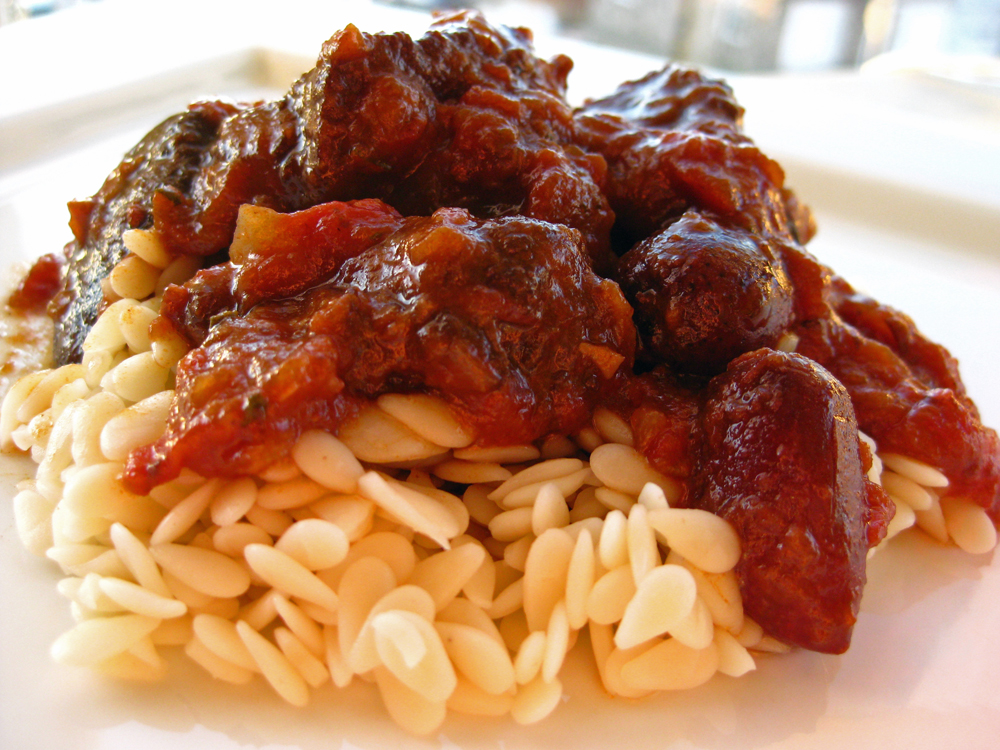
Wonderful flavors of orange, rosemary, and red wine are perfect for a weeknight Valentine's day dish.

With so many new kitchen gadgets coming onto the market these days, it’s easy to understand why home cooks feel overwhelmed by the expanding kitchen toolbox on offer from our favorite retailers. We thought it would be nice to take a step back in time by returning to a classic, trusted device we’ve come to love – the pressure cooker. As we write “trusted,” our thoughts turn to our mothers and their fears of exploding lids, shattered glass and hot molten food blown all over ceilings and walls. Some love these things, some hate them, and some don’t know what the hell we’re talking about. Read on, we’ll explain.

Pressure cookers are stove top pans with locking lids on them that use steam and pressure to cook food very, very quickly. Think of it as a sort of precursor to the microwave that hisses but doesn’t emit electromagnetic waves (or reheat coffee). There are so many great uses for the pressure cooker it’s a wonder why there aren’t more of them in U.S. households. But when we bring up the joys of the pressure cooker to our moms, we can see shrieks of terror in their eyes. Modern pressure cookers are infinitely safer than those our grandmothers used to put up preserves. With built-in safety features that prevent explosions even under the most negligent use, these cookers provide the perfect solution to the home cook who wants to prepare slow food quickly. Slow cookers, used for long braising of roasts and all-day simmering of stews, certainly have their time and place in the kitchen, but when you want to cook a stew or beans extra fast there’s only one device that will get the job done and it isn’t your microwave oven.

If you’re in the mood for a hardy yet elegant dish for Valentine’s day, without all the stress, may we suggest that you try epicurious.com’s Lamb and Shitake Mushroom Stew in the pressure cooker. The wonderful thing about this recipe is that you can substitute  almost any meat for the lamb (our latest version made use of wild elk). You can  use button or portabella mushrooms in place of the shitake if you don’t like the shitake’s slippery texture.  It’s even better made a day or two ahead and reheated, served over buttered noodles, orzo, polenta, rice, or simply in a bowl with a nice piece of baguette on the side to sop up the delicious sauce. So there’s no need to stress over what to cook on Monday night’s romantic dinner if you’ve planned ahead, just reheat and serve.

Pressure cookers are safe and easy to use. They’re also energy efficient. So put away any fear of catastrophe inherited from the cooks in your family and invest in a tool you’ll love the very first time you put it to use. You can spend a little or a lot on a good pressure cooker. Our suggestion is to start modestly. Our pressure cooker was a gift, but we suspect it wasn’t a bank breaker. We don’t need a lot of bells and whistles on a pressure cooker – quick pressure release, low pressure settings, etc. We’ve experimented with ours and know how to get the best out of it. With a little time, you’ll get there too.

This Lamb and Shitake Stew recipe makes use of some of our favorite flavors – red wine, rosemary, orange and salty Kalamata olive. Use grass-fed beef if you can’t find good lamb. You’ll still be pleased by the results. In the pressure cooker, all those great flavors come together in minutes. Enjoy!

Pressure Cooked Meat and Mushroom Stew (aka Lamb and Shitake Stew)
Can be doubled and frozen for a quick dinner later in the month

1 tablespoon extra-virgin olive oil
1 lb. lamb shoulder meat or chops, beef, elk or pork roast cut into 3/4-inch cubes
6 ounces fresh mushrooms, shitake (stemmed), button, or portabella mushroom cut into 1/2-inch pieces,
1 large onion, coarsely chopped
2 3×1/2-inch strips orange peel (orange part only)
2 large garlic cloves, minced
2 teaspoons chopped fresh rosemary
1 14 1/2-ounce can diced tomatoes in juice
1 cup Chianti, Sangiovese, or other fruity red wine
10 Kalamata olives or other brine-cured black olives, pitted, halved

Heat oil in a pressure cooker pot over high heat. Sprinkle lamb, or whatever meat you are using, with salt and pepper. Add the meat to pot; sauté until light brown, about 5 minutes, you may need to do this in two steps to avoid overcrowding the pan. Add the next 5 ingredients; sauté until onion is golden, about 5 minutes. Add tomatoes with juices and wine; bring to boil. Put the lid on top of the pressure cooker and reduce heat to medium-low for about 10-15 minutes. Remove from heat, release the pressure and stir, checking to make sure that the stew does not burn on the bottom of the pan. If the sauce is still too thin then put the lid back on, bring back to pressure and cook for another 5 minutes.

Add olives to stew and season with salt and pepper. (Can be made a day or two ahead. Cool slightly. Refrigerate uncovered until cold, then cover and keep refrigerated. Rewarm over medium heat, adding water by tablespoonfuls to thin sauce if desired.) Serve with orzo, buttered noodles, or rice as the base for the stew.