

A new favorite dish!
We ate paella multiple times while in Spain, but our favorite pan was the very first one we tried at El Rall in Valencia. The restaurant sits in an old Medieval neighborhood square with several cafe tables in the center. The restaurant has two locations adjacent to one another. Beside having the best paella in Spain, and maybe the world, it also serves fantastic Iberico ham.
Our second encounter with paella was a nice reminder of how paella was intended to be eaten, with large groups. While in Barcelona, we come across a Spanish cooking class called Travel Bound that is geared towards the young backpackers traveling through Europe. This trip was a little like a backpacking adventure for us, except we could afford first class accommodations on the AVE (a minor splurge but worth the price) and didn’t need to stay in hostels, although our room in Barcelona was a small step up from one.
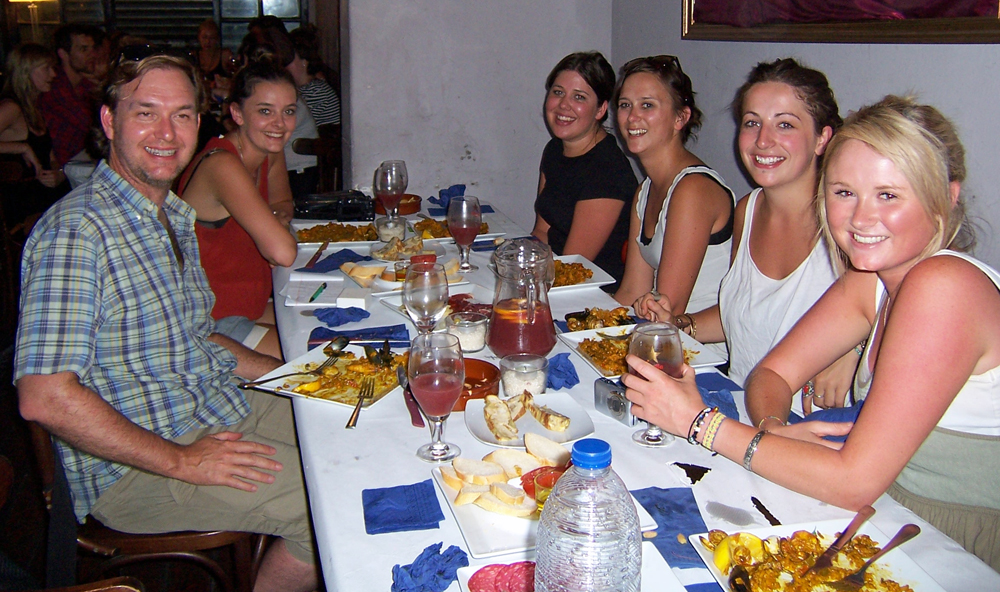
All great meals are shared!
The Australian girls we dined with were great company. Their youthful ambitions of traveling throughout Europe and living in London was refreshing to hear. It just reminded us of how short and potentially wonderful life really is. We wish our Aussie friends all the best on the remainder of their big adventures!
We didn’t know what to expect with our squid purchase. We’ve never cooked it before but decided we needed to try. The bag of squid at the market was more than we needed so we decided to forgo the rest of the seafood and “bunny” meat you might find in traditional paella recipes. We have enough experience with this classic dish to know there are very few rules when it comes to what “should” be added to the paella. We bet there are as many paella recipes out there as their are Spanish households cooking them.
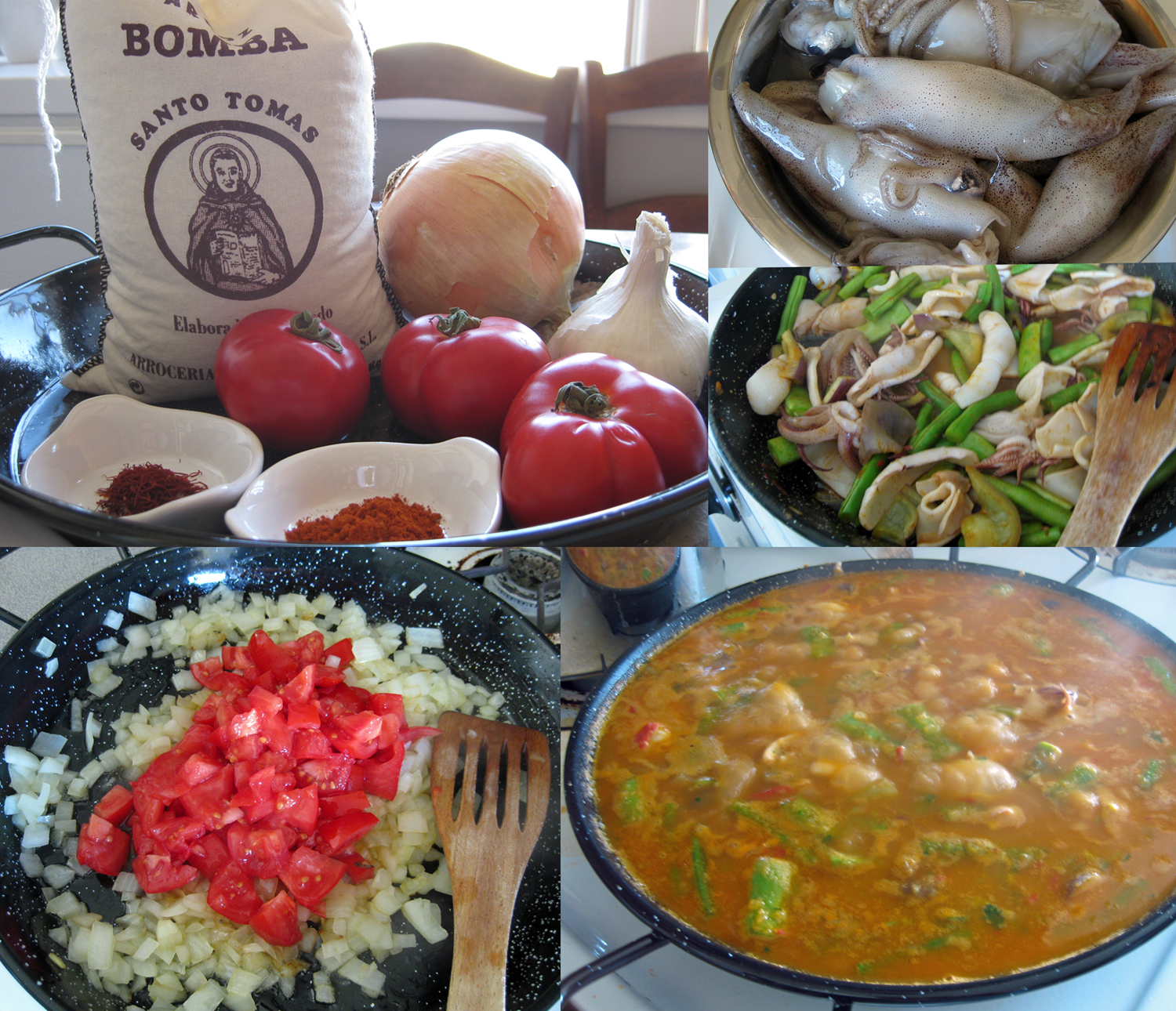
Once you have the basics, add whatever inspires you!
This recipe is a combination of the Simple Paella recipe from 1080 Recipes by Simone and Ines Ortega and Las recetas de Garcima, a flyer included with the paella pan we purchased in Valencia, Spain. Our recipe takes traditional Valencian Bomba rice and saffron, along with what we had on hand and what we could purchase from our local farmer’s market. Just remember, if you can’t find all the ingredients for a dish, improvise. We hope you enjoy our first version of paella.

Our very first Paella San Francisco!
Squid Paella
olive oil
1 medium onion, chopped
3 small – medium firm tomatoes, chopped (or 1/2 can of 14 ounces tomatoes without juice)
1 bell pepper, chopped (any color)
1/2 pound fresh green beans trimmed and cut into inch long segment
1 pound fresh squid, cleaned and cut (about.com has a great cleaning tutorial)*
2 teaspoons smoked paprika
2 garlic cloves
1 sprig fresh parsley
large pinch saffron threads
1 1/4 cup Bomba rice (or other short grain rice)
1/3 cup frozen peas
Clean the squid and place on ice in the fridge.
In a paella pan or large sauté pan, over medium high heat, add 2 tablespoons olive oil until glistening. Add the onion and sauté for a couple of minutes. Add the tomatoes and allow to cook for about 10 minutes. Remove from heat and add to a blender with 1/4 teaspoon salt. Blend together until smooth. Set aside.
Return the pan to the stove top over medium high heat. Add 2 tablespoons olive oil until glistening then add the bell pepper and green beans. Sauté the vegetables for 3-5 minutes until slightly wilted. Add the squid and paprika. Cook about 5 more minutes or until starting to dry out.
In the meantime, place the garlic, saffron, parsley, and a pinch of salt in a mortar and pound together, or use a mini prep food processor.
Add the rice to the sauté pan and stir for a couple of minutes, making sure the rice does not stick to the pan. Add enough hot water to the tomato and onion mixture to fill 3 cups, taste and season with salt. Add to the rice and stir. Add the garlic saffron mixture and gently stir. Cook on the stove top over medium heat for 10 minutes. Sprinkle the peas over the top then transfer to the oven for 10-15 minutes more.
Once the paella is out of the oven there are two options. For a crispy bottom, allow the paella dish to rest for 5 minutes before serving. If you would like the bottom to be easier to release and the rice softer, allow the paella to rest on a wet towel for 5 minutes before serving.



 (y)our food choices™