Spicy apple pear butter

Pick, peel, and chop.

Cold winter weather invites the warm spicy flavors of cinnamon, clove and nutmeg. Apples and their cider provide the perfect medium for bringing those flavors to the palate. Spiced mashed apples make excellent sauces and butters, delicious eaten on their own or used to compliment the flavors and textures of both sweet and savory dishes. Apple butter, the much thicker slow-cooked version of applesauce, is a tasty companion to cheese and bread and a nice counterpoint to rich, fatty pork.

Apple-based sauces have been a part of the human culinary tradition for millennia. Apple butter, on the other hand, is decidedly American with origins in 18th century Pennsylvania and Appalachia. Apples are cooked and mashed and then cooked some more until they’re nearly as thick as paste. Seasonings include the classic sweet spices, some apple cider and perhaps a bit of apple brandy (obviously not included in the original Amish recipes). Once nice and thick, the butter can be water processed in mason jars and kept for months in the pantry.

Concentrating the flavor.

Apple butter is easy enough to make. We made a batch in October after we received a large shipment of apples and pears in our Capay produce box. We knew we couldn’t eat them fast enough to enjoy them at their best, so we opted for this simple form of preservation to extend their shelf-life. We mostly ate it on peanut butter sandwiches and cheddar cheese sandwiches, but it could have been used as a condiment with tender pork loin or as a topper to our muesli pancakes.

We recently used up the remaining apple butter from a recent batch in a recipe for barley scones from Kim Boyce’s beautiful baking book, Good to the Grain. Instead of using strawberry preserves we used the apple butter along with some grated Irish cheddar cheese. They were perfectly sweet and savory. With the addition of crispy bacon and soft scrambled eggs, a cozy Sunday brunch at home brought our weekend to a delicious conclusion.

Spicy--fresh ginger, nutmeg, cardamom pods, and cinnamon sticks.

Since we used up the last of the apple butter in these delicious barley flour scones before we’d accumulated enough fruit to make another batch, we were relieved when this weeks Capay produce box arrived full of apples and pears. We aren’t big sticklers for rigid adherence to a specific recipe. The technique for creating fruit butters is so universally applicable to things that “melt” and thicken that it seems silly sticking to one variety of apple or pear. Sticking to a particular variety of apple or pear may make the flavor of your fruit butter more consistent from batch to batch, but when your making such a small amount for your own personal use it’s nice to try an assortment of different apple and/or pear varieties.

In the recipe below, we recommend using apple cider (we like to use hard cider). If you don’t have any, you can substitute a tablespoon of apple cider vinegar mixed with enough water to make up a half-cup of liquid. The resulting butter will be a bit more tart making it a nice side to savory dishes, like pork roast.

Spicy Apple Pear Butter

Jars of apple pear butter. YUM!

3 lbs. apples and/or pears, any variety
1/2 cup sugar
1/2 cup apple cider (or 1 tablespoon apple cider vinegar, plus water to make ½ cup liquid)
1 cinnamon stick
1 tablespoon fresh ginger, grated
1/4 teaspoon nutmeg, freshly grated preferred
1/4 teaspoon ground cardamom
a pinch of salt

Peel, core and large dice the apples and pears. Add to a medium size pot with the rest of the ingredients. Cook over medium heat stirring occasionally for 1 hour, being careful not to burn the fruit.

Place the pot in the oven at 200 degrees for 8 hours or overnight. Can be stored in the fridge for a few months or canned to extend the shelf life.


Right out of the oven.

Apple and Cheddar Barley Scones

(adapted from Good to the Grain)

1 cup plus 2 tablespoons barley flour
1 cup all-purpose flour
1/4 cup dark brown sugar
2 teaspoon baking powder
1/2 teaspoon baking soda
1 1/4 teaspoon kosher salt
8 tablespoon cold, unsalted butter
1/2 cup buttermilk (or 1/2 cup whole milk with 1 tablespoon lemon juice or vinegar)
1 egg
1/2 cup apple butter
1/2 cup shredded cheddar cheese
1 tablespoon melted butter
1 tablespoon sugar

Preheat the oven to 350 degrees.  Line a baking sheet with parchment paper or use a Silpat mat. Add the dry ingredients into a large bowl and whisk together to fully mix the flours.

Cut the butter into 1/2-inch pieces and add them to the dry mixture. Using your hands, quickly rub the butter between your finger

s, breaking it into smaller bits. Continue rubbing until the butter is in sizes ranging from rice grains to flattened peas. If the butter becomes too soft, place in the fridge for 10 minutes before continuing.

In a small bowl, whisk together the buttermilk and egg until thoroughly combined. Pour the buttermilk and egg into the dry mixture, and mix until barely combined. The more you mix, the tougher the scone will be.

Use a pastry scraper or a spatula to transfer the dough onto a well-floured surface. The dough may be too sticky to handle; if it is, dust it with flour and fold it together a few times. Divide the dough into 2 pieces. Flour your hands and pat each piece of dough into a disk about 3/4 inch thick and 7 inches in diameter.

Cover one disk with the cheddar cheese and top with apple butter. Top the spread with the other disk and press down gently so that the dough settles into the apple butter. Brush the dough lightly with melted butter and sprinkle with sugar. Use a sharp knife to slice the circle into 8 triangular wedges, like a pie. Carefully place the wedges on the baking sheet, leaving a few inches between them.

Bake the scones for 22 to 26 minutes, rotating the sheets halfway through. The scones are ready when their tops are golden brown and some of the apple butter and cheese has bubbled over onto the pan. The scones are best eaten warm from the oven or later that same day.

Makes 8

NOTE: If you can’t find barley flour feel free to substitute whole wheat flour or you can use all purpose flour for the full recipe.

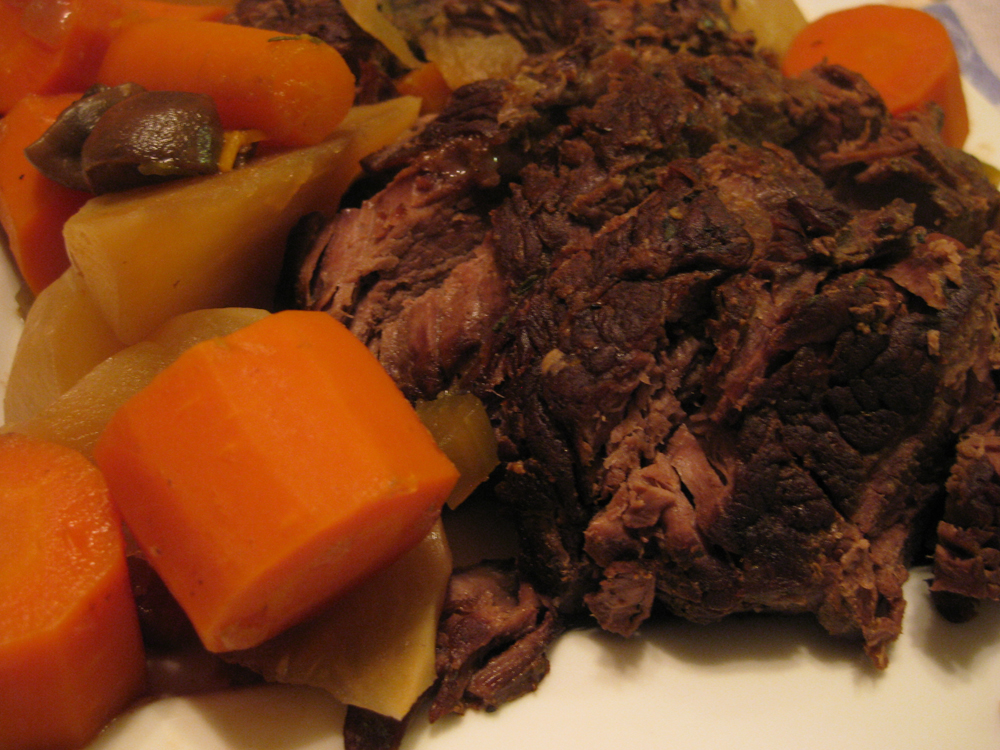
An Elk Roast That Even Sarah Palin Would Be Proud Of

Elk, the other red meat.

There are very few things that Sarah Palin and I would ever agree upon, but venison being a superior meat to America’s slaughterhouse beef is one on which we definitely would see eye-to-eye. We would probably even swap a few recipes and the only debate we would have, about the meat that is, would be who makes the best chili. My chocolate cherry chili would win, hands down! But I’ll leave that blog for another day. This one is about our Elk roast dinner last night with our good friend Mary. The small party was supposed to include another friend, and artist, Zannah Noe, who’s work is displayed throughout our apartment. Unfortunately, we received a text from her at the last minute letting us know she was under the weather and wouldn’t be making it. Feel better Zannah!

We received the elk roast from Steve’s father, Karl, who lives to hunt and fish. Most people would be turned off by the smell and taste of wild meat, and I must admit that I was once that way. But over the years of substituting venison for beef, I can honestly say that I prefer the musky taste of it over the flavorless greasy beef that comes from the grocery store. It’s also nice to know exactly where the animal I’m consuming came from; what type of food it grazed on; and that it’s death was more humane than the conveyer belts of cows that line up to be slaughtered, day and night.

Is there anything more comforting than a big bowl of mashed potatoes?

The recipe for the roast came from Cook’s Illustrated, Simple Pot Roast, which you can only get online by being a member, but I’ll give you the run-down at the bottom of the post—just don’t tell Chris Kimball. The moment I unwrapped the elk roast I knew it was going to be a great meal. The meat was lean and firm, and there was no fat or sinew to cut away. The only prep work necessary was to tie the meat together and pat it dry with paper towels before placing it in a hot stock pot with vegetable oil.

As decadent as ice cream with a little less guilt.

With the pot roast we serve mashed potatoes and bleu cheese popovers, a variation of the popovers that Steve has become very fond of. Unfortunately they didn’t rise all that well, probably due to a reduction in the oven temperature, but were still quite tasty. For desert, we served a cardamom and cinnamon scented frozen yogurt, that was topped with orange segments and pistachios. It had a bit of middle eastern flare to it, but the oranges are so abundant right now and we have a lot of cardamom and cinnamon in our pantry, I thought it would be a great use for them. It was also a little lighter then say, an American cherry pie, or even traditional vanilla ice cream. The conversation was the best thing about the dinner. We really enjoyed getting to know Mary a little better and can’t wait to go over to her house and help her in her garden.

We’re hoping to have more dinner parties in the future; giving our friends the chance to try venison and some wonderful grass-fed beef.

Simple Elk Pot Roast

(adapted from Cook’s Illustrated)

1 boneless elk roast (3-4 pounds)

2 tablespoons vegetable oil

1 medium onion, finely diced

4 large carrots (1 finely diced, the other 3 cut into ½ inch slices)

1 celery rib, finely diced

1 pound button mushrooms, quartered

3 gloves garlic, minced

2 cups beef broth (homemade preferred)

3 sprig fresh thyme, tied together

1-2 cups water

2 large turnips, peeled and cut into wedges (6-8 wedges each turnip)

¼ cup red wine

Preheat oven to 300 degrees. Adjust the oven rack to the middle position. Tie the roast with cooking twine and pat dry with paper towels. Sprinkle generously with salt and pepper

Heat the oil in a large, heavy bottomed stockpot until oil is shimmering. Place the roast in pot and sear until a nice dark brown develops on all four side, 8-10 minutes. Reduce the heat if there is too much smoke and add more oil if meat is very lean and the bottom of the pan dries out. Transfer the roast to a clean plate and add the onions, diced carrots, celery, and mushrooms. Sautee until the vegetables start to brown, stirring occasionally, 8-10 minutes. Add the garlic, cooking until fragrant, about 30 seconds. Add the broth and water, scraping up the bottom of the pan. Return the roast to the pan and any juices that have accumulated. Turn the temperature up and bring to a boil. Add the thyme, cover the top with foil and then place the lid on top. Place the pot in the oven and cook for 3 ½ – 4 hours. Every 30 minutes turn the roast over on each side.

After about 2 ½ hours add the sliced carrots and the turnips. Making sure that the vegetables are submerged in the cooking liquid.

When the roast is tender remove the pot from the oven and remove the roast from the pot. Tent the roast with foil and remove the carrot slices and turnips. If a lot of fat has accumulated, skim from the top. Then place the pot on the stove and reduce the cooking liquid to about 1 ½ cups. Add the red wine and reduce a few more minutes.

Cut the string from the roast and slice it into 1-inch pieces. Arrange the roast and the vegetables on a warmed serving platter. Serve with horseradish cream and sauce.

Horseradish Cream

¾ cup sour cream

2 finely chopped green onions

1-2 tablespoons (or more) prepared horseradish

Mix all together and serve with roast elk.

Cinnamon-Cardamom Frozen Yogurt

(adapted from Mark Bittman’s Basic Vanilla Frozen Yogurt)

1 ½ cups whole milk

3 cardamom pods

1 cinnamon stick

¾ cups sugar

4 egg yolks

2 cups plain whole-milk yogurt

Heat the milk in a pan with the cinnamon stick and cardamom pods, until just barely warm. Place a lid on the pan and let seep for 30 minutes. Discard cinnamon and cardamom pods. Add half the sugar, heat until steam barely rises, stirring to dissolve the sugar.

Meanwhile beat the egg yolks and other half of sugar with a pinch of salt until light yellow and very thick. Slowly add a little of the warmed milk, whisking constantly so as not to cook the eggs. Adding more milk continue to whisk until all the milk has been add. Transfer the mixture back into the pan and place on the stove over low-medium heat, stir constantly until thickened. Remove from heat and stain through a mesh sieve to remove any cooked egg.

Place the bowl on an ice bath to cool, about 20-30 minutes. Once the custard is cool add the yogurt and whisk together. Place the yogurt mixture in an ice cream maker and allow to mix for about 25-30 minutes. Remove from the tub and store in a freezer safe container for at least 2 hours before serving. If the frozen yogurt becomes too hard to serve leave at room temperature for 10-15 minutes before serving.

Serve with orange slices, pistachios, honey, or any desired topping.