Preserved Lemons

It’s citrus season in the Bay Area and folks everywhere are harvesting their winter crops. Friends have gifted us bags of golden yellow Meyer lemons and we’re happy to accept. Meyer lemons are sweeter and more fragrant than their true lemon cousins. Their thin skins make them more delicate and their lower acidity makes for a more versatile flavoring agent. Raw or cooked, these beauties are a favorite in our kitchen.

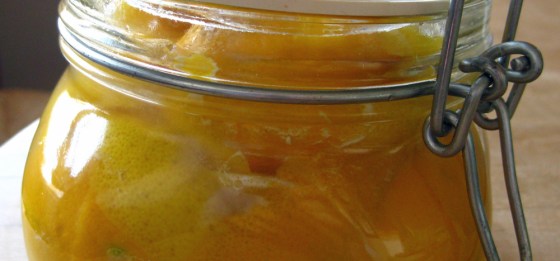
A friend recently asked what to do with all the lemons on her tree and we suggested preserving. Typical of Mediterranean lemon preservation, we like salt packing lemons and their juice into jars where they are then left to ferment, transforming them into a savory condiment deliciously paired with a variety of dishes. They’re great chopped and added to fresh sauces for fish, or stewed with chicken, olives and fennel. Preserved lemons are commonly added to couscous and other grain dishes where they add rich complexity. However you use them, these lemons are best used as a condiment. That means a little will go a long way (remember, they’re preserved in salt and lemon juice). Taking a spin on the most obvious pun, “When life gives you a bag of Meyer lemons, preserve them.” They’ll last longer than lemonade and will flavor more dishes.

The following recipe comes from Chef Mourad Lahlou of Aziza in San Francisco who included it in his book – Mourad: New Moroccan. While the recipe is simple, preserved lemons aren’t a last-minute flavoring, so if you plan to add them to your pantry, you’ll have to wait a month before digging in. We think the wait is worth it!

As easy as cut, salt, juice, and pack.


Preserved Lemons

12-18 lemons (Meyer if you can get them)
½ cup kosher salt

Slice the 6-8 lemons lengthwise and in a cross shape ¾ of the way through the lemon. Generously add the kosher salt down the center of the lemon and pack it in a sterile jar. Continue with all the lemons. With the lemons you intend to juice, be sure to remove strips of lemon zest (use a veggie peeler). Make sure not to remove too much of the pith. Add the strips of zest to the jar. Juice the zested lemons either by hand or with a citrus juicer. Pour the lemon juice over the salted lemons in the jar, make sure the lemons are fully covered by the juice, seal tight. Allow to sit in a dark area of your kitchen, gently shaking the jar daily. After about a month the lemons will be ready to use.

Salsa-touille

Bright beautiful vegetables! ...and Steve can't spell.

In less than a week we will be enjoying the sun, food, wine, culture, and everything else Spain has to offer. It will be our first visit to Spain and our second trip to Europe and we can’t wait. It has been an extremely foggy summer in San Francisco’s Sunset District and we are in dire need of some rays. Madrid, Barcelona, Valencia, and San Sebastian spread over 15 days. In preparation, Jason has been taking a beginning immersion Spanish class at Casa Hispana. Though his Spanish language skills are in their developmental stage, he’ll be doing a much better job with communicating than he did on last year’s trip to Paris. His French speaking skills were so pathetic that even the baristas at Starbucks couldn’t understand his simple request for coffee. Cafe con leche is our typical morning brew so we’ll at least get started on the right foot when we land in Madrid.

Susan and Jason at the Ferry Building's Farmers Market on Saturday morning. Thanks for all the help, Susan.

For the last ten years or so, Jason has been making a ratatouille (French) or pisto (Spanish), which is basically a summer veggie stew, that seems to get better and better with each batch. Neither one of us is a big fan of zucchini, summer squash, or eggplant, but when they are roasted and then stewed with onions, tomatoes, roasted peppers, garlic, thyme and lots and lots of olive oil it becomes the best thing in the world to eat. This year, with thoughts of Spain ever on our mind, an idea was hatched to combine the best that pisto has to offer with the spiciness of Mexican salsa.

As far as we know, there is not a salsa or other dish that combines all the vegetables mentioned above with the spicy peppers of Mexico. We imagine it must be because of a feud centuries ago that forbade adding squash or zucchini to salsa. We’re probably completely wrong, but since we’re gringos who are essentially biologically mutts we figure we can add just about anything to our salsa without upsetting any familial laws.

We describe it as Old World meets New World salsa or, in this particular case, a salsa-touille. We hope you try our recipe and let us know what you think.

Salsa-touille Recipe

1 small to medium globe or Italian eggplant, cut into 1/2” thick “steaks”
1 lb summer squash or zucchini, cut into 1/4” planks
1/2 lb red onions, cut into quarters or eighths depending on the size of the onion(s)
2 1/2 lbs firm tomatoes, roasted, skin on (dry farmed preferred)
1 head of garlic, roasted, skin on
1 jalapeños, with or without seeds, or more if you like it spicy
1 red bell peppers
1 small pepper from a can of Chipotle peppers in adobo
sea salt to taste
3 tbsp lime juice

Preheat the oven to 450 degrees. Line two sheet pans with parchment paper. Place eggplant, squash, onions, tomatoes, and garlic on the two baking sheets. Roast in the oven for about 20 minutes, rotate and roast for another 10-20 minutes or until slightly -medium toasted. At the 20 minute mark the garlic may be toasted enough to come out of the oven. Remove from the oven and set aside to cool.

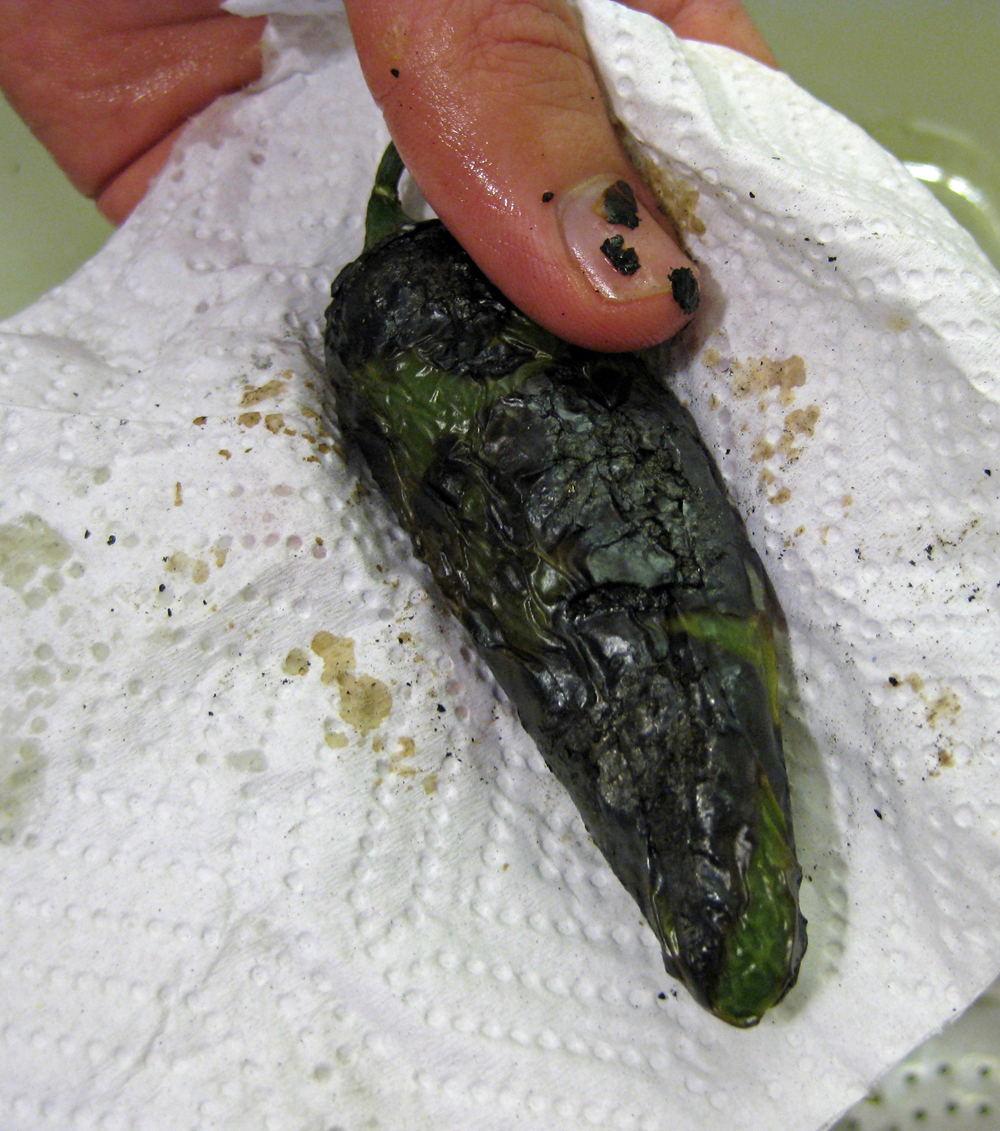
If you have a gas-burning stove you can roast the jalapeños and bell peppers on the stovetop over the open flames of the burners. If you cook with an electric stove, roast the peppers under the broiler, turning regularly until completely charred. Once the peppers are charred, wrap them in one or two paper towels and cover the wrapped peppers with a bowl for 5-10 minutes. Take off the bowl and gently wipe off the charred skins . Do not rinse under water. It’s OK, if there is a little charred skin left on the peppers. Cut off the tops of the peppers and discard the seeds and ribs for a more mild salsa. Include the seeds and ribs for one with more heat.

Once all the vegetables are cool, rough chop or tear apart with your hands and add them to a food processor with the chipotle pepper. Pulse 3 – 4 times then add salt and lime (or vinegar). Process for approximately 10-20 seconds or until an even , slightly chunky consistency is achieved.