A Bean By Any Other Name: Garbanzo, Ceci, Chickpea

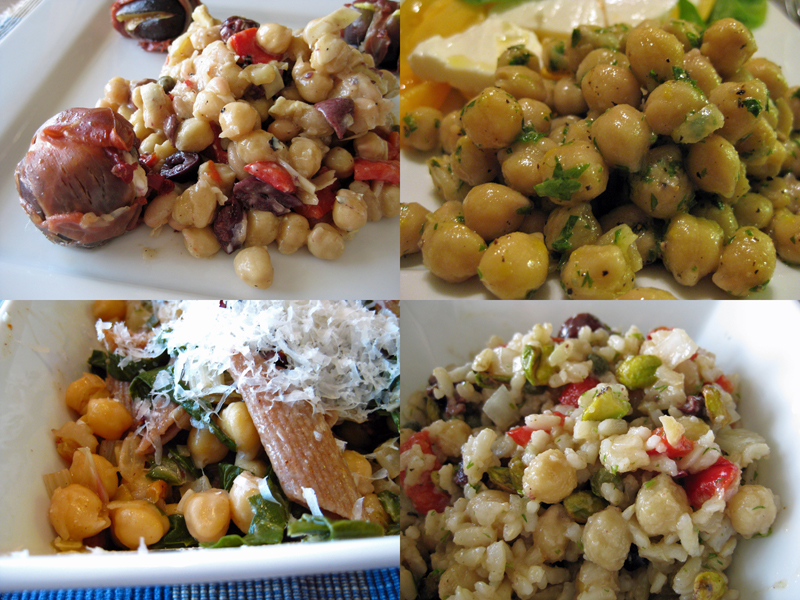
Top (L to R) Garbanzo beans with kalamata olives, roasted peppers, lemon & olive oil, accompanied with roasted goat cheese stuffed figs wrapped with prosciutto. With parsley, vinegar and olive oil. Bottom (L to R): With whole wheat pasta, saute of greens, shredded cheese, and prosciutto. With brown rice, peppers, pistachios, olive oil, and vinegar.

I know I’ve been down this road with earlier posts. I’m a big fan of the legume and in our house, they’re almost always prepped and on hand for any number of uses. Our pressure cooker makes easy work of cooking dry beans. It takes a good 30 minutes to go from dry to tender. And because we don’t buy them in cans, we’re not only saving money, we’re reducing waste.

The ceci bean (or garbanzo or chickpea or Egyptian pea) cooks just as quickly as any other hard, dry bean in spite of their rough and tough exterior. I love these beans for their firm texture and their warm, nutty flavor. Never mind that they’re packed with fiber and protein as well as a host of minerals including calcium and phosphorus. Most of us know them in pureed form as hummus, but we eat them in a variety of ways – whole in salads, as an addition to brothy soups, as a spread on bruschetta and as a companion to whole wheat pastas.

After picking over the dry beans to remove dirt and rocks, give them a good rinse and then place them in a bowl and cover with plenty of water before soaking them overnight. After soaking, rinse the beans well and place them in a large stock pot, cover with fresh water and bring to a boil. Reduce heat and simmer beans for approximately one and a half hours or until just tender. They should be completely softened. This isn’t an instance where you want ‘al dente’ centers. You can skip the soaking step if you’re using a pressure cooker. Be sure to reduce the cooking time to approximately 25 minutes. You’ll want to release the pressure after 15 minutes to check them. Adjust the remaining cooking time accordingly.

Dry Garbanzo Beans

Cooked ceci beans are fine hot, but they’re even better at room temperature. Simply dressed with extra virgin olive oil, fresh chopped parsley, course sea salt and a dash of red wine vinegar, these beauties offer up a hearty, comforting bite.

Cheers,
Steve & Jason

Lentil Cravings

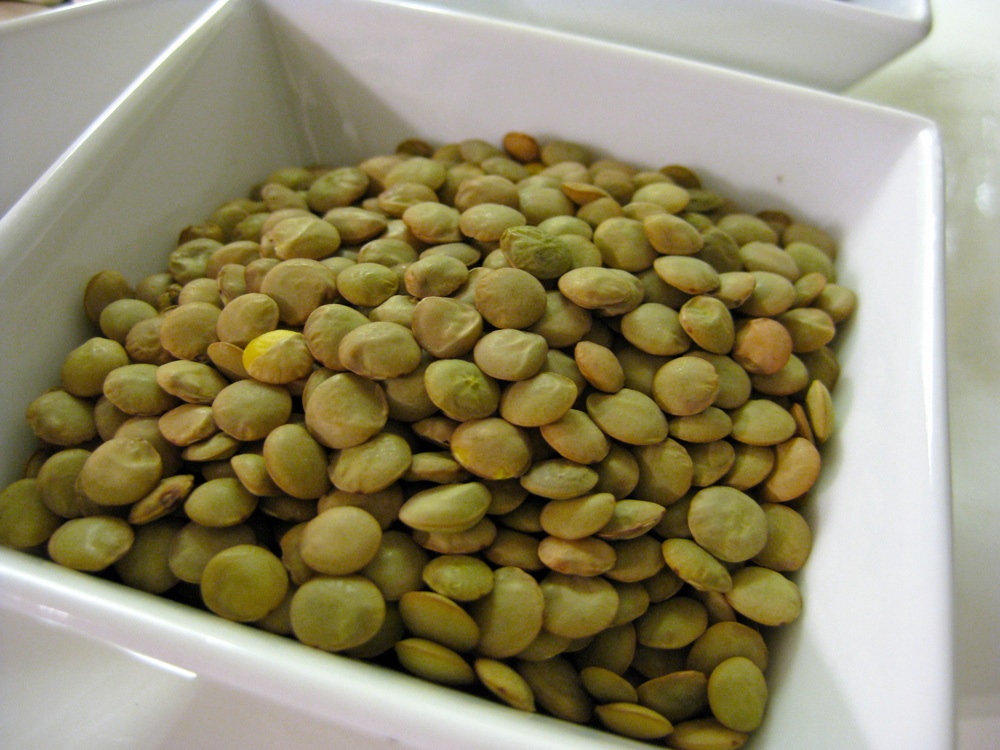
Green Lentils

Weird craving confession time: I frequently crave lentils. I don’t know why. I didn’t eat them as a kid so there are no fond remembrances or suppressed memories of lentils. My first exposure to these little gems likely came as a college student living in Salt Lake City and that exposure likely occurred in a Mediterranean restaurant we frequented fairly often. Whatever the case, I love them for no particular reason except that they satisfy a hunger for something simple, earthy and filling.

Lentil soups do the trick, but my favorite use of the legume is in a pilaf or cold salad paired with brown basmati rice, diced veggies like carrot and celery and seasoned liberally with salt and pepper. Lentils lend themselves to heavy seasoning. I love to experiment with “exotic” spices to scent lentils, which means taking a deep dive into the spice cupboard. Garam Masala, cardamom, cinnamon, turmeric, cumin, dry mustard, and saffron – the possibilities are endless.

We keep green lentils on hand, but I love the look and shape of the smaller bluish-black French lentils, which look like caviar. Red lentils are beautiful, but they’re really more of a dry pea and taste like them. All are worth keeping in your pantry for a quick, delicious and incredibly nutritious main or side dish. High in protein and fiber, lentils sit near the top of most super foods lists. Vegetarians can add a complete protein to their diets by combining lentils with brown rice.

Of the beans we keep on hand, lentils are hands-down the simplest, quickest to cook. No pressure cooker or overnight soaking necessary. From dry, the beans will cook in 20 – 30 minutes at the boil. The small, dark French lentils are a bit firmer and may take more time, but not much. Like most beans, lentils should be cooked in unsalted water to prevent them from getting tough. I like to add a bay leaf to the cooking water to start the seasoning process from the beginning.

Lentil Salad

If you’re going to use them for salad or pilaf, they should be drained and set aside to cool before combining them with other ingredients. Cooked lentils are tender so they need to be handled carefully to prevent them from turning into a big mash. They firm up a bit as they cool making them easier to fold with other ingredients. I like the vegetables I mix with them to be diced small enough that they look roughly the same size as the lentils. When I’m ready for them, I’ll heat olive oil in a skillet and add the dry spices for a quick sauté to allow the oil soluble flavors to “bloom” before adding carrots, celery, onion and garlic. Be sure to keep the flame at medium heat to be sure not to brown them.  Once the veggies are tender and fragrant, take them off the heat and gently fold them into the cooled lentils. I think this dish is best at room temperature, but it makes for a nice cold salad spooned onto a leaf of butter lettuce and finished with a sprinkle of sea salt, a bit of fresh ground black pepper and a drizzle of extra-virgin olive oil.

Cheers, Steve