Bread

I’ve been baking a lot lately. A LOT! We taught our first bread baking class a couple of weeks ago and it seemed a great success. We’re looking forward to the next round of classes in May. The preparation for the classes along with the recipe research has been exhausting and yet at the same time exhilarating. Our “office” desk is lined with all the cookbooks we have on bread baking along with a large handful of books we’ve checked out of the library and I’ve been scouring the web for even more. Just looking at the spines of all those books gives me a much-needed mental boost to continue baking and our oven hasn’t gotten much rest as a result.

A collage of the steps in bread making.

I’ve been experimenting with baking bread using “harvested” wild yeasts. I have one yeast starter made of a chopped apple and peel that has a very sweet vinegary smell. I made another out of golden raisins that first developed a very sour ammonia smell that has mellowed to a sweet earthy yeasty aroma. We’ve tried harvesting yeast from juniper berries in the past, but the only thing we created was a bacteria farm that smelled worse than dirty socks. We’ve tried to capture yeast out of thin air, unsuccessfully. This time, using William Alexendar’s leavin method from 52 loaves and the yeast starter made from golden raisins and one from apples, I’ve produced two wonderful loaves of bread. The starters seem to be thriving now and will likely be a source of many loaves in the weeks and years to come. I’m looking forward to experimenting with different yeasts, including Chad Robertson’s method of just using the yeast that collects naturally on his hands.
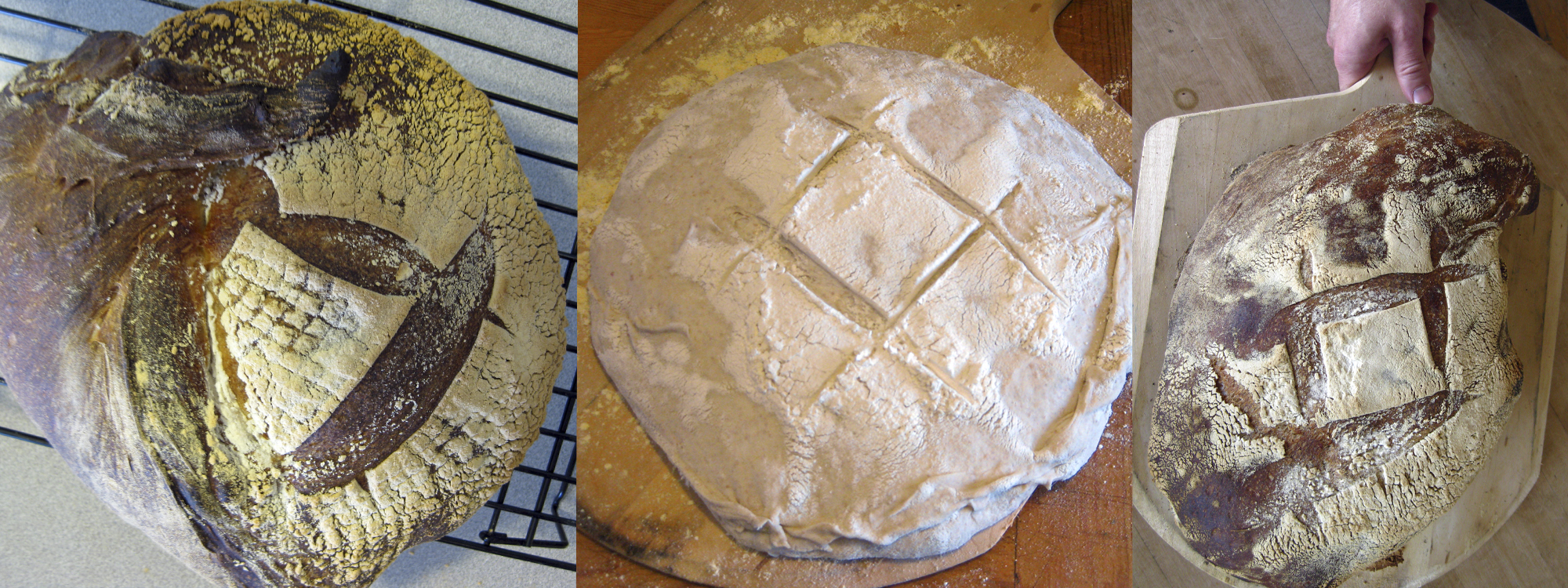
The gnarly beasts. Loaves second and third.

The challenge I’m facing now is in the transferring of the dough from the basket to the peel and then to the oven. With my first loaf of bread I tried something non-traditional in baking: I dusted a lot of corn flour over the bottom of the bread while still in the basket. Next, I placed the peel on top of the basket and then, in one quick swoop, flipped the dough-filled basket over to transfer the dough to the peel and then, with a quick tug of the peel, the dough was in the oven on a heated pizza stone. The only problem was that the bottom of the bread had a lot of flour on it and it just wasn’t crisp enough coming out of the oven. With the subsequent two loaves I’ve tried the traditional method of dusting the peel and then flipping the dough onto the peel and then again sliding the dough from the peel to a pizza stone that has pre-heated in the oven. My first attempt at this method resulted in a fold over of the dough and my next attempt wasn’t much better as the dough oozed over the edge of the stone and between the wires of the oven rack. While both loaves of bread turned out gnarly and twisted they both tasted great.
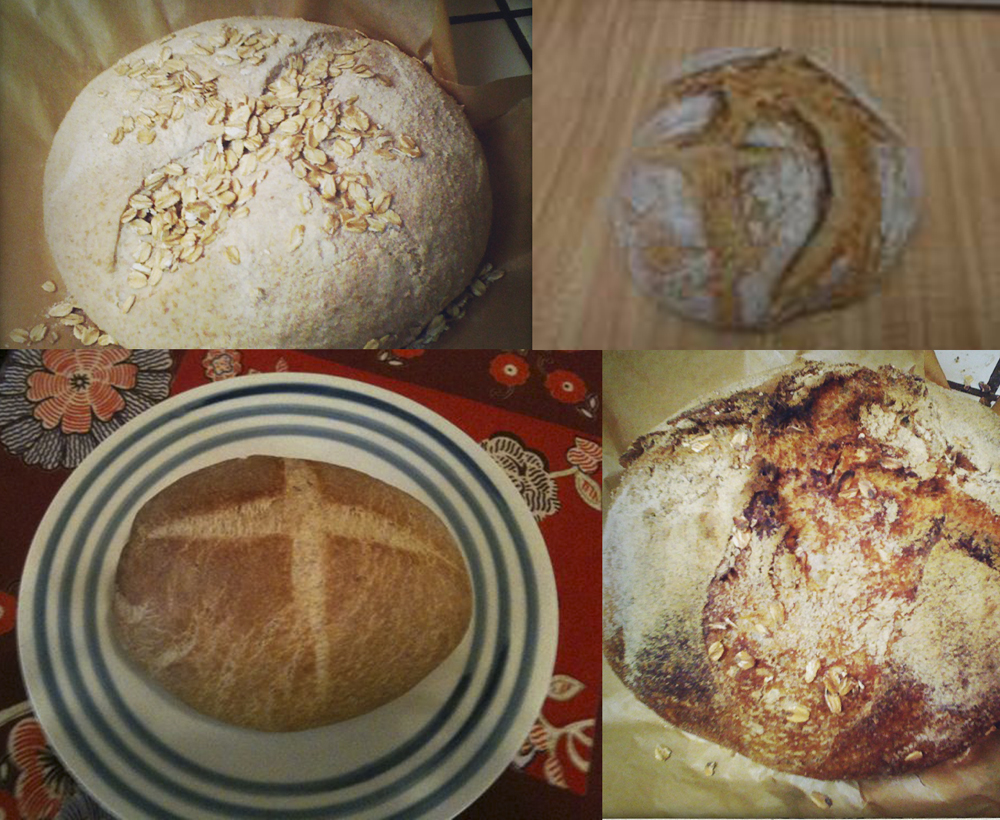
The bread created by members of our first class. Top – L to R: Kathleen (before), Joe. Bottom – L to R: Jess, Kathleen (after).

Once I feel like I have my dough transfer method down to a science I’ll be sharing the bread recipe with others on our blog and in another baking class. So, stay tuned for more in our ongoing quest for the best homemade loaves and congratulations to the bread baking 101 class for their successful loaves! I hope we have inspired you to keep baking.

A bird in the hand…

Pheasants are not the sort of thing most people keep in their freezers and we wouldn’t have them either if it weren’t for Steve’s Dad’s love of hunting and his generosity. He’s given us more game meat than we know what to do with and we may need to purchase a larger freezer next year when he retires. Of course, we also need to invite more of our friends to dinner so they can help us get through our frozen cave of meat. It sounds like it’s time to plan a dinner party!

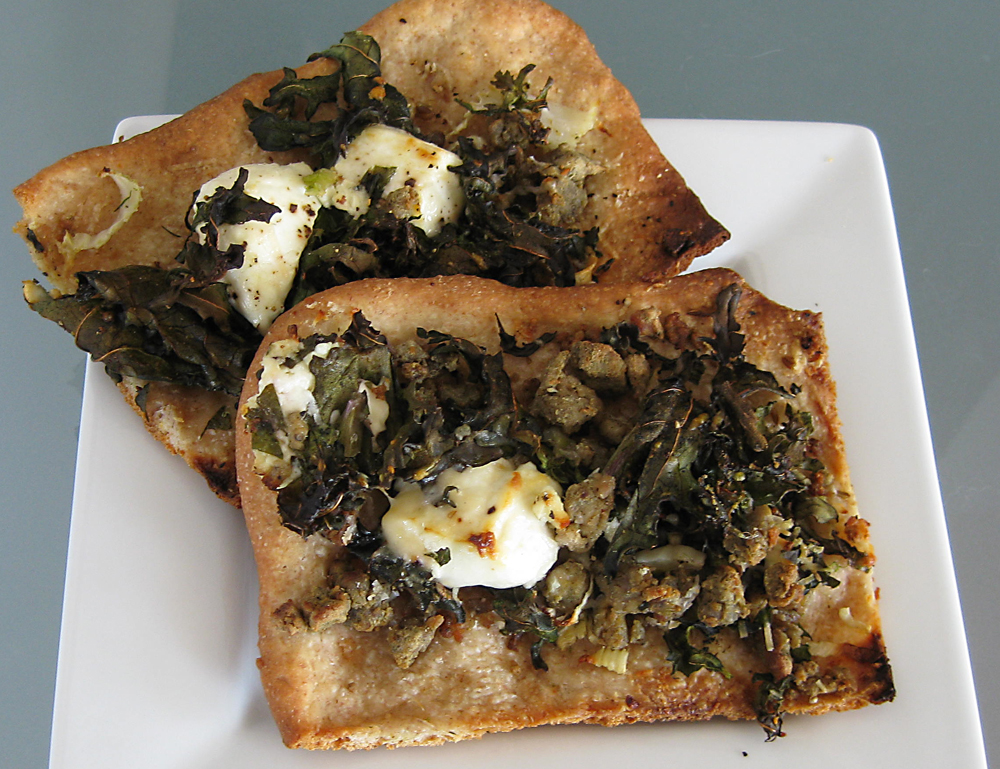
Pheasants are not the easiest birds to cook with. In fact, wild pheasant is a pain in the ass to prepare well. They’re wild birds with very lean meat, lots of bones and leg meat that is virtually impossible to separate from the dozens of tiny tendons holding the bird’s drumstick together. Steve took most of the meat he could get off the bones and put it in the food processor along with a variety of herbs and spices. He chopped the mixture into a course, fresh sausage and browned it in olive oil. The large cooked crumbles of “sausage” dotted the pizza crust accompanied by thin slices of fennel, chopped kale and a generous scattering of goat cheese.

The next day, Jason took what was left of the pheasant meat and bones and made a nice pressure-cooked stock. We read the Cook’s Illustrated suggestion of finely chopping the vegetables in a food processor, and also grinding the meat, before making stock. Modernist Cuisine, the new six-volume cookbook by Nathan Myhrvold, suggests using a similar method of pressure-cooking stock. It was time to give it a try. So, after chopping the vegetables and then grinding up the pheasant meat, Jason browned the bones in the pressure cooker with a little olive oil, tossed in the meat to cook a little, then added the vegetables and enough water to cover everything. He sealed the lid and for the next 45 minutes, that familiar little ssssss from the pressure cooker was music to his ears. After cooking was complete, he turned it off and let the whole thing cool down before unsealing it. The stock was clear and beautiful. A very nice consommé.

Preparing to make the stock.

He also tried this method with the left over veggie clippings we keep in the freezer, and the carcass of a rotisserie chicken from a recent dinner out. We had the pleasure of dinning with our good friend Kathy the other night while she was in town and took her to Limon Rotisserie, one of our favorite restaurants in the city. Not only is the restaurant’s food excellent, the staff of hot guys serving would make any gay man, or straight woman, blush and flirt, but we digress. Anyway, asking to keep the bones from the chicken carcass isn’t a common request at the restaurant. We usually only keep them when we get take out. The owner, who was waiting on us, looked a little perplexed by our request to box up the bones until Jason mentioned that we make a great chicken stock with them. With all the herbs and spices rubbed on the chicken before roasting, it would be a waste to just throw the bones away without getting all that flavor from them.
The Limon chicken stock turned out very nicely in the pressure cooker too, and it took a lot less time than boiling everything for hours. The stock was a little cloudy though and we think the vegetable clippings absorbed a lot of the water. We didn’t finely chop the veggies before adding them to the pot. No matter, the stock has a lot of great flavor and we have a rich stock for the next great soup or sauce.

Pizza Dough

Pheasant Sausage

Leftovers are just as good.

1 tsp fennel seeds
1 tsp cumin seeds
1 tsp dried sage
1 tsp dried oregano
½ tsp red pepper flakes
1 tsp fresh ground black pepper
1 tsp salt
1 lb pheasant meat
3 tbsp olive oil

Heat a small sauté pan over medium flame, add dry spices and carefully toast until fragrant. Do not let them brown. Remove from heat and pour into a mortar. Add salt and grind mixture into a fine powder.

Add pheasant and spice mixture to the bowl of a food processor and process with the chopping blade until ground into a fine mince.

Heat a skillet over medium flame and add olive oil. Once oil has heated, add pheasant “sausage” to the pan and cook while breaking the mixture into small pieces. Cook, stirring frequently, until pieces begin to brown. Remove from heat and set aside to use or to cool before refrigerating.

Assemble Pizza

3 tablespoons olive oil
1 garlic clove, rough chop
1 small fennel bulb, thinly sliced with a mandolin
1 small bunch kale, any variety
4 ounces goat cheese, crumbled into large pieces

In a small sauté pan gently heat the olive oil and garlic until starting to sizzle. Remove from the heat to cool.

After stretching the dough to fit onto a baking sheet, brush with the garlic infused olive oil. Equally distribute the fennel slices, topped by the kale, then the pheasant sausage and goat cheese. Bake in a 450-degree oven for 12-15 minutes or until lightly browned on top and bottom.


Pheasant stock

2 pheasants, bones and leg meat
1 medium onion
1 large carrot
1 large celery rib
1 bay leaf
½ tablespoon whole black pepper corns
¼ teaspoon salt

Remove as much meat from the bones and pulse in a food processor until the consistency of ground meat. In a pressure cooker add the oil and heat the pan. Add the bones and brown. Add the ground meat and cook stirring constantly, until browned. In the food processor add the onion, carrot and celery. Pulse until finely chopped. Add to the pan along with the bay leaf, pepper corns, salt, and enough water to cover. Place the lid on the pressure cooker and under low pressure cook for 45 minutes. Allow the to cool before removing the lid. Strain the stock and refrigerate for up to 1 week, or freeze for two months.

Chicken & Veggie Carcass Stock

4-6 cups chicken bones and/or veggie scraps
water
salt
bay leaves
whole peppercorns

We’ll collect chicken carcasses and veggie clippings in the freezer until the container is overflowing. Once the container is full, about four-six cups of whatever items you have, add to the pressure cooker and cover with water. Add a large pinch of salt, a small palm full of black peppercorns, and a few dried bay leaves. Cook with low pressure for 45 minutes and than let cool without releasing the pressure. Strain the stock and refrigerate for up to 1 week, or freeze for two months.