Meyer Lemon: Meyer Lemon and Honey Meringue Tart

Even though the Meyer lemon is considered a winter fruit, we received a bagful of this sweeter version of a lemon, as a gift, a couple of weeks ago and couldn’t resist adding the Meyer lemon to our blog. From just reading the wiki entry, it seems that we owe a debt of gratitude to Alice Waters of Chez Panisse for reintroducing the Meyer lemon into the American diet. Although it seems like every friend of ours with a citrus tree has at least one Meyer lemon tree in their yard, most Americans are unfamiliar with this delightful kin of the common lemon.

The Meyer lemon is a cross between a traditional lemon and either a tangerine or an orange. It comes from China and was brought into the US at the beginning of the 1900’s. In the kitchen, the uses for the Meyer lemon are vast. It can be substituted for the regular lemon for a slightly sweeter, less acidic flavor, or for the orange or tangerine for more tartness.

The skin of the Meyer lemon is probably one of the most fragrant of all citrus. The skin is thin on the fruit and has a soft non-porous touch to it. The culinary uses for the Meyer lemon range from good old lemonade, to adding the juice to brine in preparation for cooking chicken, or adding the juice to olive oil for a vinaigrette, or putting them up as salt-cured preserves to be used as a condiment with Moroccan food.  Anything that calls for a lemon, or even an orange, may be substituted with Meyer lemons.

Meyer lemons are high in vitamin C, but they aren’t  nutritional powerhouses. You’ll get a small amount of calcium, fiber, and protein from them if you eat the whole fruit. We suggest that you use their delicious juice and zest for their unique flavor and not because of their nutritional value. Eat some leafy greens first to get your vitamins, then you’ll be able to have a Meyer Lemon Meringue Tart for dessert. Everything in moderation. Cheers!

This slideshow requires JavaScript.

Meyer Lemon and Honey Curd

2/3 cup fresh Meyer lemon juice
1/3 cup honey
3 eggs
pinch of salt
6 tablespoons butter, room temperature
zest of 1 Meyer lemon

Note: Before juicing the lemons, wash and zest at least one for the recipe.

Place a medium saucepan with a couple inches of water in it over medium heat, bring to a simmer. In a metal bowl that will fit on top of the saucepan, whisk the lemon juice, honey, and eggs together and place over the heated water. Make sure that the water does not touch the bottom of the bowl.

Whisk over simmering water for 4-12 minutes or until thickened. The whisk should leave waves in the custard.

Take the bowl off the heat. Continue whisking the custard and add one tablespoon of butter at a time, making sure to thoroughly whisk the butter into the custard before adding another piece. Whisk the zest into the custard.

Serve warm or pour the custard into a glass storage container and cover the surface with a piece of wax paper or plastic wrap. Completely cool at room temperature before refrigerating.

Optional: For added smoothness to your custard, pass through a fine mesh screen and omit the zest.

Almond Whole Wheat Crust

1-large 9” tart/ 4-medium 4″ tarts/Several small tarts

1/3 cup almond meal
1/3 cup all-purpose flour
1/3 cup whole wheat flour
4 Amaretti cookies, crushed
7 tablespoons butter, softened
2 tablespoons powdered sugar
1/8 teaspoon salt
1 tablespoon milk
1 egg yolk

Combine the almond meal, flours, and crushed cookies together, set aside.

In a medium bowl with a hand mixer add the butter and the powdered sugar. Mix on low to combine. On low speed add the almond and flour mixture, and salt. Add the egg yolk and milk and stir to combine. The dough will be sticky.

Remove the dough from the bowl and flatten into a disc, wrap in plastic wrap and refrigerate at least 3 hours or up to a couple of days. The dough can also be frozen for up to 3 months, and thawed when ready to use.

When ready to roll, lightly flour your work surface and roll the dough out to about a 1/8 inch thickness. Gently place the dough into a false bottom tart shell pan and press the dough into the edges of the pan. Press off the excess dough. Prick the dough several times with a fork and place the dough back into the fridge for 30 minutes.

Preheat the oven to 325 degree while the tart rests in the fridge. Place the crust in the oven and bake for 20-25 minutes. For added crispiness of the tart shell, brush the inside of the tart with egg wash (a beaten egg with a little water) after 10 minutes of baking.

Meringue Topping

4 egg whites
1/4 cup sugar
1/4 teaspoon cream of tartar

In a large bowl over a pot of simmering water, heat the egg whites and sugar whisking constantly until the mixture reaches 160 degrees. Remove from heat, add the cream of tartar, and using an electric mixer beat the egg whites until they form stiff peaks.

Assembling the Tart

Pour the cooled curd into the prepared tart shell(s). Top with the meringue and, using a spatula or back of a spoon, push the meringue from the center of the pie to the sides, making large swirls and peaks in the meringue.

Place the pie in an oven set at  broil and toast until the meringue is light brown 3-4 minutes, watch carefully, or toast the meringue using a culinary torch.

Asparagus: Pizza

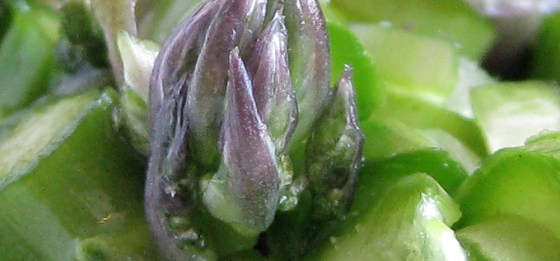
Spring is truly sprung when those miraculous shoots of asparagus push their way up and out into the fresh air. Imported organic asparagus is available year round, but we try to eat the local stuff instead, when it’s available, and then move on to whatever comes into season next. Asparagus is full of vitamins (especially K), minerals, dietary fiber and protein. Like most veggies, it’s great both raw and cooked. We eat lots of it at this time of year when it’s at its most tender.

More often than not, we roast it whole on foil-lined baking sheets, tossed in olive oil and sprinkled with a little sea salt. Asparagus tastes like nothing else, so however you enjoy it, you really taste it. A random search for asparagus recipes drummed up over 41 million hits, reminding us that people have been eating it for thousands of years. It seems to love cheese and cream and butter, but then again, don’t we all. It’s confusingly infamous for not pairing well with wine, but we haven’t found that to be true. A bottle of your favorite Pinot Grigio, Sauvignon Blanc or sparkling wine is a nice accompaniment to this spring veggie.

As veggie prep goes, asparagus is a breeze to clean, but stems that have grown “woody” need to be peeled before cooking. If you cook asparagus for a blended soup, you may need to strain the stubborn fibers after pureeing. Most blenders just aren’t up to the task of breaking them down.

The asparagus pizza recipe that follows was inspired by a delicious, seasonal pizza on the menu at The Plant Organic Café on the Embarcadero at Pier 3. Our tasty iteration is nothing like it, but the beautiful spring asparagus on both reminded us of why we miss the season when it’s over.

This slideshow requires JavaScript.

Roasted Asparagus, Arugula Pesto, and Feta Cheese Pizza

1/2  pizza recipe (see recipe below for pizza made with coconut flour or click here for our traditional pizza recipe)
1/4 – 1/3 arugula pesto (or homemade basil pesto, or gasp…store bought 😉 )
1 bunch pencil thin asparagus, trimmed and cut into half
2-3 ounces feta cheese, crumbled
2 eggs

Optional items: raw walnuts, red pepper flakes, thinly sliced lemons,

Preheat the oven to 500 degrees. After shaping the pizza on a baking sheet, spread the pesto over the pizza dough. Decoratively place the asparagus spears over the top, then add the crumbled feta cheese. Place in the oven for 3-4 minutes. Take the pizza out of the oven and crack the two eggs on top of the pizza on each side, place it back in the oven for another 7-8 minutes.

For runny eggs, you’ll want to prebake the pizza for a longer time 4-5 minutes then add the cracked eggs and finish baking for an additional 6-7 minutes.

For hard yolks, you can place the eggs on top of the pizza before you place it in the oven and bake for the full 10 minutes, or so.

Pizza Dough made with Coconut flour
Makes 2 pizzas

2 cups (10 ounces) all-purpose flour
1/2 cup (2 ounces) coconut flour
1 teaspoon rapid rise yeast
2 teaspoons salt
1 – 1  1/4 cup water
3 tablespoons + 1 tablespoon olive oil

Food Processor Method:
Add the flours, yeast, salt in the bowl of a food processor, pulse to combine. With the processor running, add 1 cup water and 3 tablespoons olive oil through the feed tube.

Process the dough for 30 seconds to 1 minute. The dough should come together as a ball. If the dough is too dry add 1 tablespoon of water at a time through the feed tube. The dough should be slightly sticky to the touch, and may look slightly textured and not completely smooth (this is due to the coconut flour).

Form the dough into a ball and place in bowl with the additional tablespoon of olive oil. Turn the dough to coat it in oil and cover the bowl with a damp kitchen towel, or plastic wrap. Let the dough rise until doubled in volume 2-3 hours, or less, depending on the warmth of your kitchen.

When ready, divide the dough in two and proceed to form the pizza. At this point you can stretch the dough with your hands or roll the dough out on a floured surface. If the dough becomes too tight and does not stretch, cover with a lightly damped towel, or plastic wrap and let it sit for up to 10 minutes to relax before trying to shape it. This dough is great for a thin crusted pizza. The thinner you can get the it without tearing, the crispier it becomes.

Bake the pizza in a preheated 500 degree oven with your favorite toppings for 10-15 minutes. Don’t overload the pizza with a lot of toppings and cheese, a little goes a long way.

Stand Mixer:
In a stand mixer with a dough hook, mix the yeast with the flours and salt. Add the water, 1 cup to start, and olive oil and mix on medium speed for about five to seven minutes. If the dough is too dry add a little more water, a tablespoon at a time. If too wet, add a little flour, again a tablespoon at a time. Once the dough comes together, coat the dough with the additional tablespoon of olive oil, and cover the bowl with a damp towel and let rise until doubled.

When ready, divide the dough in two and proceed to form the pizza. At this point you can stretch the dough with your hands or roll the dough out on a floured surface. If the dough becomes too tight and does not stretch, cover with a lightly damped towel, or plastic wrap and let it sit for up to 10 minutes to relax before trying to shape the dough.

By Hand:
In a large bowl, add the flours, salt, and yeast, mix with a wooden spoon. Add 1 cup of water and 3 tablespoons olive oil, mix until will combined. On a floured surface, turn out the dough and knead by hand for 5-10 minutes or until the dough is smooth and comes together in a ball. Form the dough into a ball and place in bowl with the additional tablespoon of olive oil. Turn the dough to coat in oil and cover the bowl with a damp kitchen towel, or plastic wrap, allow to rise until doubled, 2-3 hours.

When ready, divide the dough in two and proceed to form the pizza. At this point you can stretch the dough with your hands or roll the dough out on a floured surface. If the dough becomes too tight and does not stretch, cover with a lightly damped towel, or plastic wrap and let it sit for up to 10 minutes to relax before trying to shape the dough.