
This Valentine’s Day do yourself and your loved ones a favor and vow to eat dark chocolate everyday. The health benefits of dark chocolate include improving cholesterol and blood sugar levels, helping blood flow to the brain, and hardening tooth enamel. It’s also full of antioxidants, vitamins and minerals. The reason we, and others, recommend dark chocolate over milk or white chocolate is because dark chocolate has less dairy and fat in it than milk; and white chocolate is absent of cocoa solids which is where all the antioxidants, vitamins and minerals are located. Essentially, there is a time and a place to eat milk and/or white chocolate, but it just shouldn’t be eaten daily. Actually, today, of all days, is the day to eat milk, white, or dark chocolate. Just eat chocolate!
What is dark chocolate? Dark chocolate is made with cocoa, or cacao, cocoa butter, and sugar. In the U.S. there is no formal definition of dark chocolate, but in Europe, it’s defined as having a minimum of 35% cocoa solids. There are two types of dark chocolate in the U.S., semisweet and bittersweet, both of which are used frequently in cooking and baking. Often the package will state the cocoa percentage. Dark chocolate can range from 70%-99% pure cocoa, with the high numbers indicating more cocoa and a more bitter taste.
Semisweet chocolate is the one dark chocolate that most people are familiar with. Just think of those Toll House Cookies made with Nestle’s semisweet chocolate chips. Semisweet chocolate has half as much sugar as the amount of cocoa.
Bittersweet chocolate has less sugar than semisweet chocolate. It’s made up of chocolate liquor, some sugar, cocoa butter, and often vanilla and soy lecithin.
There’s a third type of dark chocolate called Couverture chocolate. It’s a high quality chocolate with extra cocoa butter, 32%-39%, and the total percentage of cocoa butter and cocoa solids must be at least 54%. This type of chocolate is mostly used for dipping, coating, and molding chocolates. This would be the type of chocolate found mostly in the upper-end chocolatiers, like Godiva.
Chocolate doesn’t have to be eaten at the end of a meal as dessert. There are many recipes that call for chocolate as a main ingredient. If you like Mexican food, and who doesn’t, try chocolate mole. In the novel, Like Water for Chocolate, it was served with turkey, it can also be served with chicken or vegetables like hard shelled squashes. Chopped cocoa nibs can be sprinkled on a bitter winter green, like radicchio, as a substitution for nuts on a salad. We’ve even included cocoa powder in our favorite chili recipe, Chocolate Cherry Chili.
For all those looking to surprise your chocoholic loved one who is also an avid reader, we suggest the perfect book, Chocolate–A bittersweet saga of dark and light, by Mort Rosenblum. Had we discovered the book sooner, and had a bit more time to read it before Valentine’s Day, we would have included references to the history of chocolate; from the Swiss to the French, and all around the world. With only a small dive into the book, we’re already hooked. Maybe a sequel to the Chocolate blog is in order, with an exploration of white and milk chocolate, just in time for Easter.
References
http://en.wikipedia.org/wiki/Types_of_chocolate
http://www.webmd.com/diet/news/20120424/pick-dark-chocolate-health-benefits
http://www.fitday.com/fitness-articles/nutrition/healthy-eating/6-health-benefits-of-dark-chocolate.html
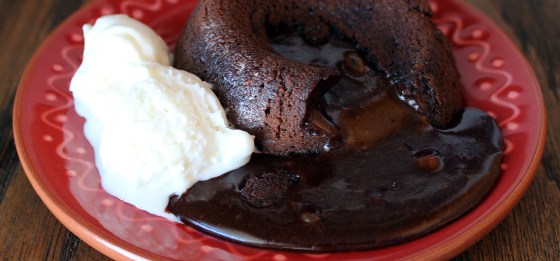
Chocolate Coconut Lava Cakes
The original epicurious recipe is by far the best Molten Lava Cake we have tried, and we have tried many. We’ve altered this recipe to include coconut sugar and coconut oil to make it healthier-ish. Should you choose to use the unadulterated version, we suggest not making the Mint Fudge Sauce. A few fresh raspberries and maybe some vanilla ice cream is all this dessert needs.
5 ounces bittersweet or semisweet chocolate, chopped
5 tablespoons unsalted butter
5 tablespoons coconut oil
1/2 cup coconut sugar (or brown sugar)
1 teaspoon vanilla
3 large eggs
3 large egg yolks
1 cup powdered sugar
1/2 cup all purpose flour
pinch of salt
Preheat oven to 450°F. Butter six 3/4-cup soufflé dishes or custard cups. Stir chocolate, butter, and coconut sugar in heavy medium saucepan over low heat until melted. Cool slightly and add vanilla. Whisk eggs and egg yolks in large bowl to blend. Whisk in chocolate mixture, then powdered sugar, salt and flour. Pour batter into dishes, dividing equally. (Can be made 2-3 days ahead, cover and chill in the refrigerator.)
Bake cakes until sides are set but center remains soft and runny, about 11 minutes or up to 14 minutes for batter that was refrigerated. Run small knife around cakes to loosen. Immediately turn cakes out onto plates. Serve with coconut gelato or vanilla ice cream, if desired, or fresh raspberries.
Toaster Oven Method: These cakes are perfect for a toaster oven. Add the cakes to a cold oven and bake at 400°F or 425°F, ovens will vary, until slightly set on sides, and top, about 12-14 minutes. The cakes may rise in the center and if the temperature is too high may even explode and ooze out of the top, like a volcano. If this starts to happen, reduce the temperature and continue to bake another minute or two.
A couple notes on Coconut Sugar and Coconut Oil: Many of our recipes call for coconut sugar and/or coconut oil. From the information we can find, both products are better than their alternatives – refined white sugar and most vegetable oils. Their flavor and coloring may be slightly different, and often times better, in our opinion – they taste like coconut.
The coconut sugar is a low glycemic product and is high in potassium, magnesium, zinc and iron, as well as vitamins B1, B2, B3, and B6. The only downside is the price: it’s about 5 times more expensive than regular white sugar and about two to three times more expensive as brown. That is why we often combine coconut sugar with white or brown sugar.
Coconut Oil has begun to resurge on the market after years of being vilified as a “bad” oil because of its high levels of saturated fats. The studies done on coconut oil used partially hydrogenated coconut oil and not virgin coconut oil. We’ll be exploring more about these two products in later posts.
References
http://en.wikipedia.org/wiki/Coconut_sugar
http://en.wikipedia.org/wiki/Coconut_oil


 (y)our food choices™