
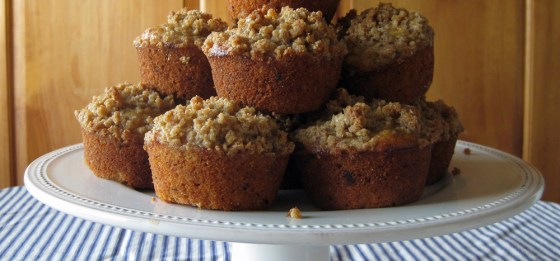
Vegan diets are a challenge for a baker. Eliminating eggs and dairy products might sound easy, but when it comes to texture and taste, let’s just say we’re not sold yet. Sure you can make a pretty good carrot cake using tofu, as Tartine bakery has, but we draw the line at using fake butter and soymilk. These products have no place in baking, at least in our kitchen.
Then there’s the egg dilemma. We know there’s the trick of using 1-tablespoon ground flax seed to 3-tablespoons of water to substitute an egg in a pinch, but to eliminate all the eggs in a recipe with ground flax seed would be like eating a handful of sand. Bleh! Why can’t there be a rich and delicious pastry with some healthful benefits added without tasting like saw dust? And it doesn’t matter if a vegan pastry is free of animal products, sometimes they’re even less healthy than the traditional pastry. At the same time, no one needs a high caloric, sugar loaded, coma-inducing muffin first thing in the morning.
Here’s our option for a more balanced–not vegan–muffin. Jason took inspiration from a few of our favorite bakers/cooks, Martha Stewart, 101 Cookbooks, and Kim Boyce’s Good to the Grain and came up with a tasty muffin that’s good in the morning and at night. To eliminate the butter in traditional muffins he added olive oil, which gives the muffins a nice flavor, plus all those Omega-3’s everyone talks about. A couple ripe bananas substitute for one of the eggs (no flax seed in this recipe), but this recipe still calls for two eggs, sorry veganeers (Is that the term for militant vegans?). The banana adds a bit of sweetness too without overpowering the muffins with a strong banana flavor.
Replacing some of the all-purpose flour with whole spelt flour not only adds a nutritional punch, it’s also a nice compliment to the olive oil. And, adding cooked quinoa to the muffin batter and the streusel mix adds texture, flavor, and increases the protein significantly. The dark chocolate, while delicious in just about anything, has so many health benefits that everyone should eat a little every day, we do.
Calling these muffins healthy is just an added benefit. Personally, we just call them delicious. Enjoy!

Health, health, health, darling! Quinoa, olive oil, bananas, and dark chocolate.
Quinoa, Olive Oil, Dark Chocolate, and Banana Muffins
Yield: 14 muffins
Crumb Topping:
1/2 cup whole spelt flour*
1/2 cup cooked quinoa**
1/4 cup brown sugar
Pinch of salt
1/4 cup olive oil
Muffins:
1 cup all-purpose flour
3/4 cup whole spelt flour*
3/4 brown sugar
1 cup cooked quinoa**
1 1/2 teaspoons baking powder
1/2 teaspoon kosher salt
4 ounces dark chocolate, chopped
2 very ripe bananas
1/4 cup whole milk yogurt
1/2 cup olive oil
2 eggs, beaten
Crumb topping:
In a small bowl, mix together the whole spelt flour, cooked quinoa, brown sugar and salt until combined. Add the olive oil and mix until blended. Set aside.
Muffins:
Preheat oven to 350 degrees. With a little olive oil on a paper towel, grease seven spots on each of two, one-dozen muffin tins for a total of fourteen muffins. Be sure to leave ungreased muffin spots between the greased muffin spots to allow air to hit most sides of each muffin.
In a large bowl, mix together the all-purpose flour, whole spelt flour, brown sugar, cooked quinoa, baking powder, and kosher salt until thoroughly combined and there are no brown sugar lumps, then add the dark chocolate. In a separate bowl mash the bananas with a fork until thoroughly “mushed.” Add the yogurt, olive oil, and eggs, and whisk together. Add the wet mixture to the dry mixture and gently stir together just until all the dry ingredients are thoroughly blended with the wet ingredients. Do not over mix.
Using an ice cream scoop, fill each muffin tin until almost full. Distribute the crumb topping evenly over each muffin. Bake for about 25 minutes rotating the pans mid way through baking. Remove the muffins from the oven and cool for 5 minutes in the pan then remove the muffins from the tins and allow to cool on a baking rack for about 20 minutes, if you can resist the temptation.

What’s up with 14 muffins?
*If you are unable to find whole spelt flour, you can substitute regular whole wheat flour, graham flour, or just use 1 ¾ cups all-purpose flour for the muffin recipe plus ½ cup all-purpose flour for the crumb topping.
**To cook quinoa, in a medium saucepan add 1 cup rinsed quinoa, 1 1/2 cups water, and a pinch of salt. Bring to a simmer and cook for 15 minutes, or until the water has absorbed. Allow to cool before making the muffins. Reserve any leftover quinoa for another use.



 (y)our food choices™