

When writing about T-day feasts, food writers like us have a quandary; do we make a separate feast weeks before and pretend it’s our Thanksgiving Day meal or do we have our meal on the fourth Thursday of November and write about it a year later? We chose to do the latter. The dinner we write about here is from 2010. It was just the two of us and from our notes last year, we were on a processed food kick. Meaning, we wanted to kick processed food out of Thanksgiving all together, and everyday of the year. To our family members: we will be home for Christmas and will be respectful of your food choices. Our goal with our blog is to be happy and healthy, to share our recipes, and to foster a dialogue about all of our food choices – not to pass judgment. Enjoy our little tirade and try out some of our simple recipes at the bottom of the post. We’re sure you’ll enjoy them as much as we do.
Forget about the hormone injected turkey and the Stovetop stuffing. We don’t need the boxed mashed potatoes, canned green bean casserole with fried onion rings, or the gooey sweet potatoes topped with multi-colored marshmallows. And please do not serve another jell-o salad with canned diced pineapple and cottage cheese. This is the same menu our families have been preparing every year for Thanksgiving since we were kids and even before. And we’re sure we’re not the only ones in America who had to eat the exact same menu every turkey day. It’s not that we don’t like these things when they’re made from scratch, but when the definition of scratch means opening up cans of one thing and dumping it into a casserole dish with a packet of this and another can of that – well, we find it just plain wrong. The food the pilgrims ate did not come from cans, packets, or boxes, so why do Americans believe that by eating this processed food we are honoring our American ancestral settlers?
We’re sure we’ve already offended over half the family for our blatant rant against this so-called food. Of course, if the choice is to either eat processed food on a visit with family or not go home for Thanksgiving, we’ll choose to visit with family and eat what is available without a disrespectful word , but why must these be our mutually exclusive choices? Why not choose to prepare items from their most natural state first before grabbing the can opener, or the box? Is it really that much harder to peel some potatoes, put them in a pot of boiling water until tender, drain them and then mash all together with butter, milk, salt & pepper? A box of instant mashed potatoes requires some measurement. Why not measure one or two more things and prepare something truly wonderful, something real?
We know that we are all busy this year (when aren’t we?) and times are tough all around. We want to save time to be with our families, but also save some money. This Thanksgiving, we propose that instead of going for the convenience of the box, we learn to think outside of it. For starters, let’s pledge to only shop the perimeter of the grocery store, leaving the middle lanes alone, and if possible just the vegetable section. When selecting a Turkey, think local, think fresh and think organic. When making the stuffing, try using bread from a real bakery – it makes for a fine first step. Try sautéing some green beans in brown butter and serving both sweet potatoes and russet potatoes mashed separately. No need to add tons of brown sugar and a bag of mini marshmallow to make the sweet tubers edible. Nicely roasted sweet potatoes with a good dash of sea salt and a healthy dollop of sweet, unsalted butter need little more. And, let’s forget about the jell-o salad altogether. Why not try something bold like a nice radicchio and apple salad with warm apple cider vinaigrette, topped with a crumble of bleu cheese and a few pine nuts?

Yes, you can use canned pumpkin and we also used the recipe on the back of the can. The crust, however, was made from scratch and yes, it did burn.
Whatever your Thanksgiving menu will be, there’s one thing that even we agree should come out of a can. No, it’s not cranberries. It’s canned pumpkin. We’re all for picking up a sugar pumpkin and roasting it, but if you’ve already made everything else from scratch, give yourself a break. The pie crust, however, should not come from the freezer section of a supermarket. If you haven’t made a crust before, now is the best time to learn.
As for those cranberries, anyone who buys canned cranberry sauce and prefers it to fresh cranberries needs to learn a quick and easy recipe for home cooked sauce. It takes a whole five minutes to throw a bag of fresh cranberries into a pan with a little sugar, or honey, some cinnamon, a little citrus peel and some water. Crank up the heat until it bubbles, cook for 5 minutes and then let cool. That’s it!
Martha Stewart–the ultimate diva of all things domestic – and others – have videos and recipes galore for any training you may need. During the holidays your family members are going to appreciate the effort even more, so give “homemade” a try. Not only will you be amazed by how great everything tastes, you’ll also appreciate that the food you’re eating is healthier for you, and that should give you another reason to be thankful.
Happy Thanksgiving!
Steve and Jason
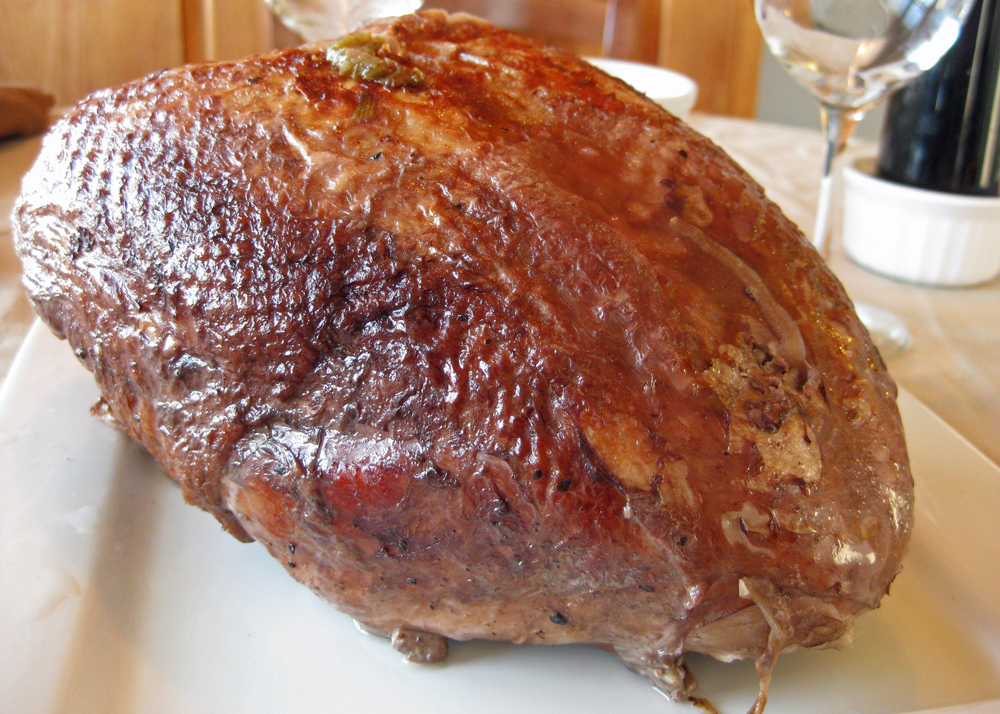
Why roast when braising keeps the breast moist?
Wine Braised Turkey Breast
Serves 8-10
From cookbook author John Phillip Carroll
Active cooking time: 30 minutes
Total cooking time: 3 hours
1 whole turkey breast, skin on (about 6 pounds)
Kosher salt
Freshly ground pepper
2 tablespoons vegetable oil
2 carrots, peeled and thinly sliced
2 ribs celery, thinly sliced
1 onion, thinly sliced
2 garlic cloves, mashed
2 cups turkey or chicken stock
1 1/2 cups dry red wine
3 tablespoons softened butter
3 tablespoons flour
1/4 cup heavy cream
Season turkey with salt and pepper. Heat oil over moderate heat in a Dutch oven. Add turkey skin-side down and brown in hot oil, about 5-6 minutes. Remove turkey, leaving fat in pan.
Add the carrots, celery, onion and garlic to pan and cook about 10 minutes, stirring occasionally, until wilted. Add the stock and wine and bring to a boil. Return turkey to pan, cover and simmer over low heat for 1 1/2-2 hours, or until a meat thermometer registers 170° when inserted in the thickest part of the turkey. Turn the turkey 2 or 3 times during cooking, and make sure the liquid is just gently bubbling. Remove pan from heat and set aside about 20 minutes, with the cover askew (turkey should be skin side down in the cooking liquid).
Remove turkey to a platter and keep it warm. Strain the cooking liquid; you will have about 3 1/2 cups. Rapidly boil it down to about 2 1/2 cups to concentrate the flavor.
Meanwhile, melt the butter and blend with flour until smooth. Add to the reduced liquid, whisking constantly until blended, then add the cream and simmer for 3 minutes. Season with salt and pepper to taste. Serve with the turkey.
Radicchio & Apple Salad with Prosciutto
4-6 Servings

Bitter greens (reds) never tasted so sweet.
2 small heads radicchio, torn into bite sized pieces
1 medium sweet apple, cored, quartered, and thinly sliced
2-3 tablespoons olive oil
2 tablespoons pine nuts
1 tablespoon apple cider vinegar
2-3 thin slices of Prosciutto
1-2 tablespoons blue cheese crumbled
Salt & pepper
In a large salad bowl, add the radicchio and apples. In a small sauté pan, add the olive oil and pine nuts. Toasted until lightly brown then pour into the salad bowl and toss the radicchio and apples with the heated oil and nuts. Drizzle the apple cider vinegar over the salad and toss a little more. Add salt and pepper to taste.
Divide the salad among the plates and add torn strips of prosciutto to each one. Top with crumbled bits of blue cheese and serve.
Roasted Sweet Potato Puree
4-6 Servings
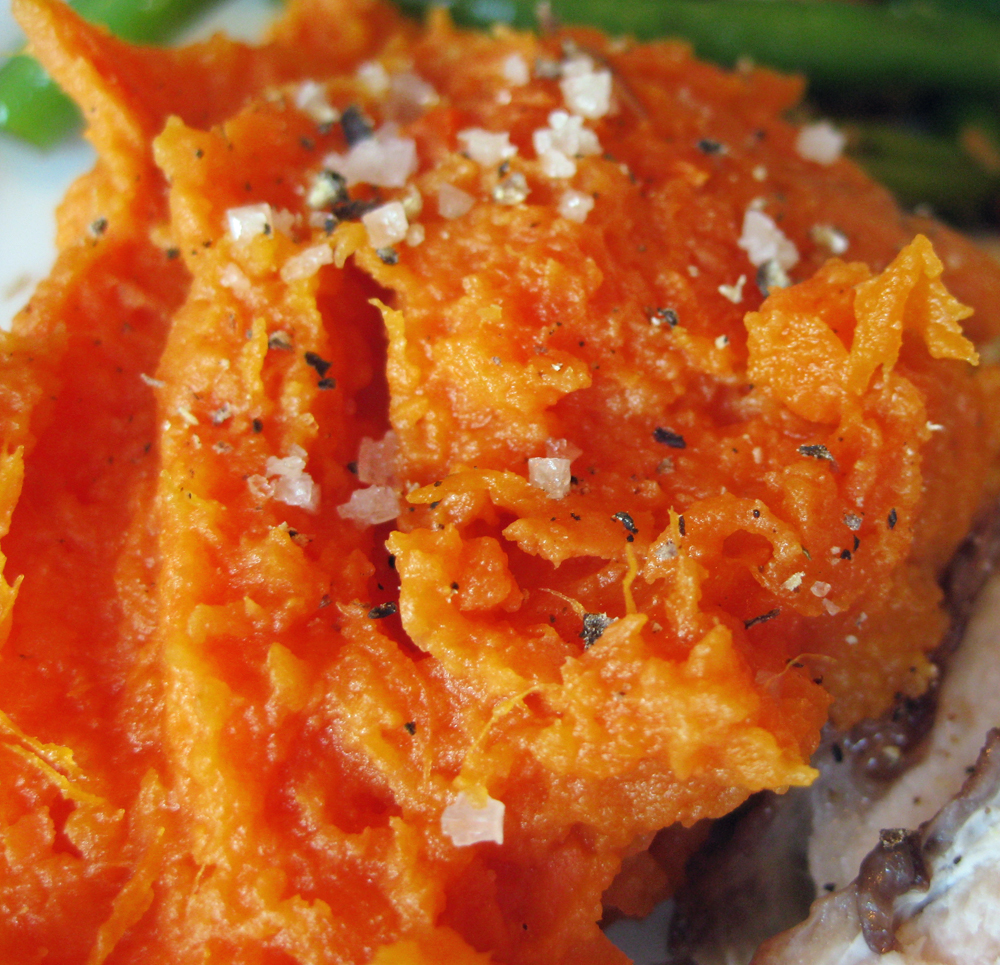
Leave the marshmallows for the hot chocolate.
3-4 large sweet potatoes, scrubbed
1-2 tablespoons butter or olive oil
¼ cup milk
Salt & pepper
Preheat oven to 425 degrees. Prick the sweet potatoes multiple times with a fork. Place in the oven on a baking sheet for 45-60 or until a knife can easily be inserted into the center of the potatoes. Remove from oven and let sit until cool enough to handle.
Heat the milk and butter, or olive oil, in a small saucepan. Once the taters are cool, peel the skin using a small knife. Place the peeled sweet potatoes in a bowl and mash with a potato masher for a rough rustic consistency, or use a hand held beater for a smoother consistency. Slowly add the milk mixture until the potatoes are the texture you desire. You may not use all the milk. Add salt and pepper to taste. The potatoes can be made ahead and kept warm in a low temperature (200 degrees) oven until ready to serve.
Smashed Red Potatoes
4-6 Servings
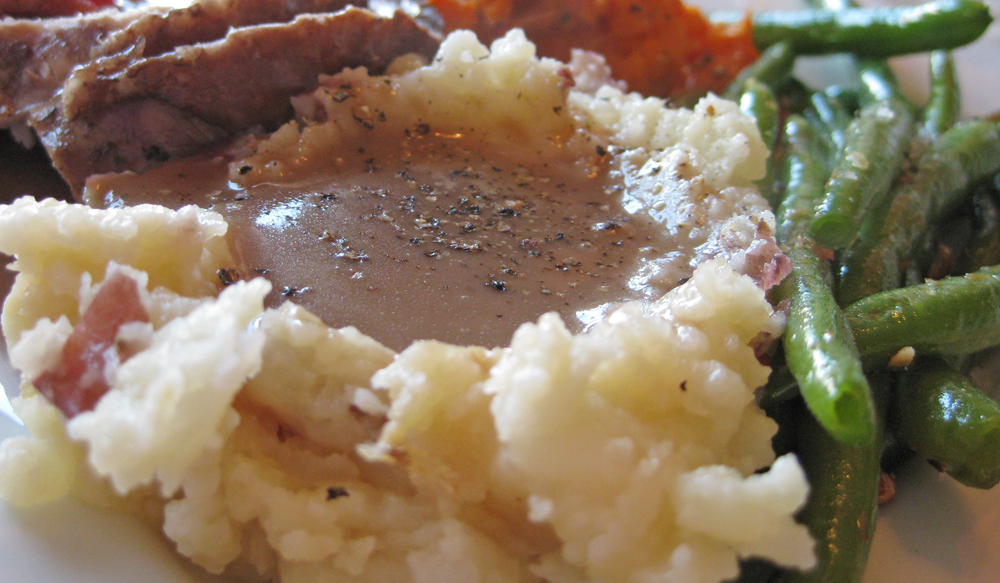
Lumpy or smooth?
8-10 small organic red potatoes (or 4-5 large ones)
1 Bay leaf
½ cup whole Milk
2-3 tablespoons Butter
Salt & pepper
Scrub the potatoes and cut out any black eyes or green tint. Place them in a medium saucepan and cover with water. Add the bay leaf and a large pinch of salt to the water. Place on the stove and heat over medium high until they come to a boil. Reduce heat to simmer and cook for about 15-20 minutes, longer for larger potatoes, or until a knife can easily be inserted into the spuds. Drain the water off of the potatoes, discard the bay leaf and leave the potatoes in the pan, uncovered, for 5-10 minutes or until the pan and potatoes are dry.
Heat the milk and butter in a small saucepan until the butter is melted. Using the back of a wooden spoon, press each potato against the side of the pan and smash them. Once all the potatoes are smashed, stir in the milk mixture and continue to stir until you have the desired consistency. Add salt and pepper to taste. The potatoes can be made ahead and kept warm in a low temperature (200 degrees) oven until ready to serve.
Note: for richer Smashed Potatoes add a tablespoon, or two, of cream cheese when heating the milk mixture.
Sautéed Green Beans
4-6 Servings
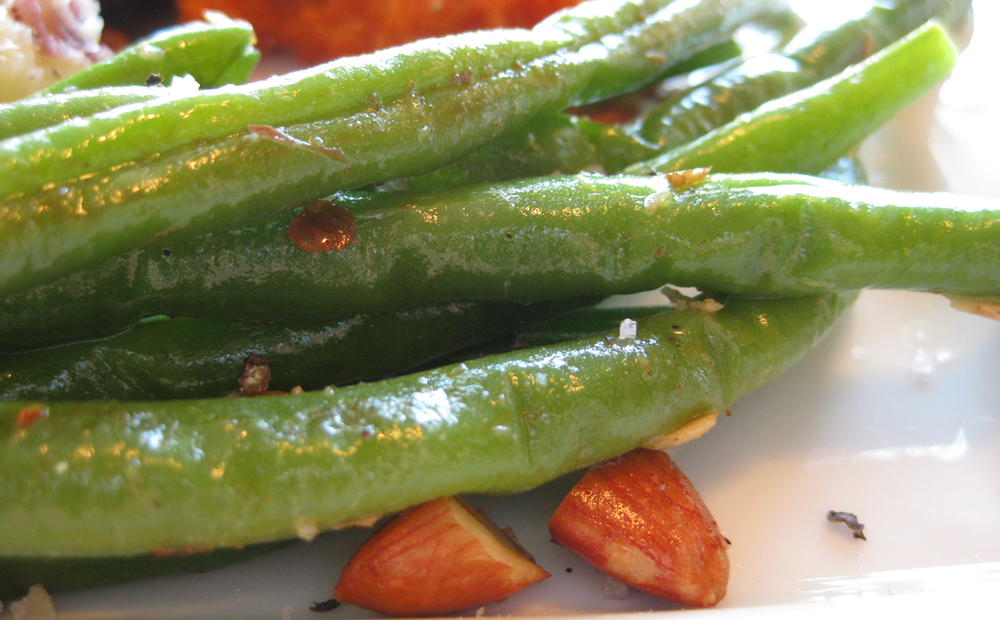
Green beans from a can, never again.
½ pound Fresh Green Beans, washed and trimmed
2 tablespoons Butter or olive oil
1 small minced shallot
Salt & pepper
Optional: 1/4 cup chopped nuts (almonds, pecans, walnuts, etc.)
Fill a large pot with water, add a large pinch of salt, and place on the stove over high heat until it boils. While the pot is coming to a boil, fill a large bowl with ice and water. When the water in the pot is boiling, add the green beans and boil for 2 minutes. Remove the beans from the water and immediately plunge them into the ice water to “shock” them and stop the cooking. They will retain their green color. At this point, you can set them aside, or refrigerate up to 1 day, to be finished just minutes before serving.
When ready to serve, in a large sauté pan, heat the butter or olive oil over medium high heat until the butter has melted and the foam has subsided or when the oil is glistening. Add the shallot and cook for 1-2 minutes. Add the green beans and nuts, if using, sauté for 3-5 minutes tossing them to evenly cook. Season with salt and pepper to taste and serve immediately.
Cranberry Sauce
4-6 Servings
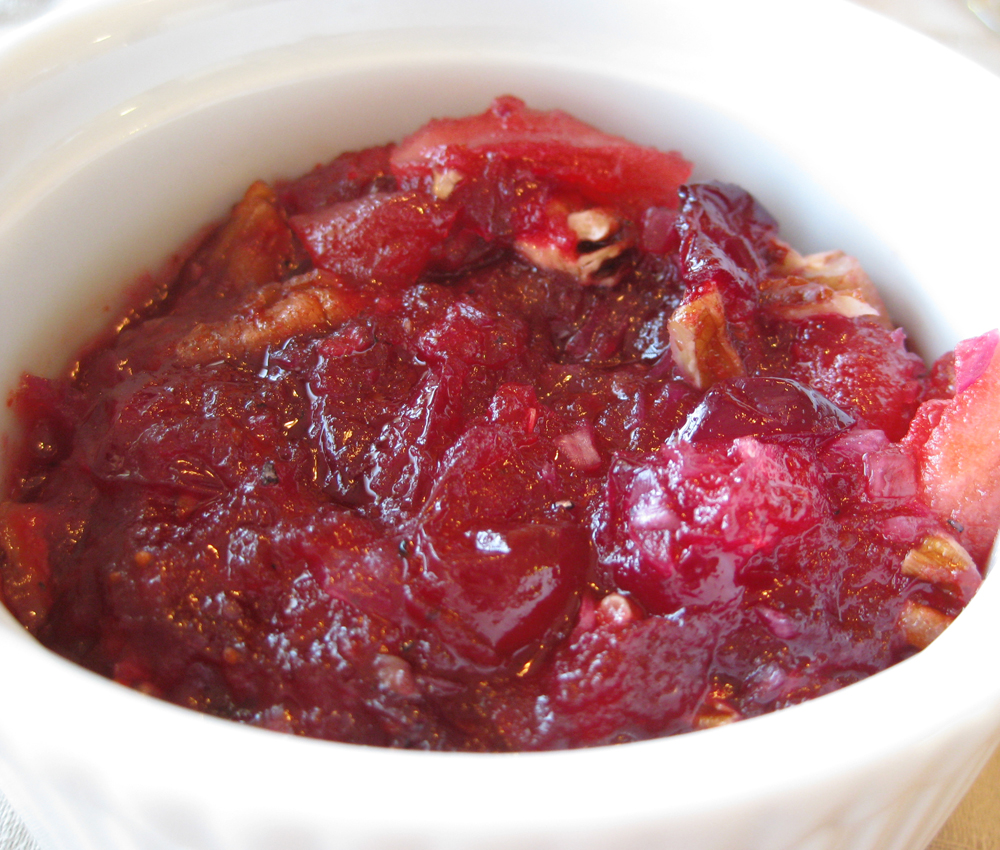
So simple even a child can make this (with supervision).
1 12-ounce bag of fresh cranberries
½ cup water
½ cup sugar or honey
Small pinch of salt
Optional: 1-2” citrus peel (lemon, lime or orange), small handful dried fruit (blueberries, cherries, and even cranberries), small handful toasted nuts (pecans, walnuts, pistachios, etc.)
In a medium saucepan add the cranberries, water, sugar or honey, and salt (if using citrus peel or dried fruit add them now) and place on the stove over medium high heat. Bring the cranberry mixture to a boil then reduce the heat to a simmer. Cook for 5 minutes. Remove from heat and cool. If using nuts add them to the cranberry sauce. Refrigerate until ready to use. Can be made 2-3 days ahead of time.


 (y)our food choices™