Hail Kale Caesar!

Miso and cured olives instead of egg and anchovy…Et tu, Brutus?

When it comes to green leafy vegetables, kale is one of the most versatile around. This veggie can be sautéed, toasted (add to popcorn for a healthy and delicious movie night treat), added to soups, or served raw. Not many other green leafy veggies can be subjected to so many types of cooking.

We recently encountered the joys of eating kale raw as a salad while on a trip to Seattle, and honestly, it’s delicious. We serve our salad with an almost vegan Caesar dressing (the honey gave it a needed sweetness) inspired by Galeos Caesar dressing (we learned of the dressing from Chow.com). Our version uses miso and some dried cured olives to give the dressing the “fishy” flavor usually obtained from anchovies, and the miso is a great emulsifier so there’s no need for the egg or mayo. And even though roasted beets and avocado are not usually found on a Caesar we thought the earthy flavor of the beets and the creaminess of the avocado fit perfectly, you can leave them out if you’re a Caesar purist. Of course, if you’re a true Caesar purist you won’t be using kale, miso, or cured olives. The salad is delicious and vitamin-packed and it’s even good enough to please the iceberg lettuce munchers in your family.

Kale Caesar with Roasted Beets and Avocado

Dressing:
5 cured olives, finely minced
1 small garlic clove, finely minced into paste
1 tablespoon light miso
1 lemon, juiced (about 2 tablespoons)
1 tablespoon honey
4-6 tablespoons olive oil
salt & pepper to taste

1 bunch kale, stemmed and torn into small pieces
small bunch fresh parsley, whole leaves only
1 Avocado, diced
2-3 medium beets, roasted, peeled and diced*

Croutons**

Parmesan Cheese

In a large salad bowl, add the cured olives, garlic, miso, lemon juice, honey,and 4 tablespoons olive oil. Whisk until emulsified. Taste then add salt and pepper, and more olive oil if needed.

Add the pieces of kale, parsley leaves, and diced roasted beets to the bowl. Toss until the kale leaves are fully dressed. Plate the salad and top with diced avocado, croutons, and ribbons of Parmesan cheese***.

*To roast the beets; scrub the beets, then place them in a small foil-lined roasting pan. Pour a couple tablespoons of olive oil over the beets, cover and seal with another piece of foil. Roast in the oven at 450 degrees for 45 minutes to 1 hour +, or until beets are knife tender. Allow to cool before peeling the skins and dicing.

**Pieces of old bread make great croutons. Freeze small pieces of left over bread and when ready to use for croutons, remove from the freezer and lightly thaw. Cut or break into bite-sized pieces and pan toast them in a sauté pan with olive oil and minced garlic until lightly browned.

***Use a vegetable peeler to make ribbons.

Best Cup of Coffee, Ever!

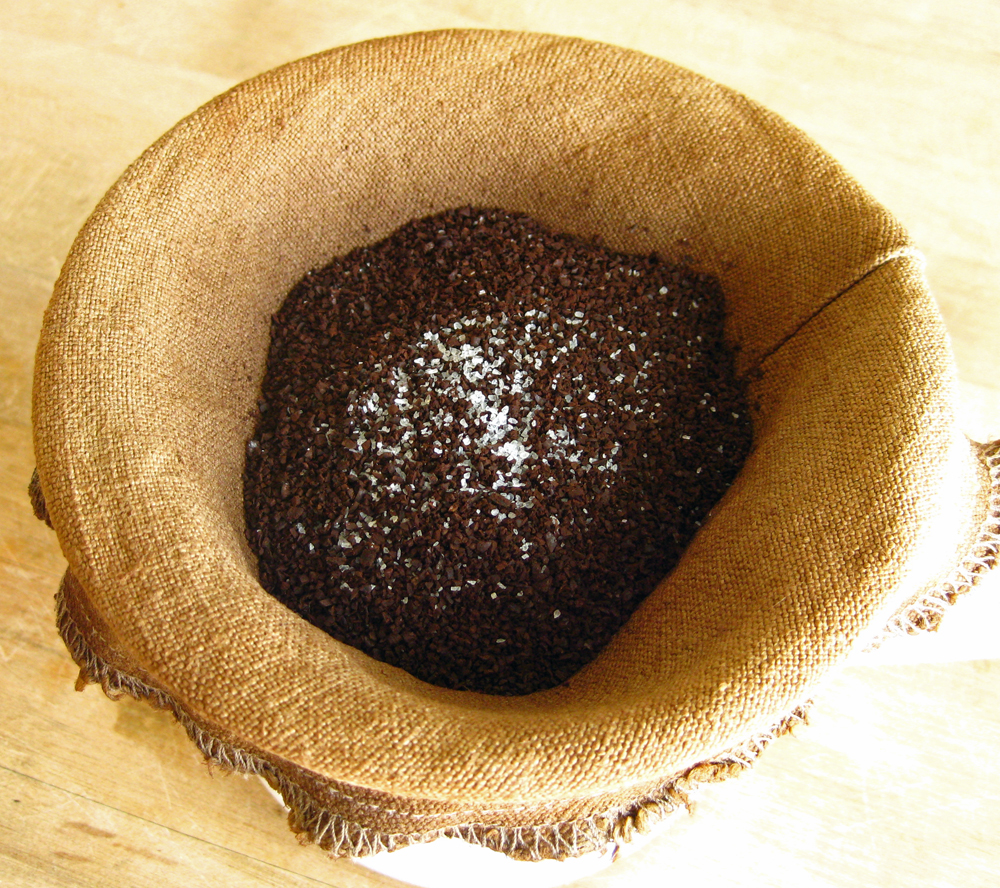
A pinch of salt (and our well seasoned filter) make the best coffee, ever!

There’s no need to go out and purchase a fancy machine to make a great cup of coffee. There’s also no need to go out and buy a specific type of coffee, or for that matter, to buy whole beans and grind them seconds before brewing your coffee. Let’s face it, there are hundreds of different types of coffee out on the market and everyone likes something different.

We got over our coffee snobbery a long time ago. For us, it’s about what we think tastes good, costs the least amount of money, takes the least amount of time, and takes up as little counter space as possible. For those reasons we buy our beans in bulk at Costco, grind them at the store, fill a Mason jar with coffee and store it in the cabinet. The rest of the coffee goes into the freezer.

We say, drink what you like, but to make a good cup of coffee even better, here’s a tip we think you should try: add a pinch of salt. That’s right, salt. Just a small amount is all you need to bring out the flavor of the coffee, less than an eighth of a teaspoon per pot. What does the salt do? As in cooking, salt brings out the flavors of the coffee. It makes the coffee less bitter and mellows the notes. We read about it in Cook’s Illustrated, so it must be true. We’ve been hooked since the first try.

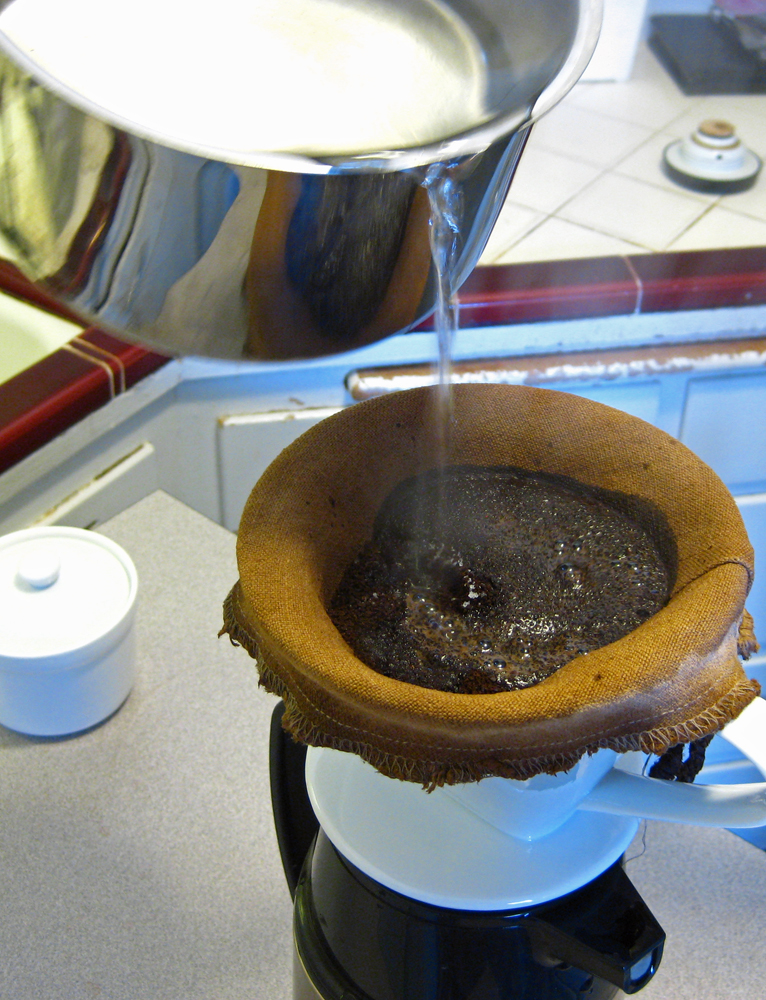
How do we make our coffee? First off, we like the pour over method and we use a reusable hemp coffee filter (it’s kind of like a cast iron skillet, it just gets better with age). We decided we don’t need a stovetop kettle – we’ve ruined a few in our lives – so we just heat the water in a pan. Quick, easy and simple!

Move over french press and make room for the pour over method.

We can see it now, the so-called “coffee aficionados”*, screaming at their screens telling us how insane we are. “How dare you title this blog post, ‘Best Cup of Coffee, Ever!” “Never freeze your coffee!” “Always get your beans fresh from a local source.” “Always grind seconds before brewing.” “Use a French Press!” “Starbucks** isn’t real coffee.” Blah, blah, blah. To the CAs, we say go ahead and spend a month’s worth of rent for that allegedly perfect cup of coffee. For the rest of us, just a little pinch of salt will do.

For all those coffee drinkers who like to add milk and sugar to their coffee, but are trying to cut out the sugar, here’s another little tip: heat the milk first before adding it to your coffee. Heating the milk breaks down lactose and converts it to glucose (simple sugar) so the coffee tastes sweeter without any added sugar. You don’t need to buy an expensive espresso machine to steam the milk. A small saucepan on the stovetop will work just fine.

*Air quotes are being used for sarcastic purposes.

**We know there was no mention of Starbucks before, but many “coffee aficionados” look down on SB. We both happen to like SB and are grateful when we find one while traveling. Although, the McCafe in Madrid was nicer than SB. Just saying.